
An explainer on the notwithstanding clause and how governments have used it
Advertisement
Read this article for free:
or
Already have an account? Log in here »
We need your support!
Local journalism needs your support!
As we navigate through unprecedented times, our journalists are working harder than ever to bring you the latest local updates to keep you safe and informed.
Now, more than ever, we need your support.
Starting at $15.99 plus taxes every four weeks you can access your Brandon Sun online and full access to all content as it appears on our website.
Subscribe Nowor call circulation directly at (204) 727-0527.
Your pledge helps to ensure we provide the news that matters most to your community!
To continue reading, please subscribe:
Add Brandon Sun access to your Free Press subscription for only an additional
$1 for the first 4 weeks*
- Enjoy unlimited reading on brandonsun.com
- Read the Brandon Sun E-Edition, our digital replica newspaper
*Your next Free Press subscription payment will increase by $1.00 and you will be charged $20.95 plus GST for four weeks. After four weeks, your payment will increase to $24.95 plus GST every four weeks.
Read unlimited articles for free today:
or
Already have an account? Log in here »
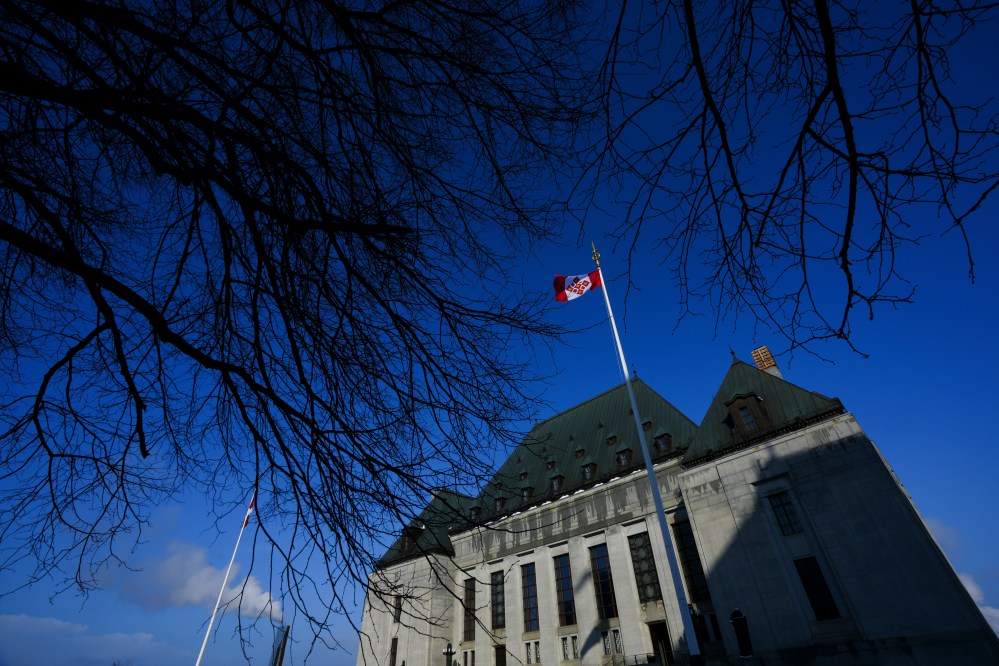
MONTREAL – The Supreme Court of Canada largely upheld Quebec’s secularism law Friday in a landmark decision that clarifies how governments can use the notwithstanding clause to override certain Charter rights.
The country’s highest court confirmed that governments can invoke the clause pre-emptively, before a court has determined whether a law violates the Canadian Charter of Rights and Freedoms. The top court also said legislatures can use the notwithstanding clause to override multiple rights at once.
However, the court was divided over whether to declare that Quebec’s secularism law, which bans certain public sector workers from wearing religious symbols on the job, violated Charter rights without striking it down.
Three of the seven justices concluded that the law was incompatible with freedom of religion, freedom of expression and the right to equality.
Here is a look at the notwithstanding clause, which has been increasingly used by provincial governments in recent years:
WHAT IS IT?
The notwithstanding clause — or Section 33 of the Canadian Charter of Rights and Freedoms — gives provincial legislatures or Parliament the ability, through the passage of a law, to override certain Charter protections for up to five years.
ITS ORIGINS
The clause in its current form came about as a tool to bring provinces onside with then-prime minister Pierre Trudeau’s signature constitutional project. With Charter negotiations ramping up in the early 1980s, Trudeau didn’t see the need for the clause, but provinces such as Alberta and Saskatchewan wanted an out should they disagree with a decision of the courts. In the end, Trudeau reluctantly agreed.
ITS STRUCTURE
The clause only applies to certain sections of the Charter, including those protecting freedom of religion, freedom of expression, legal rights and most equality rights.
It cannot be used to override gender equality, democratic rights, mobility rights or language rights, including minority-language education rights.
The clause also can’t be used for more than five years at a time, although governments can renew it for additional five-year periods. The time limit is intended to give the public an opportunity to challenge a government’s decision to use the clause in a general election before it can be renewed.
ITS USE
While historically used rarely, the notwithstanding clause has been increasingly invoked by provincial governments in recent years. The federal government has never used it.
Quebec, the only provincial government to oppose the 1982 constitutional agreement, passed legislation that year invoking the clause in every new law until 1985.
In 1986, Saskatchewan used the clause to protect back-to-work legislation, and Quebec used it again in 1988 to protect legislation requiring French-only commercial signs.
Alberta attempted to use the clause in 2000 to limit marriage to a man and a woman, but the definition of marriage falls under federal jurisdiction.
RECENT NOTABLE USES
Quebec pre-emptively invoked the notwithstanding clause in 2019 to shield its secularism law, known as Bill 21, and again in 2022 to protect its French-language law reform, known as Bill 96.
Ontario invoked the clause in 2021 to restore restrictions on third-party election advertising and in 2022 to prevent education workers from striking.
The latter legislation was subsequently repealed.
Saskatchewan used the clause in 2023 to require parental consent for students under 16 who want to change their names or pronouns at school.
In October 2025, Alberta invoked the clause to order some 51,000 striking teachers back to work. It invoked the clause again that December to shield three laws restricting the rights of transgender people.
This report by The Canadian Press was first published Nov. 27, 2026.
—with files from Erika Morris in Montreal