
Supreme Court ruling on Quebec’s secularism law expected Friday morning
Advertisement
Read this article for free:
or
Already have an account? Log in here »
We need your support!
Local journalism needs your support!
As we navigate through unprecedented times, our journalists are working harder than ever to bring you the latest local updates to keep you safe and informed.
Now, more than ever, we need your support.
Starting at $15.99 plus taxes every four weeks you can access your Brandon Sun online and full access to all content as it appears on our website.
Subscribe Nowor call circulation directly at (204) 727-0527.
Your pledge helps to ensure we provide the news that matters most to your community!
To continue reading, please subscribe:
Add Brandon Sun access to your Free Press subscription for only an additional
$1 for the first 4 weeks*
- Enjoy unlimited reading on brandonsun.com
- Read the Brandon Sun E-Edition, our digital replica newspaper
*Your next Free Press subscription payment will increase by $1.00 and you will be charged $20.95 plus GST for four weeks. After four weeks, your payment will increase to $24.95 plus GST every four weeks.
Read unlimited articles for free today:
or
Already have an account? Log in here »
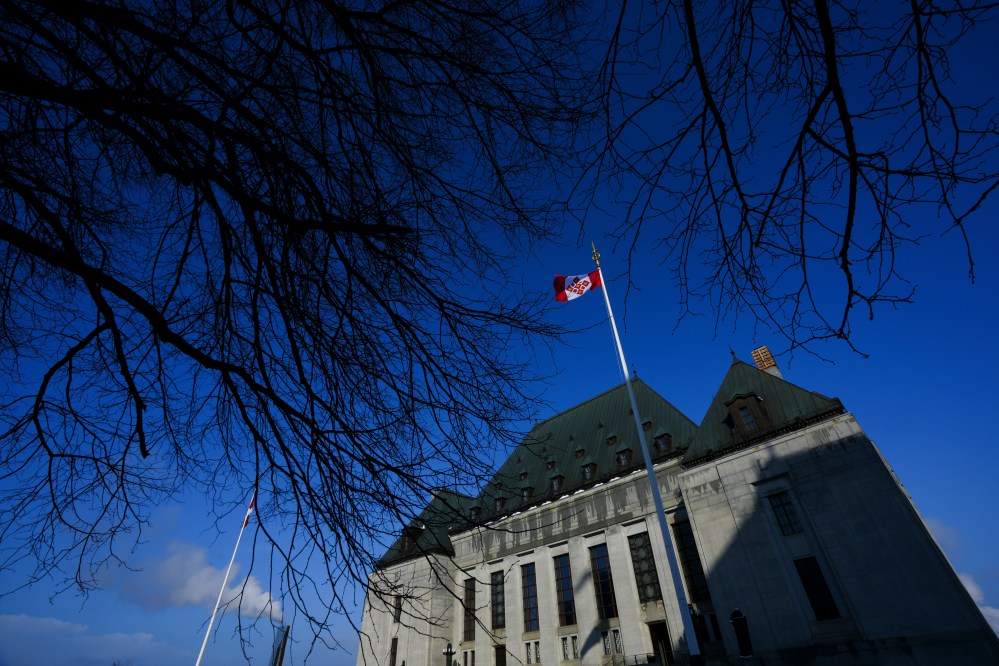
MONTREAL – Premiers across Canada are expected to be keeping a close eye on the Supreme Court this morning as it releases a ruling on the constitutionality of Quebec’s secularism law.
The historic decision could change how provinces are allowed to act when adopting laws that could override Charter rights.
The case stems from a Quebec law known as Bill 21, which bans public servants in positions of authority from wearing religious symbols while on the job.
The legislature pre-emptively invoked a section of the Constitution to shield the law from legal challenges based on Charter rights to freedom of conscience and religion and equality rights.
Since it passed in 2019, Quebec, Ontario, Saskatchewan and Alberta have all invoked the same section of the Constitution to shield some other laws from legal challenges.
These include laws restricting the rights of transgender people in Alberta and Saskatchewan, back-to-work orders in Alberta and Ontario, and Quebec’s language-law reform.
At a news conference in Quebec City on Thursday, Quebec Premier Paul St-Pierre Plamondon said that Section 33 of the Constitution, also known as the notwithstanding clause, is an essential and democratically accepted tool for legislators.
He added that “if the Supreme Court goes forward to centralize power even more and putting provinces in a situation where they cannot have their own say,” the reaction from premiers will be “very heated.”
This report by The Canadian Press was first published Nov. 27, 2026.