
Surgical, diagnostic backlog creeping down but capacity still an issue: Doctors Manitoba
Advertisement
Read this article for free:
or
Already have an account? Log in here »
We need your support!
Local journalism needs your support!
As we navigate through unprecedented times, our journalists are working harder than ever to bring you the latest local updates to keep you safe and informed.
Now, more than ever, we need your support.
Starting at $15.99 plus taxes every four weeks you can access your Brandon Sun online and full access to all content as it appears on our website.
Subscribe Nowor call circulation directly at (204) 727-0527.
Your pledge helps to ensure we provide the news that matters most to your community!
To continue reading, please subscribe:
Add Brandon Sun access to your Free Press subscription for only an additional
$1 for the first 4 weeks*
- Enjoy unlimited reading on brandonsun.com
- Read the Brandon Sun E-Edition, our digital replica newspaper
*Your next Free Press subscription payment will increase by $1.00 and you will be charged $20.95 plus GST for four weeks. After four weeks, your payment will increase to $24.95 plus GST every four weeks.
Read unlimited articles for free today:
or
Already have an account? Log in here »
Hey there, time traveller!
This article was published 31/05/2022 (1643 days ago), so information in it may no longer be current.
The latest data from Doctors Manitoba suggests the province’s surgical and diagnostic backlog has likely peaked, but a lack of capacity is preventing it from moving any faster.
The total estimated pandemic backlog is now 166,903 cases, a decrease of 2,295 from last month’s estimate, according to a news release from Doctors Manitoba.
This is the first time in over a year that the backlog has decreased. This reflects a return in many areas to pre-pandemic volumes which stops the backlog from growing, while in some areas additional capacity above pre-pandemic levels is now starting to clear the backlog.
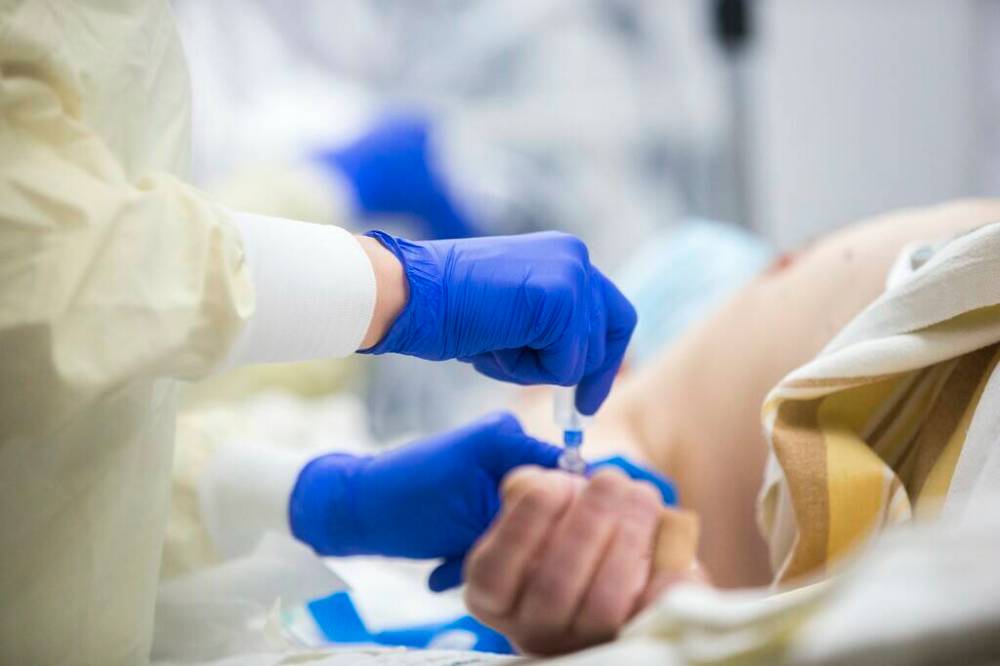
The updated backlog estimate shows:
– 55,728 surgeries as of March 2022, an increase of 158 cases over last month’s estimate.
– 44,094 diagnostic imaging procedures as of March 2022, down 2,095 cases over last month’s estimate.
– 67,081 other diagnostic testing procedures as of April 2022, including allergy tests, endoscopies, mammograms, sleep disorder studies, and lung function tests, an improvement of 358 cases over last month’s estimate.
Estimated decreases in the backlog were largely fueled by additional volumes in ultrasound, mammography and endoscopy.
“It’s some good news and much of the improvement reflects staff that was pulled from other areas and redeployed to be a part of the pandemic response,” said Keir Johnson, director of strategy and communications for Doctors Manitoba.
“Hospitals are getting back to pre-pandemic levels of surgery and testing they used to do. Getting back to those volumes stops the backlog from growing, but doesn’t tackle the backlog itself.”
This change aside, there are still more than 166,000 surgeries and tests waiting to be performed, Johnson said. He pointed out most other areas were basically unchanged from last month, with very modest increases or decreases.
The latest numbers represent a drop of 1.3 per cent. At the current rate, it would take six years to clear the backlog, according to Johnson.
The advocacy organization also put forth a series of suggestions to help clear the backlog faster.
The proposed solutions fall into two categories. First, the system must return to the baseline of pre-pandemic volumes. With the omicron wave of the COVID-19 pandemic, the initial focus has been on returning diagnostic and surgical capacity to pre-pandemic volumes. Once this is done, it will stop the backlog from growing.
The other is to add capacity to clear the backlog. After more than two years, Johnson said Manitoba’s health-care system needs “significant” new capacity to catch up and keep up with the demand for tests and surgeries. This can include adding more capacity in hospitals, where traditionally most testing and surgeries have been performed, as well as considering out-of-hospital capacity in doctors’ offices and surgical centres.
The recommendations come from consultations with different physician specialty groups. To determine the cataract surgery numbers, Johnson said they did collaborate with ophthalmologists to find out what actions need to be taken to tackle the backlog.
In terms of cataract surgery, allergy testing, mammograms and complex lung capacity and respiratory tests, reducing caps and limits would help bring those back to pre-pandemic levels, Johnson said. The issue facing increasing capacity has been caps. The reason there are caps at all is budgetary. Johnson said the provincial government sets aside a limited amount of funds for all of those and once those are reached, there is a freeze.
Another critical component is nurses and technologists. While Doctors Manitoba advocates for physicians, Johnson said this is the biggest barrier to clearing the backlog because nurses and technologists are critical in administering medicine.
The provincial government has been working to increase spaces for nursing students, as well as get out-of-province trained nurses certified faster. Johnson said these steps are a good start, but the government must also care for the nurses already working in the system.
“A lot of staff are stressed out, and burnout is a real issue in the system right now. Morale is at the lowest it’s ever been” he said.
“What they could do is give more incentives for nurses to keep them working in the province. We understand it takes years to train new nurses and technologists, but they need to have supports in place for the ones here and coming in.”
The Sun contacted the Manitoba Nurses’ Union Tuesday for comment but didn’t receive a response by press time.
It’s a difficult situation, but a human resources strategy is critical in clearing the backlog, said Bob Moroz, president of the Manitoba Association of Health Care Professionals, in an email.
Speaking specifically to the growing MRI backlog, wait times are averaging 24 weeks, up 50 per cent from February 2020.
“This month, Shared Health stated that they need 16 additional MRI technologists to drive down wait times but stopped short of providing funding or any other commitments to achieve this,” he said. “Manitobans have gone far too long without a plan.”
Shared Health and Manitoba Health didn’t respond to a request for comment by press time Tuesday.
The full surgical and diagnostic backlog dashboard can be accessed at DoctorsManitoba.ca/backlog.
» kmckinley@brandonsun.com
» Twitter: @karenleighmcki1