
Park re-enacts non-existent ‘siege’
Advertisement
Read this article for free:
or
Already have an account? Log in here »
We need your support!
Local journalism needs your support!
As we navigate through unprecedented times, our journalists are working harder than ever to bring you the latest local updates to keep you safe and informed.
Now, more than ever, we need your support.
Starting at $15.99 plus taxes every four weeks you can access your Brandon Sun online and full access to all content as it appears on our website.
Subscribe Nowor call circulation directly at (204) 727-0527.
Your pledge helps to ensure we provide the news that matters most to your community!
To continue reading, please subscribe:
Add Brandon Sun access to your Free Press subscription for only an additional
$1 for the first 4 weeks*
*Your next subscription payment will increase by $1.00 and you will be charged $20.00 plus GST for four weeks. After four weeks, your payment will increase to $24.00 plus GST every four weeks.
Read unlimited articles for free today:
or
Already have an account? Log in here »
Hey there, time traveller!
This article was published 13/08/2010 (5605 days ago), so information in it may no longer be current.
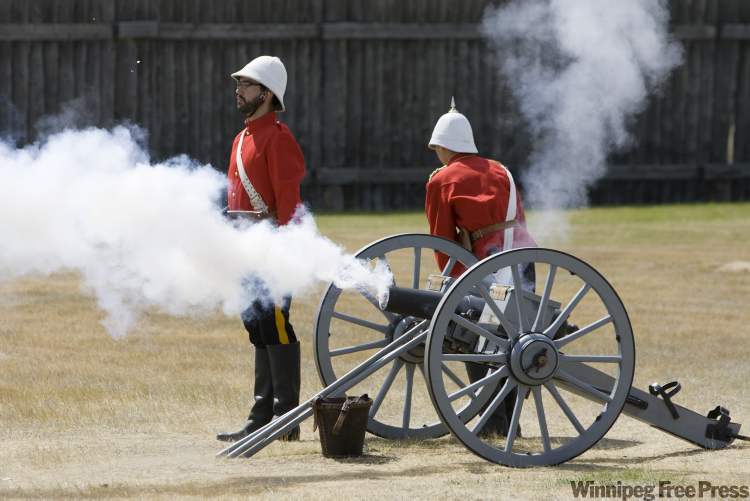
NORTH BATTLEFORD, Sask. — They call it the Siege of Fort Battleford, one of the best-known events of the Northwest Rebellion, and Parks Canada will re-enact it again this weekend from the point of view of the terrified settlers within the fort’s palisades.
But this year, the rebellion’s 125th anniversary, at least one aboriginal historian has had enough.
Tyrone Tootoosis points out there was no siege, just hungry and desperate people come to ask for help, and he’s tired of Parks Canada posters that present the encounter as an armed struggle.
"Our elders call this the white man’s truth," says Tootoosis, a member of the Poundmaker band, curator of the Wanuskewin cultural park in Saskatoon and a performer who calls himself a story-keeper.
"Our people went (to the fort) because they were hungry. They were starving."
In the spring of 1885, what eventually became Saskatchewan was in turmoil as Métis and some Cree led by Louis Riel fought back against what they saw as settler encroachment on their lands. By the end of March, whites had already been killed at Duck Lake and Frog Lake and rumours were spreading like a prairie fire that Cree from Chief Poundmaker’s band were massing to join the revolt.
Terrified, hundreds of people from the town of Battleford poured into the North West Mounted Police fort. Civilians were armed to add to the detachment of 25 Mounties and the fort’s stockade was beefed up for the attack settlers were sure was coming.
On March 30, the Cree came. But no attack followed.
Poundmaker asked to meet with the Indian Agent, but his request was denied. For the next three weeks, 500 settlers and townspeople cowered inside the tiny fort while some Cree roamed the town, looting and burning several homes and emptying the Hudson’s Bay depot.
Occasional shots were fired. A policeman was killed.
But the fort was never attacked or surrounded, nor was its surrender demanded. During the "siege," scouts from the fort often couldn’t find any Cree for dozens of kilometres around.
In fact, Poundmaker was there to ask for the supplies promised his people and to reassure the Mounties that he had no plans to join Riel.
So why, asks Tootoosis, does Parks Canada advertise its annual re-enactment with posters proclaiming "Siege of Battleford," complete with pictures of soldiers aiming rifles and cannons and blurbs reading: "Follow townsfolk and settlers as they seek shelter in the Mounted Police fort to wait out the Siege of Battleford"?
Scott Whiting, director of Fort Battleford National Historic Site, agrees that "siege" doesn’t really describe what happened. But he says that’s not how it felt to the isolated settlers of Battleford.
"There was a siege mentality. That’s what we’re representing."
— Postmedia News