
Fall dig focused on finding fossils
Advertisement
Read this article for free:
or
Already have an account? Log in here »
We need your support!
Local journalism needs your support!
As we navigate through unprecedented times, our journalists are working harder than ever to bring you the latest local updates to keep you safe and informed.
Now, more than ever, we need your support.
Starting at $15.99 plus taxes every four weeks you can access your Brandon Sun online and full access to all content as it appears on our website.
Subscribe Nowor call circulation directly at (204) 727-0527.
Your pledge helps to ensure we provide the news that matters most to your community!
To continue reading, please subscribe:
Add Brandon Sun access to your Free Press subscription for only an additional
$1 for the first 4 weeks*
*Your next subscription payment will increase by $1.00 and you will be charged $20.00 plus GST for four weeks. After four weeks, your payment will increase to $24.00 plus GST every four weeks.
Read unlimited articles for free today:
or
Already have an account? Log in here »
Hey there, time traveller!
This article was published 08/09/2010 (5591 days ago), so information in it may no longer be current.
Calling all weekend fossil hounds!
Volunteers are needed to help unearth some of the oldest reptiles in this part of the world.
The salt-water creatures, of the genus Terminonaris, lived in and near the Mid-Continental Seaway that covered Manitoba during the Cretaceous period.
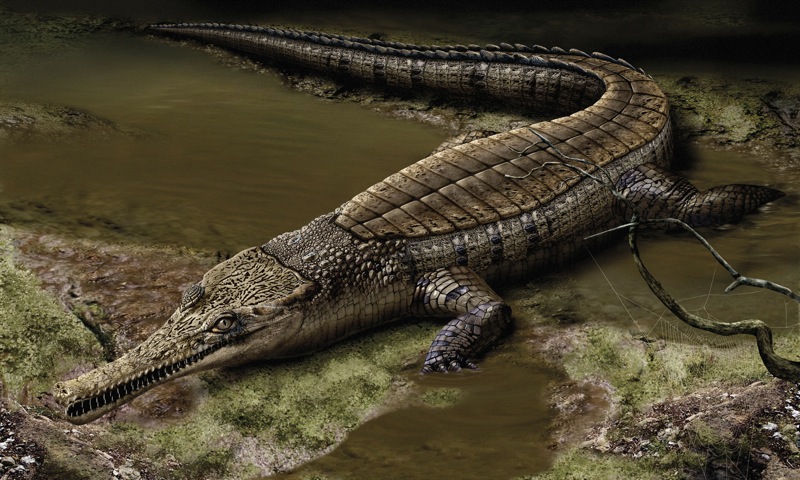
Dauphin resident and paleontology buff Chris Tait found the 100-million-year-old fossilized remains of a six-metre-long marine crocodile in the summer of 2009 along a river near his hometown.
The bones were then sent to be cleaned and prepared at the Canadian Fossil Discovery Centre in Morden.
"We think this is an important find. It’s the first one in Manitoba and it appears to be the seventh one documented in the world," said Anita Janzic, the CFDCs curator. "These are extremely rare fossils and it gives us a glimpse in time in Manitoba that we don’t normally have exhibited."
Since May, the Fort Dauphin Museum has the actual bones of that crocodile’s left leg, tail vertebrae, part of the pelvis, ribs, a shoulder blade and some osteoderms or scales in its collection.
"We have a bunch of fragments as well that have not yet been identified. Those are boxed up for people who want to study them," said Jenna Alexander, the museum’s manager.
A partnership has been struck between the two organizations to find more parts of the crocodile.
"We’re going to be lending our paleontology expertise to help out the museum, giving them hints and field techniques that they might not be aware of," Janzic said.
The museum does house other fossils, including sharks’ teeth and vertebrae that once belonged to another marine carnivore — the plesiosaur.
Along with an archeology lab, the Fort Dauphin Museum also houses collections from the fur trade era, the history of the Métis and pioneers, and other pertinent artifacts.
To register to volunteer for this autumn’s dig, call 638-6630.