
Get booze with groceries
-- Kiosks to go in food stores -- 38 changes in liquor laws
Advertisement
Read this article for free:
or
Already have an account? Log in here »
We need your support!
Local journalism needs your support!
As we navigate through unprecedented times, our journalists are working harder than ever to bring you the latest local updates to keep you safe and informed.
Now, more than ever, we need your support.
Starting at $15.99 plus taxes every four weeks you can access your Brandon Sun online and full access to all content as it appears on our website.
Subscribe Nowor call circulation directly at (204) 727-0527.
Your pledge helps to ensure we provide the news that matters most to your community!
To continue reading, please subscribe:
Add Brandon Sun access to your Free Press subscription for only an additional
$1 for the first 4 weeks*
*Your next subscription payment will increase by $1.00 and you will be charged $20.00 plus GST for four weeks. After four weeks, your payment will increase to $24.00 plus GST every four weeks.
Read unlimited articles for free today:
or
Already have an account? Log in here »
Hey there, time traveller!
This article was published 20/05/2011 (5444 days ago), so information in it may no longer be current.
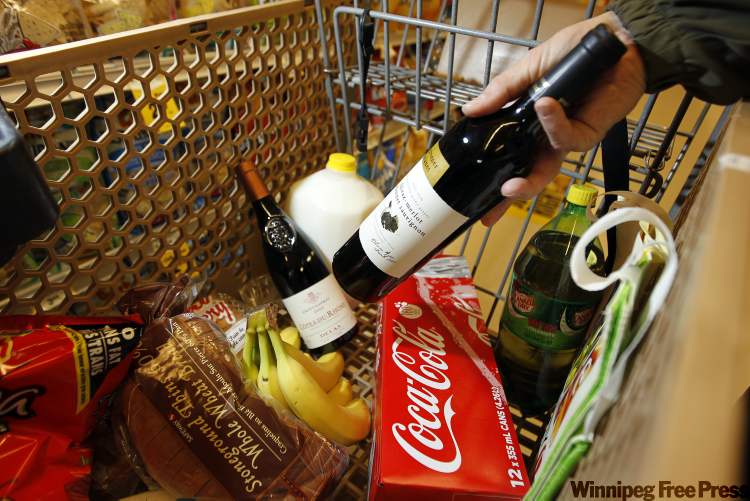
The province wants to revolutionize the way Manitobans can buy booze.
The biggest overhaul of liquor laws in recent memory — 38 changes in all — is part of a sweeping modernization effort that will make picking up your favour beer or wine more convenient.
The Manitoba Liquor Control Commission will soon begin a pilot project that will see MLCC kiosks open in several urban grocery stores. Other mini-outlets will pop up in places like the new Winnipeg airport.
Restaurants will be given the choice of whether to allow patrons to bring wine to their establishments. Beer vendors will be able to sell coolers and ciders. Laws that currently discourage the formation and success of brew pubs will be amended.
Gord Mackintosh, minister responsible for the liquor commission, said Manitoba is poised to become an “international destination” in the next few years with the opening of the Canadian Museum for Human Rights and a new polar bear exhibit at the zoo.
“We want to ensure that we send a very strong message to all those great new visitors that this is a progressive, modern, hospitable province,” he told a news conference trumpeting the proposed legislative changes Thursday.
At the same time, the province will introduce new measures to cut down on rowdiness in bars, combat underage drinking and reduce red tape for businesses selling liquor.
The province will hire three new liquor inspectors for downtown Winnipeg, increase fines for disorderly conduct and place more responsibility on bar owners for disorder outside their premises. It will also allow liquor inspectors and police to close a bar immediately for up to 12 hours when there is an imminent risk to the public.
It will enable the MLCC, which can now sell only booze, to sell 0.5 per cent alcohol drinks and taxi-fare cards.
The province will crack down on the use of fake ID by youths to get into liquor stores and drinking establishments. By 2012, young adults will have to produce a driver’s licence or identity card from Manitoba Public Insurance or, alternatively, two additional pieces of ID, one of which must be photo ID. There will be more serious consequences for licensed premises selling to underage youth.
Consumers will be able to obtain liquor permits for socials online by next year.
Ken Hildahl, the MLCC’s chief executive officer, said the liquor commission will open up to 10 limited-selection boutique stores that will focus primarily on Manitoba and Canadian products. As many as five will be in grocery stores.
Hildahl said he couldn’t say when most of the boutique stores will open, although the first will likely come on stream when the new Winnipeg airport opens in October.
He said the MLCC will ensure the new locations do not compete with private wine stores or the commission’s own outlets.
“These aren’t going to open overnight. It’s going to be a well-thought-out process,” Hildahl said. “We’re not going to flood the market with new outlets.”
John Graham, a local spokesman for Canada Safeway, said his company would be interested in having the liquor commission set up shop in its stores. “We think there is a natural association with grocery shopping and wine and beer shopping,” he said.
Store-run liquor outlets are common in U.S.-based Safeways. In Alberta, the grocery chain has operated liquor outlets in its supermarkets for 15 years. It has 10 such outlets in that province.
The government’s new measures were generally well received Thursday and swift passage of the enabling legislation is all but assured.
The province doesn’t expect to generate more revenue from the rule changes, a spokeswoman said Thursday. “The purpose wasn’t to raise more funds for the province. The purpose was to give more choice to consumers and to crack down on rowdiness and underage drinking,” she said.
Doug Stephen, president of WOW Hospitality, which operates several local restaurants, said his company will likely ramp up plans to create a brew pub at The Forks once the new law takes effect.
Under the proposed new rules, brew pubs will be allowed to do off-sale business and market their beer through liquor commission stores.
“In all, it’s not everything we would like,” Stephen said Thursday of the new rules changes, “but we’re very encouraged. I personally am extremely encouraged about what we’re hearing today.”
Mothers Against Drunk Drivers endorsed the province’s “balanced” approach to liberalizing its liquor laws. MADD liked a rule change that would make it an offence for adults to provide minors with fake ID to buy booze.
“The amendments introduced today illustrate the importance of having a government-run model of alcohol sales and marketing,” said Andrew Murie, MADD’s chief executive officer.
There were also grumblings. The Canadian Restaurant and Foodservices Association said the province missed an opportunity to simplify its liquor- licensing system. Manitoba has 11 different classes of liquor licences, while Ontario has one, said Dwayne Marling, the organization’s local vice-president.
larry.kusch@freepress.mb.ca
Related Articles
Mayor hopeful about brew pub following gov't move
Advertisement Advertise With Us
Advertisement Advertise With Us