
Flood compensation slow, painful
Twin Lakes Beach cottagers wade through red tape
Advertisement
Read this article for free:
or
Already have an account? Log in here »
We need your support!
Local journalism needs your support!
As we navigate through unprecedented times, our journalists are working harder than ever to bring you the latest local updates to keep you safe and informed.
Now, more than ever, we need your support.
Starting at $15.99 plus taxes every four weeks you can access your Brandon Sun online and full access to all content as it appears on our website.
Subscribe Nowor call circulation directly at (204) 727-0527.
Your pledge helps to ensure we provide the news that matters most to your community!
To continue reading, please subscribe:
Add Brandon Sun access to your Free Press subscription for only an additional
$1 for the first 4 weeks*
- Enjoy unlimited reading on brandonsun.com
- Read the Brandon Sun E-Edition, our digital replica newspaper
*Your next Free Press subscription payment will increase by $1.00 and you will be charged $20.95 plus GST for four weeks. After four weeks, your payment will increase to $24.95 plus GST every four weeks.
Read unlimited articles for free today:
or
Already have an account? Log in here »
Hey there, time traveller!
This article was published 28/10/2011 (5476 days ago), so information in it may no longer be current.
Wendy Stevenson used to have a front yard at her Lake Manitoba home.
Alice Dent used to have a cottage.
Like hundreds of other residents and cottagers who used to call the shoreline along Lake Manitoba their spot of heaven, the two say they’re now caught in a web of provincial bureaucracy as they try to get compensation for their losses.
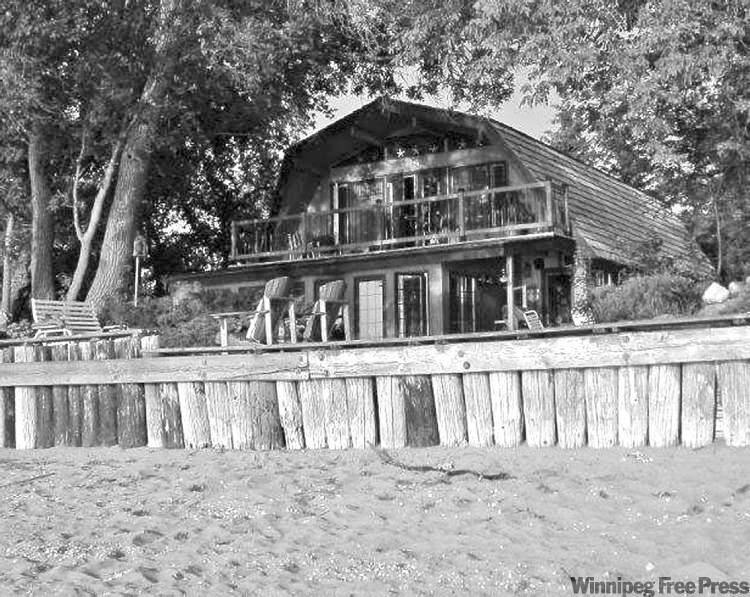
“They keep changing the rules,” said Dent, whose wrecked cottage at Twin Lakes Beach was recently torn down.
To date, Dent has received a $5,000 cheque from the province.
“Ideally, I want what I had before, but it looks like it’s not going to happen,” she said of the modest beachfront cottage built by her father more than 40 years ago.
She said the province has offered $70 per square foot to rebuild, but Dent said that falls far short of the cost of rebuilding, never mind installing a new well and holding tank.
Stevenson said her beef is that the province designated a cottage on an adjacent property her family owns as a boathouse, and won’t compensate for flood damages.
“It has a garage door underneath and they’ve decided that they’re going to classify it as a boathouse,” she said. “They say it’s an outbuilding and they don’t cover stuff like that. There’s a full cottage upstairs and we pay taxes as a cottage, not as an outbuilding.”
She and her husband are full-time residents and are in the process of moving back in.
Stevenson said her family has to fight the province to help pay to fix and move the cottage back from the lake and raise it about one metre on a new foundation.
Dennis Turek of the Association of Lake Manitoba Stakeholders said the organization and municipal officials met with Manitoba Agricultural Services Corp. officials Wednesday night for a tutorial on the compensation programs so everyone in the flood zone is working off the same page. The corporation is heading up the compensation program.
“The application forms and the terms and conditions are beyond what most people can comprehend and understand on their own, especially the older people out there,” Turek said. “Hopefully, with this process we can ease that pressure a bit.”
Turek’s two cottages on Lake Manitoba have also been torn down and he’s waiting to find out how much compensation he will receive.
He said about one-third of the approximately 340 cottages at Twin Lakes Beach are to be torn down and removed.
He also said some of the people who have had their cottages removed are satisfied with their compensation settlements.
“I’ve heard a few cases where people say, ‘Yeah, it was pretty fair.’ They wouldn’t give me the specific number but they seemed to be somewhat happy.”
Ron Bell, hired by the province to act as the appeals commissioner on flood compensation, said if people are dissatisfied with their settlements, they can take it up with his office and they’ll get a fair hearing. He wouldn’t comment on the number of appeals he’s received to date.
“It’s still the early days,” he said. “We have no idea if we’ll see 12 claims or 500.”
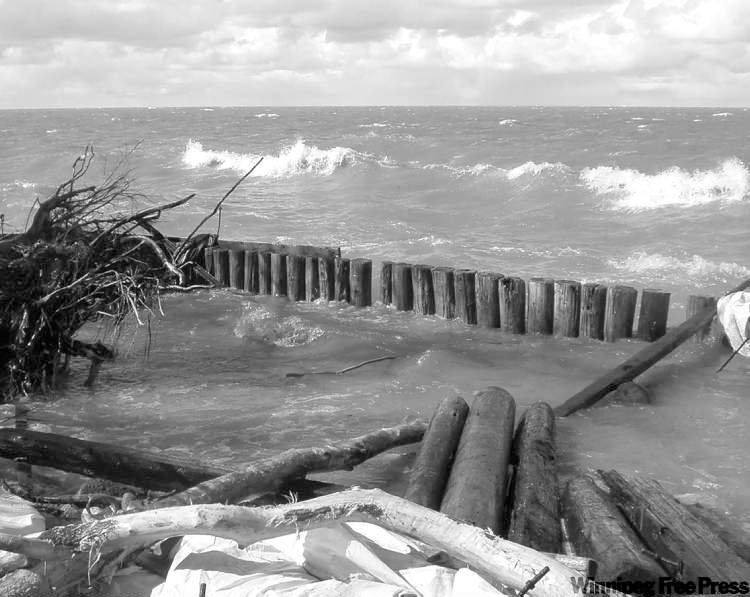
The other challenge facing the province is cleaning up the shoreline, likely starting next year. When storm waves pounded through cottages and outbuildings May 31, tonnes of debris washed back into the lake and marshes behind.
“There are all kinds of things washing up both on the lake and in the marsh, from floating septic tanks, which are the most, to propane tanks plus there are a lot of personal items,” Portage la Prairie Conservative MLA Ian Wishart said.
“As the water goes down, frankly it’s a horrible sight. You’ve got a lot of junk, but it looks like a white, frosty moonscape. It’s not going to grow anything for a while.”
Wishart said property owners will be responsible for some of the cleanup, but removal of uprooted trees and kilometres of broken glass on public property should be the province’s responsibility.
“It’s not something that will be done easily,” Wishart said. “It’s a difficult place to work.”
Stevenson said the marsh at Twin Lakes Beach is full of washed-out TVs, sofas and fridges.
“I just wonder if that land is going to be rendered useless,” Turek said, adding raw sewage, gasoline and paint pollute some sites. “Will it have any value?”
Water Stewardship Minister Christine Melnick said the province intends to restore the marsh at Twin Lakes Beach. Emergency Measures Minister Steve Ashton said the province will work with property owners and municipalities on cleanup once the flood threat is over.
“It’s going to be a difficult, challenging process,” Ashton said.
Agassiz Tory MLA Stu Briese said ranchers are also lining up for compensation. He said many will need to winter their cattle on new land because their own land is still flooded. Thousands of cattle have been removed from the flood zone.
Ranchers also must add costs such as installing electricity and building new structures before calving season next spring.
bruce.owen@freepress.mb.ca