
Emergency outflow not moving enough water, residents say
Advertisement
Read this article for free:
or
Already have an account? Log in here »
We need your support!
Local journalism needs your support!
As we navigate through unprecedented times, our journalists are working harder than ever to bring you the latest local updates to keep you safe and informed.
Now, more than ever, we need your support.
Starting at $15.99 plus taxes every four weeks you can access your Brandon Sun online and full access to all content as it appears on our website.
Subscribe Nowor call circulation directly at (204) 727-0527.
Your pledge helps to ensure we provide the news that matters most to your community!
To continue reading, please subscribe:
Add Brandon Sun access to your Free Press subscription for only an additional
$1 for the first 4 weeks*
- Enjoy unlimited reading on brandonsun.com
- Read the Brandon Sun E-Edition, our digital replica newspaper
*Your next Free Press subscription payment will increase by $1.00 and you will be charged $20.95 plus GST for four weeks. After four weeks, your payment will increase to $24.95 plus GST every four weeks.
Read unlimited articles for free today:
or
Already have an account? Log in here »
Hey there, time traveller!
This article was published 24/11/2011 (5409 days ago), so information in it may no longer be current.
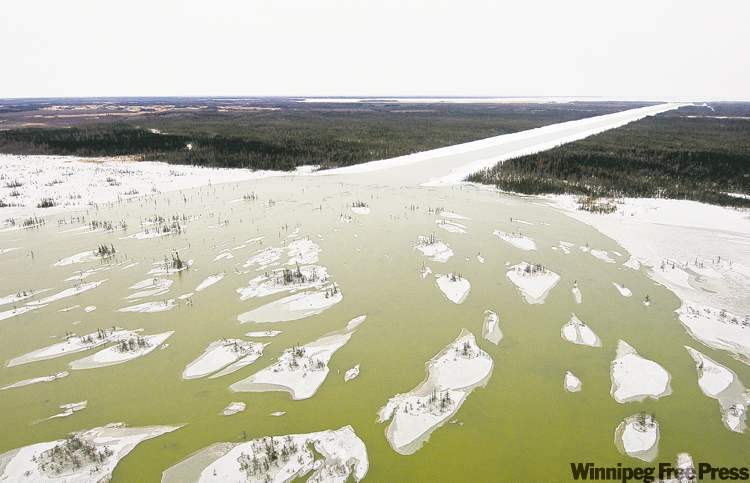
The $100-million Lake St. Martin emergency channel isn’t lowering the water level on Lake Manitoba quickly enough in advance of next spring, residents and cottagers on Lake Manitoba say.
They’re demanding a meeting with Premier Greg Selinger to lobby him to build a second diversion — plans are already on the books — to lower the level of Lake Manitoba before possible flooding next spring brings more widespread destruction.
The province says the emergency channel, which started running Nov. 1, is doing its job and will help reduce the level of Lake Manitoba by April.
“There is concern the channel isn’t doing enough for Lake Manitoba,” said Don Clarkson of the Association of Lake Manitoba Stakeholders, adding Lake St. Martin has already dropped several inches while Lake Manitoba has not.
Clarkson said the province now has to move quickly on building a $60-million channel around the Fairford dam. Lake Manitoba flows into Lake St. Martin through the control structure.
The project is critical because high water flows on the Waterhen River into Lake Manitoba are keeping lake levels high despite the emergency channel, he said.
“It’s inches a week, not inches a day of drop, which is what we need,” Clarkson said earlier this week.
Doug McNeil, deputy minister of infrastructure and transportation, said approximately 5,500 cubic feet per second of water is flowing through the channel from Lake St. Martin, bringing the lake down to 803.01 feet above sea level. When the channel opened the lake’s level was about 804.2 feet asl (above sea level). The excess water coming out the end of the six-kilometre channel has completely flooded a large boggy area and is entering Lake Winnipeg.
Lake Manitoba was measured Monday at 814.85 asl, and McNeil said without the channel, the lake’s level would be more than half a foot higher.
“Eventually, come April 1, we’re going to be two to three feet lower than would have occurred if it wasn’t for the emergency channel,” McNeil said. “It is getting the desired effect for us.”
McNeil also said his group is only looking at the impact of the channel over the past three weeks and not what will happen over the course of the winter.
He said that’s because use of the channel will allow the province to keep the Fairford dam open throughout the winter without fear of ice jams building downstream and backing water up.
The emergency channel will also stay open through the winter — it won’t freeze solid — because the water coming into it from Lake St. Martin is flowing too quickly, he said.
He also said the province can’t begin building the Fairford bypass channel until it expands the Lake St. Martin channel to handle more water.
“Any more water we add into Lake St. Martin we’ve got to be able to take out,” he said, adding the priority now is to build a small secondary channel over the winter to direct excess water from the Lake St. Martin channel away from Dauphin River First Nation to protect it from serious flooding.
bruce.owen@freepress.mb.ca