
Flood refugees to get homes in February
Advertisement
Read this article for free:
or
Already have an account? Log in here »
We need your support!
Local journalism needs your support!
As we navigate through unprecedented times, our journalists are working harder than ever to bring you the latest local updates to keep you safe and informed.
Now, more than ever, we need your support.
Starting at $15.99 plus taxes every four weeks you can access your Brandon Sun online and full access to all content as it appears on our website.
Subscribe Nowor call circulation directly at (204) 727-0527.
Your pledge helps to ensure we provide the news that matters most to your community!
To continue reading, please subscribe:
Add Brandon Sun access to your Free Press subscription for only an additional
$1 for the first 4 weeks*
- Enjoy unlimited reading on brandonsun.com
- Read the Brandon Sun E-Edition, our digital replica newspaper
*Your next Free Press subscription payment will increase by $1.00 and you will be charged $20.95 plus GST for four weeks. After four weeks, your payment will increase to $24.95 plus GST every four weeks.
Read unlimited articles for free today:
or
Already have an account? Log in here »
Hey there, time traveller!
This article was published 21/12/2011 (5422 days ago), so information in it may no longer be current.
OTTAWA — Members of the Lake St. Martin First Nation will start moving to temporary homes near Gypsumville in mid-February.
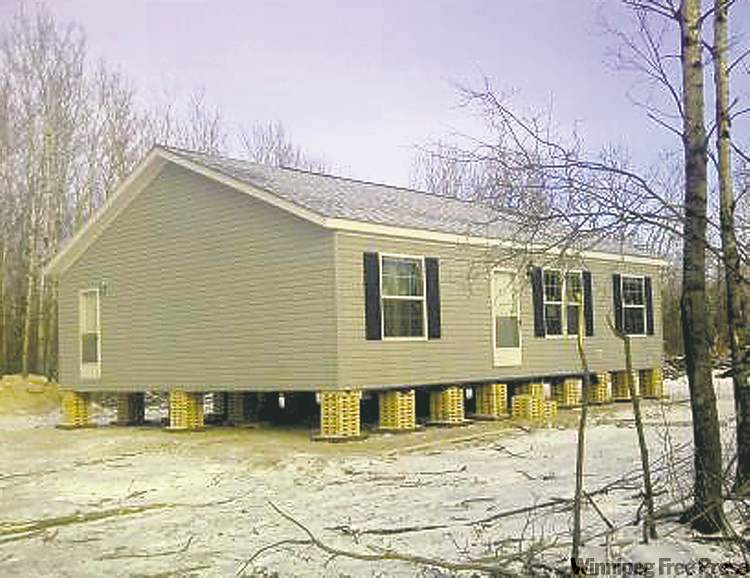
Aboriginal Affairs Minister Eric Robinson told the Free Press the modular homes purchased for band members will begin being shipped to the old radar base in Gypsumville in the second or third week of January. The first residents will begin moving in around the second week of February, Robinson said.
“We want to make sure the people of Lake St. Martin are not stuck in hotels for another year,” he said. “We want to make sure they are taken care of.”
More than 700 residents of Lake St. Martin were forced from their homes in spring by flood waters. There are 487 people living in hotels in Winnipeg, an official with Aboriginal Affairs and Northern Development Canada said. Another 1,687 residents of Lake St. Martin and other First Nations are still out of their homes but living in private accommodations.
Lake St. Martin, about 255 kilometres northwest of Winnipeg, was so damaged most of the homes are uninhabitable. Residents are unhappy in hotels, their kids are scattered in schools around the city and many missed weeks of classes because of the evacuation. A permanent location for the community is still being sought but the province wants to offer up an option other than hotels right away, Robinson said.
“A permanent location for the reserve is what we need to do but that’s going to take a bit of time,” he said. “I would expect that would take a year or two.” Where the permanent homes will go is up to the band, he said. Ottawa will also be part of the decision.
In the meantime, the province is purchasing 150 modular homes, which will be erected on the site of the old radar base, about 10 km from Lake St. Martin’s current location.
In November, nearly all evacuees had signed up to move to the temporary site, which will include a school. It will cost about $40 million, including the purchase of the land.
Lake St. Martin Chief Adrian Sinclair rejected the Gypsumville site plan after the province did not buy the homes from a company in which he was involved. Sinclair did not respond to an interview request Tuesday. He has previously denied his rejection of the plan was because of the company choice but was because there is no plan for a permanent community.
Residents at a recent town-hall meeting also expressed concerns they may end up living at the site permanently and fears the site is on a garter-snake migration route.
Robinson and his federal counterpart, John Duncan, met Friday in Ottawa and discussed Lake St. Martin. In a news release, Duncan said they are committed to finding a permanent location for Lake St. Martin.
mia.rabson@freepress.mb.ca