
Mayor concerned about impact of hog moratorium
Advertisement
Read this article for free:
or
Already have an account? Log in here »
We need your support!
Local journalism needs your support!
As we navigate through unprecedented times, our journalists are working harder than ever to bring you the latest local updates to keep you safe and informed.
Now, more than ever, we need your support.
Starting at $15.99 plus taxes every four weeks you can access your Brandon Sun online and full access to all content as it appears on our website.
Subscribe Nowor call circulation directly at (204) 727-0527.
Your pledge helps to ensure we provide the news that matters most to your community!
To continue reading, please subscribe:
Add Brandon Sun access to your Free Press subscription for only an additional
$1 for the first 4 weeks*
- Enjoy unlimited reading on brandonsun.com
- Read the Brandon Sun E-Edition, our digital replica newspaper
*Your next Free Press subscription payment will increase by $1.00 and you will be charged $20.95 plus GST for four weeks. After four weeks, your payment will increase to $24.95 plus GST every four weeks.
Read unlimited articles for free today:
or
Already have an account? Log in here »
Hey there, time traveller!
This article was published 13/01/2012 (5358 days ago), so information in it may no longer be current.
Brandon Mayor Shari Decter Hirst added her voice to those concerned about the province’s moratorium on new hog barns and expansion of existing ones.
“We need to make sure that the capacity those plants need for their business case is met,” Decter Hirst said on Thursday, referring to Brandon’s Maple Leaf Foods pork-processing plant and Neepawa’s Hylife Foods plant.
“It’s been part of the ongoing discussions with the Manitoba Pork Producers and the Pork Council, the Keystone Ag Producers and the moratorium is having an impact on the amount of hogs we have in this province.”
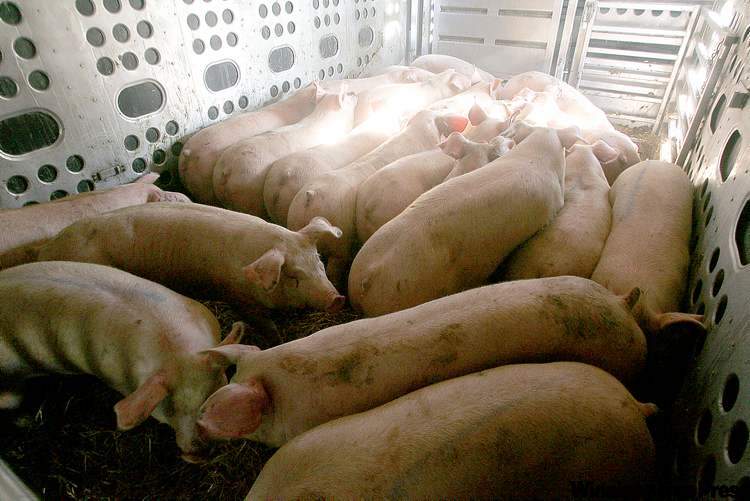
Decter Hirst said if hogs produced outside of Manitoba have to be trucked in to make the processing plants in Westman viable, the transportation costs could eventually cost the industry and the region as a whole.
“I think we need to be aware, not just of the environmental issues, which are important, but of the economic aspect of this discussion,” Decter Hirst said. “Nobody denies Lake Winnipeg has serious environmental issues. What’s the best way of approaching that? It’s easy to make hog production a scapegoat.”
At his Brandon New Years Open House on Thursday, Premier Greg Selinger said the hog industry is not solely to blame for the environmental issues affecting Lake Winnipeg, but it needs to be part of the solution.
“We believe there are practical ways we can move forward together to ensure the hog industry remains active and dynamic in Manitoba and that we can protect water and lakes,” Selinger said. “I don’t think there’s any contradiction there. New technologies have to be applied for the treatment of waste. New methods have to be applied. …There was a time when they used to say it wasn’t our responsibility because it wasn’t us that caused (the damage). There are numerous sources for the nutrification of Lake Winnipeg. Nobody is 100 per cent to blame, but everyone needs to be involved in the issue.”
Selinger pointed to the biological nutrient removal system now employed in Brandon’s wastewater treatment facilities as a practice that, “makes a big difference.”
“Practices are changing based on the science which has told us that the lake is at a potential tipping point and we need to address it now before things get worse,” Selinger said. “That said, we recognize the tremendous role the hog industry plays here, the jobs they create and the exports they generate.”
Decter Hirst said better research should enable the hog industry to expand, and Selinger noted the moratorium was only on “certain practices that put the lake at risk.”
“With proper practices, the industry can do more,” Selinger said. “With proper technologies and assurances that areas at risk are protected, then the industry can do more. That’s always been the approach.”
While hog supply is one concern, pork exports to a lucrative South Korean marketplace are another, especially given an imbalance that favours American pork over Canadian products.
Selinger has pressed the federal government to secure a free trade deal with South Korea. Right now, Canadian pork products are slapped with a 20 per cent tariff. Meanwhile, American producers avoid the tariff because the U.S. has a new trade deal with South Korea.
It’s important because South Korea has become a key new market for Manitoba pork. Exports rose from $9 million in 2006 to $64 million from January to September last year.
Federal Agriculture Minister Gerry Ritz was to address the Brandon Chamber of Commerce on Tuesday, but other commitments will prevent him from coming.
“I was looking forward to having Minister Ritz in Brandon so we could have that discussion face-to-face,” Decter Hirst said.
Decter Hirst hopes the city is part of any discussions regarding an expansion of the hog industry because of its importance to the region.
» kborkowsky@brandonsun.com