Gone Gardenin’: Lowly geranium a thing of beauty, indoors and out
Advertisement
Read this article for free:
or
Already have an account? Log in here »
We need your support!
Local journalism needs your support!
As we navigate through unprecedented times, our journalists are working harder than ever to bring you the latest local updates to keep you safe and informed.
Now, more than ever, we need your support.
Starting at $15.99 plus taxes every four weeks you can access your Brandon Sun online and full access to all content as it appears on our website.
Subscribe Nowor call circulation directly at (204) 727-0527.
Your pledge helps to ensure we provide the news that matters most to your community!
To continue reading, please subscribe:
Add Brandon Sun access to your Free Press subscription for only an additional
$1 for the first 4 weeks*
- Enjoy unlimited reading on brandonsun.com
- Read the Brandon Sun E-Edition, our digital replica newspaper
*Your next Free Press subscription payment will increase by $1.00 and you will be charged $20.95 plus GST for four weeks. After four weeks, your payment will increase to $24.95 plus GST every four weeks.
Read unlimited articles for free today:
or
Already have an account? Log in here »
Hey there, time traveller!
This article was published 23/02/2012 (5283 days ago), so information in it may no longer be current.
As I admire the bright blooms of my over-wintering geranium plants in my sunroom windows, my respect for this old garden favourite is renewed once again. No plant can beat this good old standby’s reliability and ease of care.
I always bring my geraniums in for the winter, but instead of bringing in entire plants, which by the fall have grown into very substantial plants, I bring in a good chunk of each variety, making sure that there is a bit of root attached to each slip. I don’t want to take any chances of losing one of my plants if an unrooted cutting happens to not form roots — and in the fall cuttings do not “take” as reliably as they do in the spring.
Pelargoniums — which is a more accurate name for my plants than geranium — consists mainly of four types: zonal, ivy, Martha Washington (Regal), and scented. It is the first type that I will discuss in today’s column; I wrote about scented pelargoniums in a column a couple of weeks ago.
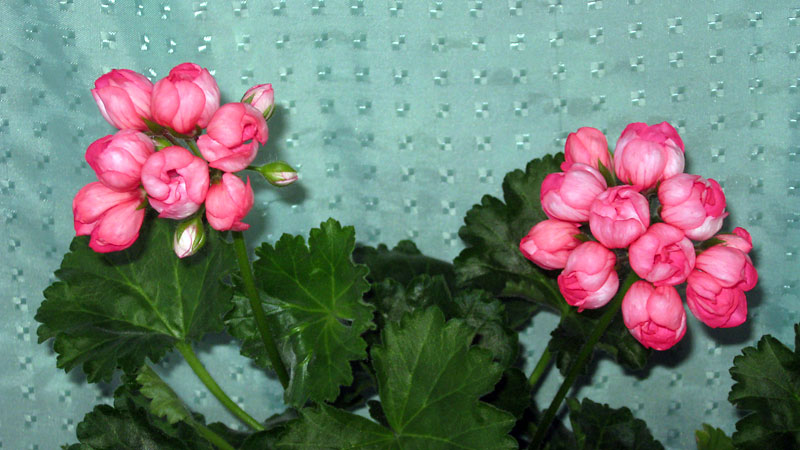
I don’t have Regal or ivy geraniums in my collection. I sometimes have had an ivy geranium in my summer garden but I don’t have much luck wintering them over for some reason so I have pretty much stopped growing them.
And I do not have the right indoor conditions for the Martha Washington pelargoniums and I find that they are not continuous bloomers in the summer garden so I have stopped trying to grow them. They are often offered as pot plants at Easter and for Mother’s Day and perhaps they are best treated as a special occasion pot plant rather than an outdoor garden plant.
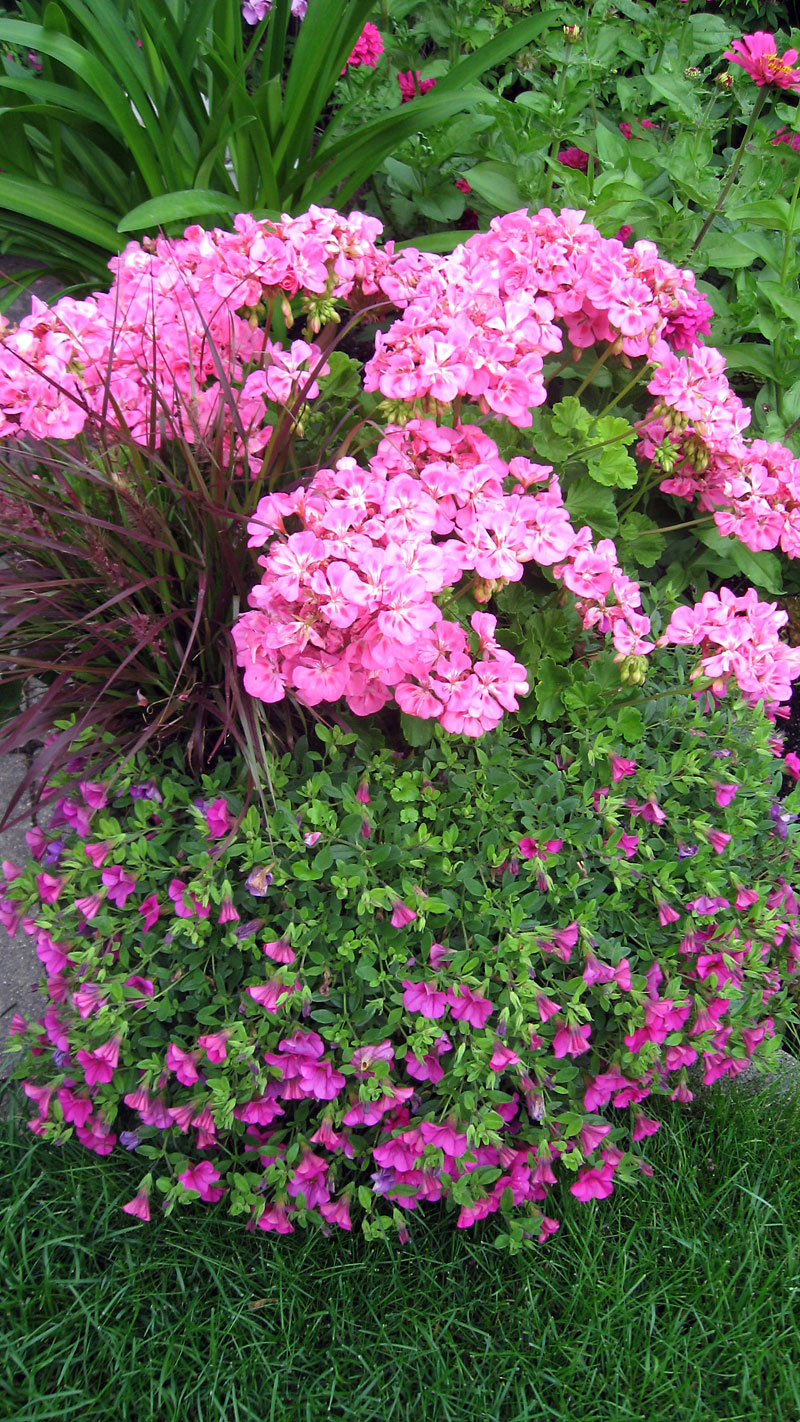
Zonal geraniums have been around for years but were only given the name “zonal” in the 1970s when seed geraniums were introduced to the marketplace. The name refers to the horseshoe-shaped band of colour that is often evident on the leaves — although some of the seed geraniums have this marking as well.
I have several green-leafed varieties of zonal pelargoniums, many of which have sentimental value because I got the original plants from loved ones or good friends. The type of bloom produced by my zonal pelargoniums differs from plant to plant.
I have a lovely lavender/lilac variety, a couple that produce quite different shades of scarlet, and several salmon-flowered types. Last year a friend gave me a dark pink zonal, which has very large flower heads whose earliest florets do not seem to go past until after all the florets have opened.
I have a couple of rosebud-flowered varieties; one has bright red flowers while the other, called ‘Appleblossom’, has white blooms fringed pink. I have a tulip pelargonium called ‘Pandora’, whose individual flowers resemble miniature tulip blossoms.
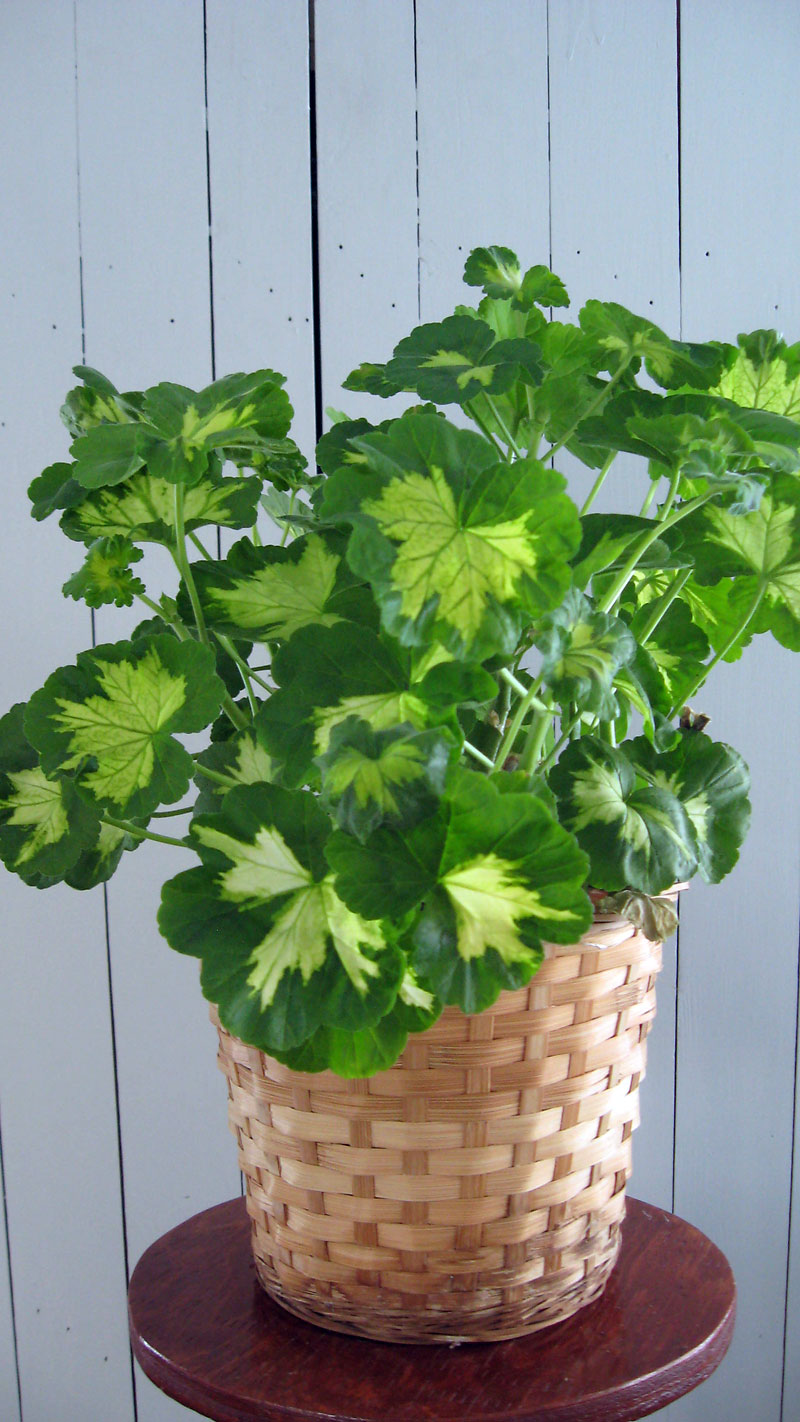
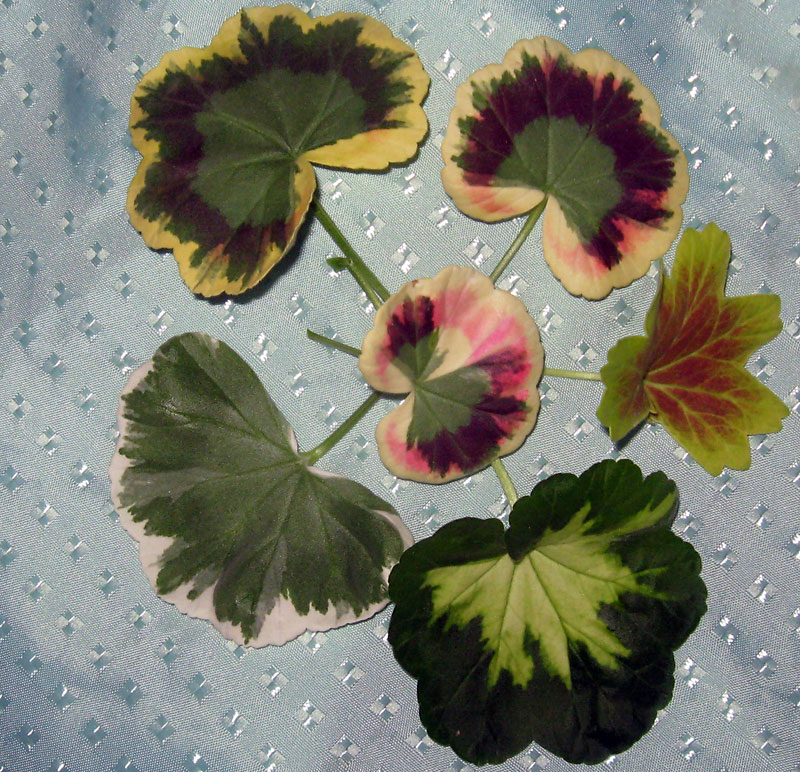
Probably the most interesting zonals in my collection are the ones referred to as brocade geraniums. The term refers to the leaves, which have various colour combinations on their surfaces, providing relief and in some cases making the leaves look like the embossed cloth from which the term originates.
Some of my brocades are bi-coloured green and white or green and gold, while others have a third colour, often some shade of red, on their leaves. One has green leaves with white edges while another has lime-green edges on its foliage.
All of the brocades are zonal pelargoniums and all of mine have the typical zonal flowers — I haven’t got any rosebud or tulip brocades, although I am sure there are such varieties available somewhere. Several of my brocade geraniums seem to have smaller blooms than many other zonals, but they are just as floriferous.
The big advantage of brocade geraniums is that their colourful foliage contributes to the beauty of outdoor plantings because the various colours in their leaves pick up and complement the flower colours of companion plants.
I use several of my brocades in mixed containers in the outdoor garden but at this time of year, I also enjoy the individual specimens as they bloom in my winter garden in the sunroom.
The zonal geranium has long been a standby plant both indoors and outside, and with the development of so many different types, the lowly geranium continues to add colour to our gardens.
Perhaps you will try some of the new zonal pelargonium varieties when you get the chance.
Albert Parsons is a consultant for garden design and landscaping who lives in Minnedosa.
» communitynews@brandonsun.com