
Zoo welcomes endangered horses
Advertisement
Read this article for free:
or
Already have an account? Log in here »
We need your support!
Local journalism needs your support!
As we navigate through unprecedented times, our journalists are working harder than ever to bring you the latest local updates to keep you safe and informed.
Now, more than ever, we need your support.
Starting at $15.99 plus taxes every four weeks you can access your Brandon Sun online and full access to all content as it appears on our website.
Subscribe Nowor call circulation directly at (204) 727-0527.
Your pledge helps to ensure we provide the news that matters most to your community!
To continue reading, please subscribe:
Add Brandon Sun access to your Free Press subscription for only an additional
$1 for the first 4 weeks*
- Enjoy unlimited reading on brandonsun.com
- Read the Brandon Sun E-Edition, our digital replica newspaper
*Your next Free Press subscription payment will increase by $1.00 and you will be charged $20.95 plus GST for four weeks. After four weeks, your payment will increase to $24.95 plus GST every four weeks.
Read unlimited articles for free today:
or
Already have an account? Log in here »
Hey there, time traveller!
This article was published 17/10/2012 (5061 days ago), so information in it may no longer be current.
FOR the first time in its 108-year history, the Assiniboine Park Zoo is home to a pair of Przewalski’s horses.
The two male horses of the endangered species are two years old and are making their home in the northwest corner of the zoo next to the zebras.
“We’re very excited to have another new species at the zoo,” said Tim Sinclair-Smith, the zoo’s director of zoological operations. “Przewalski’s horses are quite rare, which makes this an even greater addition for our visitors since most have never seen them before.”
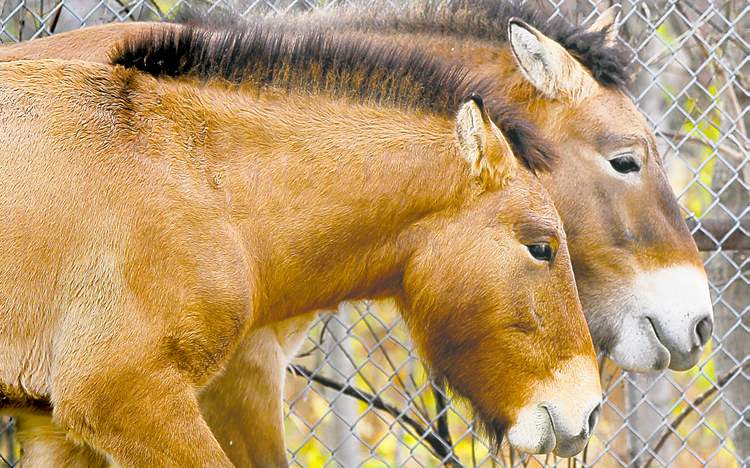
Originating in Mongolia, Przewalski’s horses are smaller than most domestic horses and weigh approximately 200 to 340 kilograms. Standing 120 to 140 centimetres tall, they have stocky bodies, upright manes and a dark stripe down their backs.
The last surviving subspecies of the wild horse, they were once declared extinct until being reassessed in 2008 after successful introductions into the wild.