
Those blooming lady’s-slippers
Advertisement
Read this article for free:
or
Already have an account? Log in here »
We need your support!
Local journalism needs your support!
As we navigate through unprecedented times, our journalists are working harder than ever to bring you the latest local updates to keep you safe and informed.
Now, more than ever, we need your support.
Starting at $15.99 plus taxes every four weeks you can access your Brandon Sun online and full access to all content as it appears on our website.
Subscribe Nowor call circulation directly at (204) 727-0527.
Your pledge helps to ensure we provide the news that matters most to your community!
To continue reading, please subscribe:
Add Brandon Sun access to your Free Press subscription for only an additional
$1 for the first 4 weeks*
- Enjoy unlimited reading on brandonsun.com
- Read the Brandon Sun E-Edition, our digital replica newspaper
*Your next Free Press subscription payment will increase by $1.00 and you will be charged $20.95 plus GST for four weeks. After four weeks, your payment will increase to $24.95 plus GST every four weeks.
Read unlimited articles for free today:
or
Already have an account? Log in here »
Hey there, time traveller!
This article was published 26/07/2013 (4697 days ago), so information in it may no longer be current.
It is lady’s-slipper season. During early July, these showy flowers brighten up the landscape and provide an impressive display for wild-plant enthusiasts.
However, some members of this beautiful orchid family are being threatened with extinction.
While the yellow lady’s-slipper is abundant throughout the Westman region, other less common varieties are also found here, including the small white lady’s-slipper and the showy lady’s-slipper.
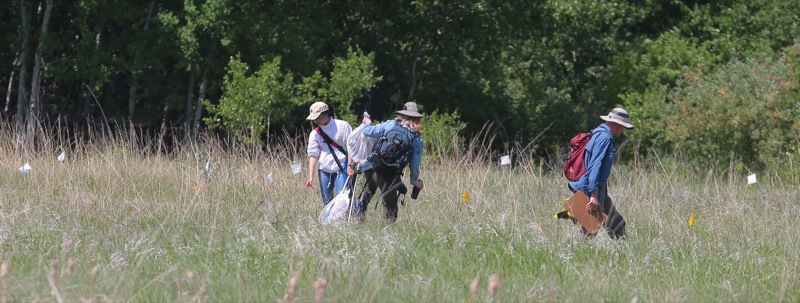
The small white lady’s-slipper is a provincially and nationally endangered orchid, according to the Manitoba Conservation website. It is rare and one of the most precious wildflowers found in this province.
A tiny patch of these rare plants is found south of Brandon. However, its future is in jeopardy as the city develops and spreads.
The largest of Manitoba’s three patches is found in the Tall Grass Prairie Preserve near Tolstoi. The book “Manitoba Wild” provides directions and information on this phenomenal reserve.
Another beautiful member of this family is the showy lady’s-slipper. In most areas, it is currently in full bloom.
“This regal plant is easily distinguished from other lady’s-slippers by its large size and its large pink and white flowers,” according to the book “Orchids of Manitoba.” It normally grows from 40 to 90 centimetres tall.
Although never common, this rare plant has vanished from much of its historical range due to habitat loss, according to the online encyclopedia, Wikipedia. Removing them from the wild is very harmful.
On a visit to one of the “normally” beautiful showy lady’s-slipper patches recently, I was horrified to find about 50 holes in the earth where plants had been dug and removed. This was likely done by a local re-seller who destroyed the beautiful patch of orchids for personal gain.
“Orchids of Manitoba” authors advise against transplanting showy lady’s-slippers from the wild. This book urges orchid friendliness with these suggestions: never transplant orchids from the wild and buy only from reputable sources that do not dig from the wild.
Their website provides a list of reputable greenhouse at nativeorchid.org.
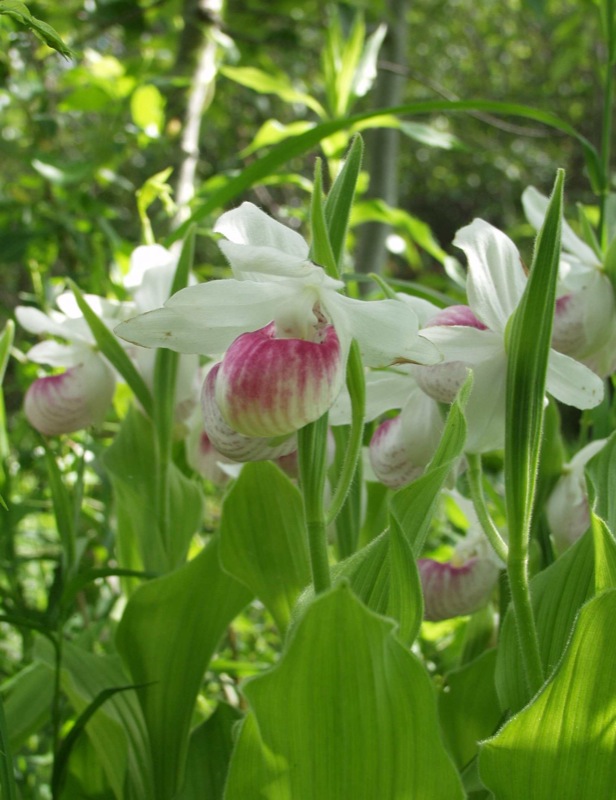
Many wildflowers are late in appearing this year due to a colder than usual spring. The lady’s-slipper is no exception. They appear to be 10 days to two weeks behind schedule in some areas.
The yellow lady’s-slipper is most common lady’s-slipper normally found in Manitoba. They are common in roadside ditches throughout the region. We have two different varieties of this flower, the large yellow lady’s-slipper and the small yellow lady’s-slipper.
The moccasin flower, also known as the pink lady’s-slipper, is another variety found in jack pine forested regions of the province. This pink to deep purplish red flower grows from 10 to 40 cm tall. Good places to view them include the Stead area, Shoe Lake and Tulabi Falls. Again, directions can be found in “Manitoba Wild.”
We are lucky to have such diversity of wildflower and plant species in our province. Mid June to late July is a great time to get out and enjoy our bounty of wildflowers.
Remember to respect and protect our natural resources. If you happen to find any small white lady’s-slipper or any other interesting sightings, please email manitobawild@mts.net
» Bill Stilwell is the award-winning author of three national bestsellers, “Manitoba Wild,” “Manitoba Naturally” and “Scenic Secrets of Manitoba.” Visit his website at manitobawild.com or order books by phone at 204-476-5210.