
Munro books place in history with Nobel Prize
Advertisement
Read this article for free:
or
Already have an account? Log in here »
We need your support!
Local journalism needs your support!
As we navigate through unprecedented times, our journalists are working harder than ever to bring you the latest local updates to keep you safe and informed.
Now, more than ever, we need your support.
Starting at $15.99 plus taxes every four weeks you can access your Brandon Sun online and full access to all content as it appears on our website.
Subscribe Nowor call circulation directly at (204) 727-0527.
Your pledge helps to ensure we provide the news that matters most to your community!
To continue reading, please subscribe:
Add Brandon Sun access to your Free Press subscription for only an additional
$1 for the first 4 weeks*
- Enjoy unlimited reading on brandonsun.com
- Read the Brandon Sun E-Edition, our digital replica newspaper
*Your next Free Press subscription payment will increase by $1.00 and you will be charged $20.95 plus GST for four weeks. After four weeks, your payment will increase to $24.95 plus GST every four weeks.
Read unlimited articles for free today:
or
Already have an account? Log in here »
Hey there, time traveller!
This article was published 11/10/2013 (4746 days ago), so information in it may no longer be current.
Canada is front and centre on the literary stage after Alice Munro became the first in the country to win the Nobel Prize for literature on Thursday.
The 82-year-old revered wordsmith was named as the 110th Nobel laureate in literature and only the 13th woman to receive the distinction, announced in Stockholm.
“I’m particularly glad that winning this award will please so many Canadians,” Munro said in a release issued by Penguin Random House Canada. “I’m happy, too, that this will bring more attention to Canadian writing.”
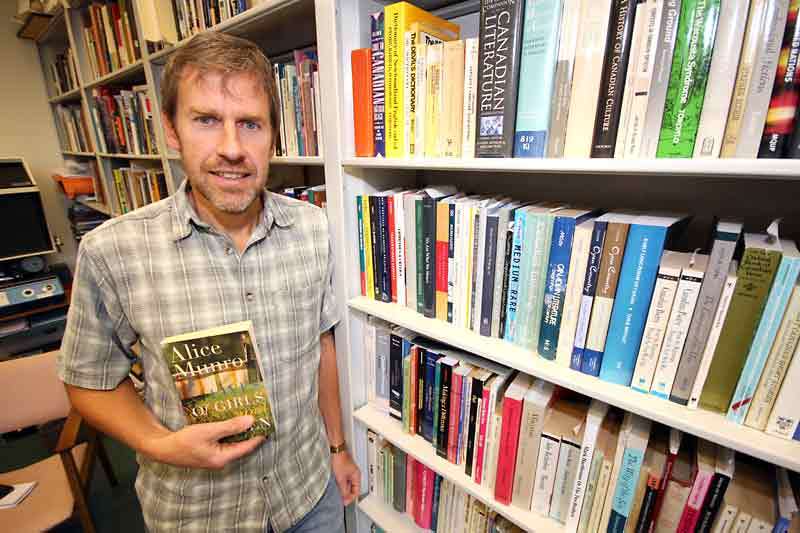
Well known for her short story collections including “Who Do You Think You Are?” and “Lives of Girls and Women,” Munro’s name is included in many anthologies, making her works a staple in many Canadian literature classrooms.
“She’s written great brilliant stories, complex stories about the way human beings treat each other and what we do and our motives,” said Reinhold Kramer, chairman of the English and creative writing faculty at Brandon University.
“She’s not a flashy writer and she hasn’t written novels, and when people read they usually pick novels, but she still has managed to give us so many wonderful stories,” Kramer said.
Her large collection is held in the highest regard within the literary world despite her never publishing a full novel, making it difficult to become a household name on the bookshelf of the average reader. However, in the wake of yesterday’s news, sales of her work shot up drastically according to news reports.
Considered one of the world’s greatest living writers of short stories, Munro last published the 2012 collection “Dear Life,” which won the Ontario-born writer her third Trillium Book Award.
“I don’t know if there are that many writers who are truly great, and Alice Munro and Margaret Atwood I think fit into that category and so I think it’s happened at the right time,” Kramer said.
“We are getting the recognition we deserve, but there are some really great writers around the world … and one of our best has been chosen. It’ll get a lot of people who haven’t read her work to read it and people will realize how good she is.”
Munro has also previously won the Man Booker International Prize for her entire body of work, as well as two Scotiabank Giller Prizes, three Governor General’s Literary Awards, the Commonwealth Writers’ Prize, the inaugural Marian Engel Award and the American National Book Critics Circle Award.
While her stories are largely considered to be accessible on the surface, many say there’s a complex web of themes waiting to be unpacked by the reader in many of her stories.
“It’s sometimes kind of difficult to understand the way human motives are. They’re not always on the surface, but they’re knotted up with different reasons we do things, so that stuff is difficult to untangle sometimes,” Kramer said.
Dale Lakevold, an English literature professor at BU, said the decorated writer often deals with a character’s awareness of their identity and the world around them, often done through the eye of children, exemplified in her 1971 release, “Lives of Girls and Women,” a collection of short stories that documents a recurring character in different stages of life.
“We go through life without really understanding what the significance of certain events are until much later in life,” Lakevold said.
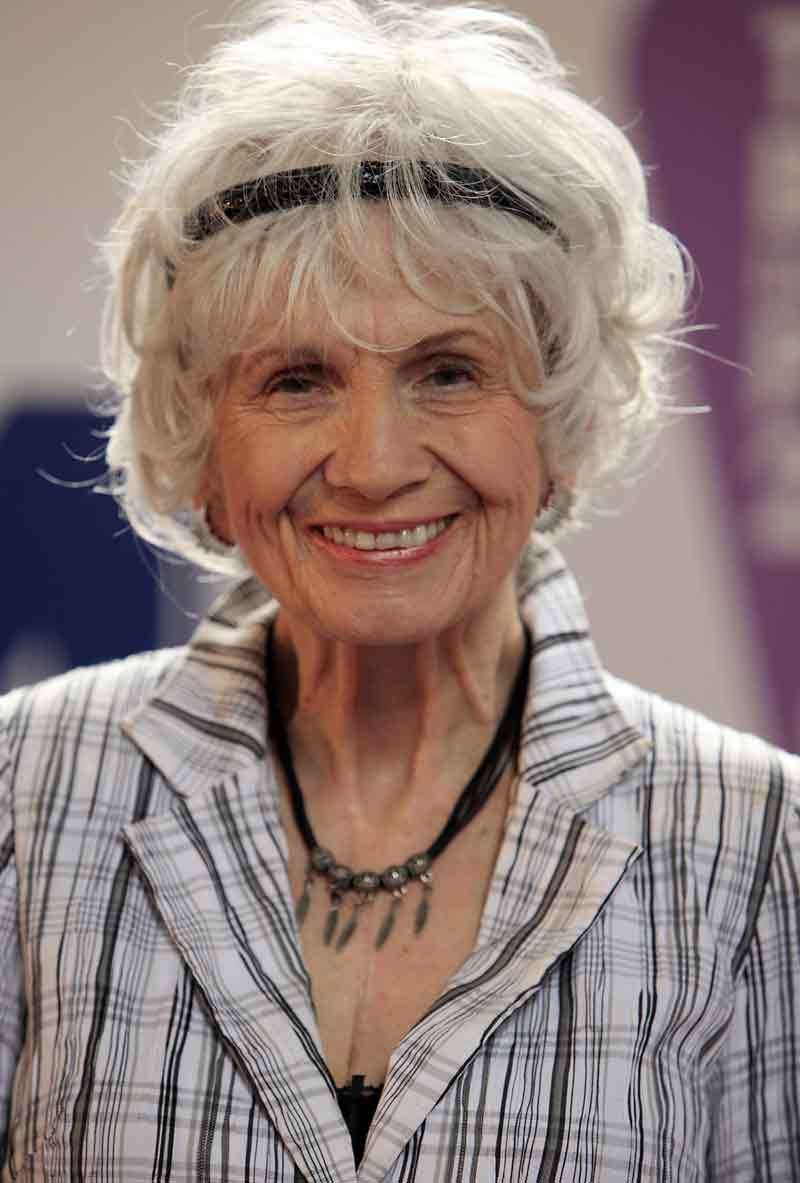
At the time, prize judge chairwoman Jane Smiley noted that: “The surface of Alice Munro’s works, its simplicity and quiet appearance, is a deceptive thing, that beneath that surface is a store of insight, a body of observation and a world of wisdom that is close to addictive.”
Born in 1931, in the southwestern Ontario farming community of Wingham, Munro later moved to Victoria with her first husband, with whom she had three children.
The couple eventually divorced and Munro moved back to Ontario. She married again, to Gerald Fremlin, who died earlier this year.
Munro is beloved by readers around the world for her striking portraits of women living in small-town Ontario.
Three years ago, in an interview at Toronto’s International Festival of Authors, Munro revealed she’d been through a battle with cancer but did not provide specifics.
This past June, she told the National Post she was “probably not going to write anymore.”
Yesterday morning, after the Nobel Prize announcement, she was succinct: “It’s just great. At this moment I can’t believe it. It’s really very wonderful.”
» gbruce@brandonsun.com, with files from The Canadian Press