
Deadly pig virus found in Westman
Advertisement
Read this article for free:
or
Already have an account? Log in here »
We need your support!
Local journalism needs your support!
As we navigate through unprecedented times, our journalists are working harder than ever to bring you the latest local updates to keep you safe and informed.
Now, more than ever, we need your support.
Starting at $15.99 plus taxes every four weeks you can access your Brandon Sun online and full access to all content as it appears on our website.
Subscribe Nowor call circulation directly at (204) 727-0527.
Your pledge helps to ensure we provide the news that matters most to your community!
To continue reading, please subscribe:
Add Brandon Sun access to your Free Press subscription for only an additional
$1 for the first 4 weeks*
*Your next subscription payment will increase by $1.00 and you will be charged $20.00 plus GST for four weeks. After four weeks, your payment will increase to $24.00 plus GST every four weeks.
Read unlimited articles for free today:
or
Already have an account? Log in here »
Hey there, time traveller!
This article was published 10/04/2014 (4380 days ago), so information in it may no longer be current.
A virus that can be fatal to pigs — but doesn’t affect humans — has been detected in western Manitoba.
The Office of the Chief Veterinary Officer confirmed today that a small number of animals being held at a high-traffic site in western Manitoba tested positive for the porcine epidemic diarrhea (PED) virus.
Based on the timing of the symptoms and other preliminary investigation, authorities say it is likely the pigs were infected with at the Westman site and not at their home farm. The infection is through to be due to environmental contamination present at the site
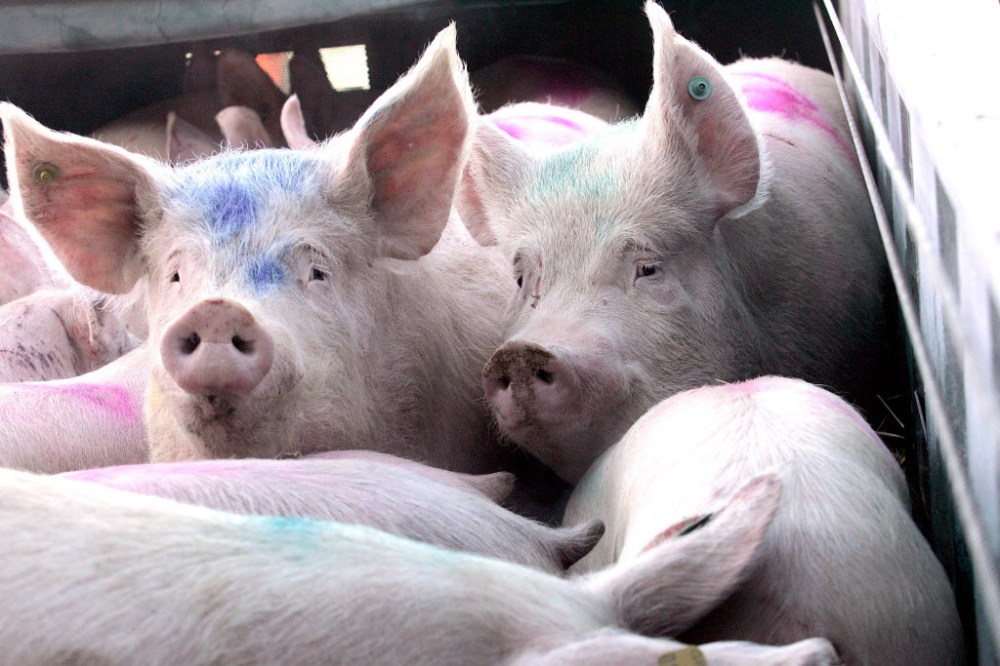
Now, provincial veterinarians plan to follow up with other farms and facilities that had contact with the site. The site is cooperating with the investigation and has taken measures to reduce the possibility of further transmission.
Facilities moving or handling large numbers of pigs are considered high-traffic sites and include livestock assembly yards, federal and provincial abattoirs, truck wash stations and livestock trailers.
The virus is not a food safety issue and it does not affect humans. However, it can be a severe and often fatal illness in newborn and young pigs. Older animals often have less serious symptoms and generally recover.
The province has previously confirmed PED on a farm in southeast Manitoba and also confirmed two positive environmental samples from other high-traffic sites. None are currently believed to be linked to this case.
There are now 51 farm premises that have tested positive for PED across Canada including one in Manitoba, one in Prince Edward Island, one in Quebec and 48 in Ontario. Manitoba remains in regular contact with chief veterinary officers and industry stakeholders across the country on this issue.
Producers are encouraged to remain vigilant with the necessary biosecurity protocols that prevent the spread of PED and are reminded they must report all suspected cases to their veterinarian.
Producers who have questions about PED, biosecurity and related issues should contact the Manitoba Pork Council at 1-888-893-7447 (toll-free) or online at www.manitobapork.com for their resources and expertise.