
More help urged for Mounties with stress disorder
Advertisement
Read this article for free:
or
Already have an account? Log in here »
We need your support!
Local journalism needs your support!
As we navigate through unprecedented times, our journalists are working harder than ever to bring you the latest local updates to keep you safe and informed.
Now, more than ever, we need your support.
Starting at $15.99 plus taxes every four weeks you can access your Brandon Sun online and full access to all content as it appears on our website.
Subscribe Nowor call circulation directly at (204) 727-0527.
Your pledge helps to ensure we provide the news that matters most to your community!
To continue reading, please subscribe:
Add Brandon Sun access to your Free Press subscription for only an additional
$1 for the first 4 weeks*
*Your next subscription payment will increase by $1.00 and you will be charged $20.00 plus GST for four weeks. After four weeks, your payment will increase to $24.00 plus GST every four weeks.
Read unlimited articles for free today:
or
Already have an account? Log in here »
Hey there, time traveller!
This article was published 18/07/2014 (4277 days ago), so information in it may no longer be current.
THEY shared their friendship and their careers at the RCMP.
For almost three decades, Paul Brisson and Ken Barker worked together, socialized and even shared season tickets to Winnipeg Jets games. They also witnessed horrific events together.
Today Brisson, who retired in September 2012 and is still being treated for the same work-related post-traumatic-stress disorder that culminated last weekend in the suicide of Barker, 51, is mourning the friend he tried to help.
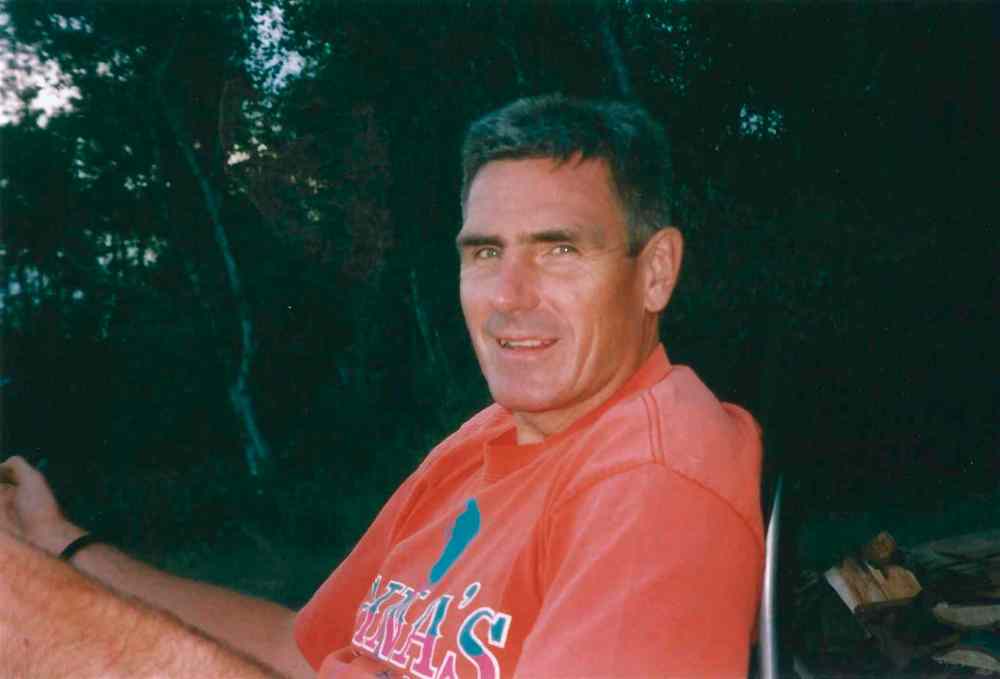
He’s not the only RCMP member and friend Brisson has lost to suicide: Sgt. Pierre Lemaitre, the senior RCMP spokesman who had to respond to accusations the force misled the public about the Taser death of Polish immigrant Robert Dziekanski, killed himself in 2013.
Now Brisson, like Barker’s family, is speaking out to try to raise the issue of PTSD in the ranks of the RCMP and to eliminate the stigma for those who get help.
“We lost Ken to this thing,” said Brisson.
“We have to get these things sooner than later… I tried to get hold of him for months. Maybe I should have camped out on his front yard or banged on his door.”
Barker committed suicide a few years after being diagnosed with PTSD. His family and former colleagues blamed a career of witnessing traumatic events, culminating in him being one of the first on the scene to watch Tim McLean being beheaded on a Greyhound bus in 2008.
Barker — whose funeral is today — received psychological counselling through the years. On Saturday, his estranged wife called 911 after finding he had left his door open and was not responding when she call out for him. He had told her not to enter if she encountered such a situation.
Brisson served 20 years as a traffic-collision analyst followed by 11 years as a forensic specialist. He also helped identify victims of the earthquake in Haiti in 2010.
“We always looked after each other,” Brisson said.
“We talked to each other and kept an eye on things. He was always concerned about me. When I asked him how he was he would say ‘Enough about me, what about you?’ We had a friendship unlike any other.”
Brisson said he had only been on the force a year in 1987 when he met Barker, who had recently joined. Soon the pair were partners in Nanaimo, B.C., where they saw traumatic events.
“We went to a potential suicide where a woman said her son is going to kill himself,” he said. “We saw him go into the bedroom with a shotgun in his hand and then the boom. The mother said, ‘Do something,’ and Ken pulled her and took her outside while I went in. He had blown his head off.”
Barker’s death shook up Brisson so much he scheduled a counselling session for Thursday.
“I was looking for him for strength, and now he’s gone,” Brisson said.
“Every year about this time we get the Jets season schedule and see who will go to what game. I don’t know what I’ll do this year. They were Ken’s seats. It’s starting to sink in.”
Brisson said he still has flashbacks to traumatic incidents and he knows Barker did, too.
“That’s exactly what PTSD is like,” he said. “It can come at any time. You can never shake it off, but how you manage it is important. Unfortunately, Ken couldn’t. He was trying to, but he lost the battle.”
Dave Roach, secretary of the Manitoba Division of the RCMP Veterans Association, said he knows many current and former officers who have struggled with PTSB.
“PTSD can happen to anyone,” Roach said.
“PTSD is something that has to be addressed a little stronger by the RCMP. Any member in for any length of time has seen gross stuff.
“As well, there are a lot of members out there who have it, but just don’t identify it. I can guarantee you this story itself will help people and it helps get more and more momentum about the issue of PTSD.
Meantime, a trio of retired soldiers is marching across Canada to raise awareness about post-traumatic stress disorder. Steve Hartwig of Vancouver, Scott McFarlane of Sparwood, B.C., and Jason McKenzie, of Regina Beach, Sask., served together on a peacekeeping mission in Yugoslavia in the 1990s. All three came home with PTSD.
kevin.rollason @freepress.mb.ca