
Developing First Nations’ land ‘really long process’
Advertisement
Read this article for free:
or
Already have an account? Log in here »
We need your support!
Local journalism needs your support!
As we navigate through unprecedented times, our journalists are working harder than ever to bring you the latest local updates to keep you safe and informed.
Now, more than ever, we need your support.
Starting at $15.99 plus taxes every four weeks you can access your Brandon Sun online and full access to all content as it appears on our website.
Subscribe Nowor call circulation directly at (204) 727-0527.
Your pledge helps to ensure we provide the news that matters most to your community!
To continue reading, please subscribe:
Add Brandon Sun access to your Free Press subscription for only an additional
$1 for the first 4 weeks*
*Your next subscription payment will increase by $1.00 and you will be charged $20.00 plus GST for four weeks. After four weeks, your payment will increase to $24.00 plus GST every four weeks.
Read unlimited articles for free today:
or
Already have an account? Log in here »
Hey there, time traveller!
This article was published 09/08/2014 (4180 days ago), so information in it may no longer be current.
It’ll be years before anything is built on the approximately 400 acres of farmland north of Brandon purchased in 2009 by a group of Manitoba First Nations.
“We’re talking a few more years here,” said Rolling River First Nation Coun. Ivan Amyotte.
Rolling River took the lead of a consortium, along with Waywayseecappo and Keeseekoowenin First Nations, to gain reserve status. They had tenuous plans to build homes, a trade school, service station, and a location for video lottery terminals to employ band members and serve those living in Brandon.
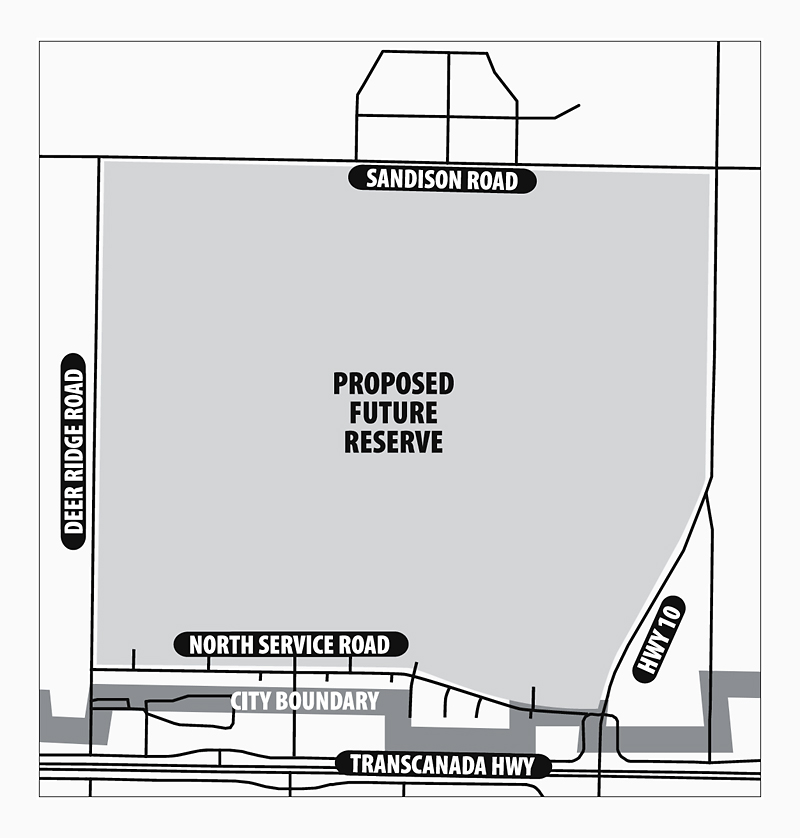
The land was first purchased in 2009 with the goal of building a casino — but those plans never came to fruition.
It spans from the new North Service Road to Sandison Road south of Brandon Municipal Airport, and from Highway 10 to Deer Ridge Road.
“It’s a really long process,” Amyotte said. “The federal government, they’re hard to deal with,” referring to the First Nations’ duty to consult with surrounding municipalities as part of the Addition to Reserves, which he said is time-consuming.
The federal rules around Addition to Reserves also frequently change.
Along with converting the area into reserve land, Amyotte said another hurdle is figuring out how to service the area, including where police, fire, water and sewer services will come from — the same challenge the consortium said it was facing 12 months ago.
“The services most likely need to come from Brandon,” said Brandon city manager Scott Hildebrand.
“We’re willing to work with them. We’re just at a standstill for no reason really, other than it hasn’t been a priority for that group.”
The consortium also wanted the city’s underground services running through the land to the airport to be moved to run along Highway 10, an issue that’s been on the table for about four years.
The cost of moving the services is upwards of $4 million, a project Hildebrand said the city would be willing to contribute toward, so long as it’s cost-shared with other levels of government and the group of First Nations.
The city also awaits a firm development plan from the group of First Nations to begin making any movements on services.
“You only have one opportunity to do it, so you better do it right,” Hildebrand said. “They’re not quite sure what they want to do yet there, and that’s what we’re waiting for.”
He has been in periodic contact with the consortium, but he said there doesn’t appear to be a major push.
The goal of the city is for the area to have the “look and feel” of Brandon and the Westman area, Hildebrand said, and he’s excited about the possibilities about the future of the land — an area in the way of Brandon’s long-term northbound growth towards the airport.
“There’s a lot of opportunity there, it’s a very strategic piece of property and it needs to be taken advantage of,” he said. “I’ve been trying to make it a priority.”
After the province had to buy back some of the property to build a 1.3-kilometre service road on Brandon’s outskirts as part of a major long-term Trans-Canada Highway redevelopment project, Herb Mahood, regional director with Manitoba Infrastructure and Transportation, told the Sun there is no further need for land in that area.
The $3.4-million North Service Road is complete, but no firm timeline or approvals have been set for the other seven phases, which would ultimately see interchanges added to the Trans-Canada at First and 18th streets.
» gbruce@brandonsun.com
» Twitter: @grjbruce