
Spruce Woods named designated area for reptiles during Skink Fest
Advertisement
Read this article for free:
or
Already have an account? Log in here »
We need your support!
Local journalism needs your support!
As we navigate through unprecedented times, our journalists are working harder than ever to bring you the latest local updates to keep you safe and informed.
Now, more than ever, we need your support.
Starting at $15.99 plus taxes every four weeks you can access your Brandon Sun online and full access to all content as it appears on our website.
Subscribe Nowor call circulation directly at (204) 727-0527.
Your pledge helps to ensure we provide the news that matters most to your community!
To continue reading, please subscribe:
Add Brandon Sun access to your Free Press subscription for only an additional
$1 for the first 4 weeks*
*Your next subscription payment will increase by $1.00 and you will be charged $20.00 plus GST for four weeks. After four weeks, your payment will increase to $24.00 plus GST every four weeks.
Read unlimited articles for free today:
or
Already have an account? Log in here »
Hey there, time traveller!
This article was published 25/08/2014 (4238 days ago), so information in it may no longer be current.
SPRUCE WOODS PROVINCIAL PARK — The Assiniboine delta and the sand hills, the desert-like lands within Spruce Woods Provincial Park, has been officially designated as an important area for reptiles and amphibians.
The label, bestowed by the Canadian Amphibian and Reptile Conservation Network, was given to the park during its annual Skink Fest event, which celebrates Manitoba’s only known lizard, the endangered northern prairie skink.
The area has been a draw for local researchers, but park interpreter Jennifer Bryson said the announcement brings hope the park could host scientists from far and wide to study the skink, one of only five known lizard species in Canada.
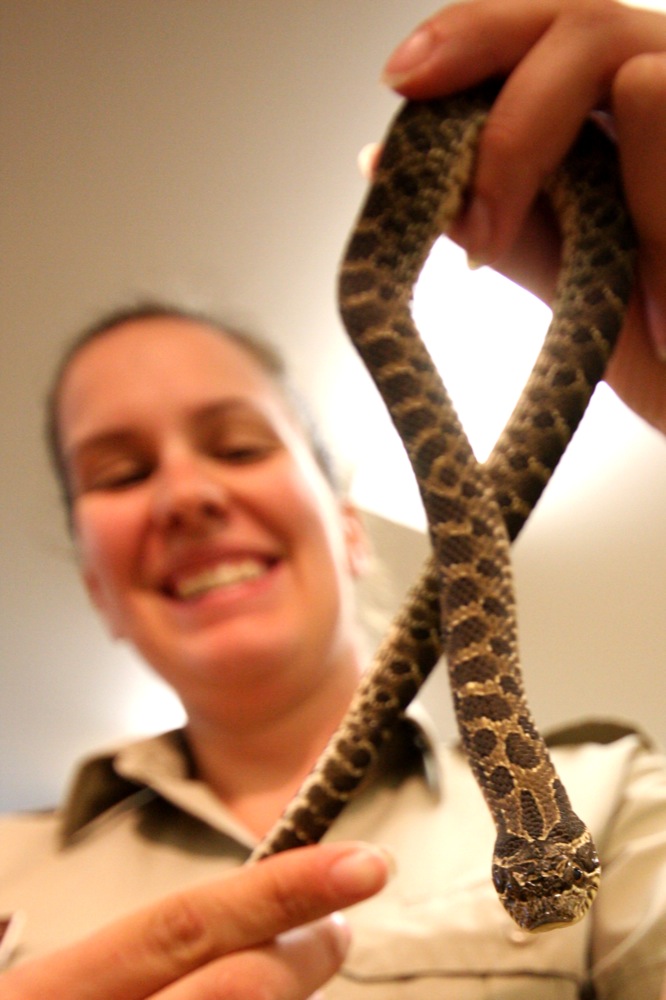
“It’s really unique, this park is amazing. If you’re interested in herpetology, this is the place to go, because there’s no where else you’re going to see all the different reptiles,” she said.
The event is aimed at highlighting the park’s unique landscape that the small population of skinks call home.
“They’re only found within this very small area … the habitat they require in order to survive,” Bryson said.
“They have a perfect habitat right now.”
Over time, the localized subset of skink was left behind in this area, and were able to survive in the sands and hibernate by burrowing under the ground in the winter time.
The southern subspecies can be found in Oklahoma and Texas.
“It’s a protected space, so the population we have here should be OK,” she said.
The skink, which can grow to about eight inches, is well known for it’s ability to detach it’s tail as a defence mechanism.
“When a predator comes, they wag their tail and then drop it,” she said.
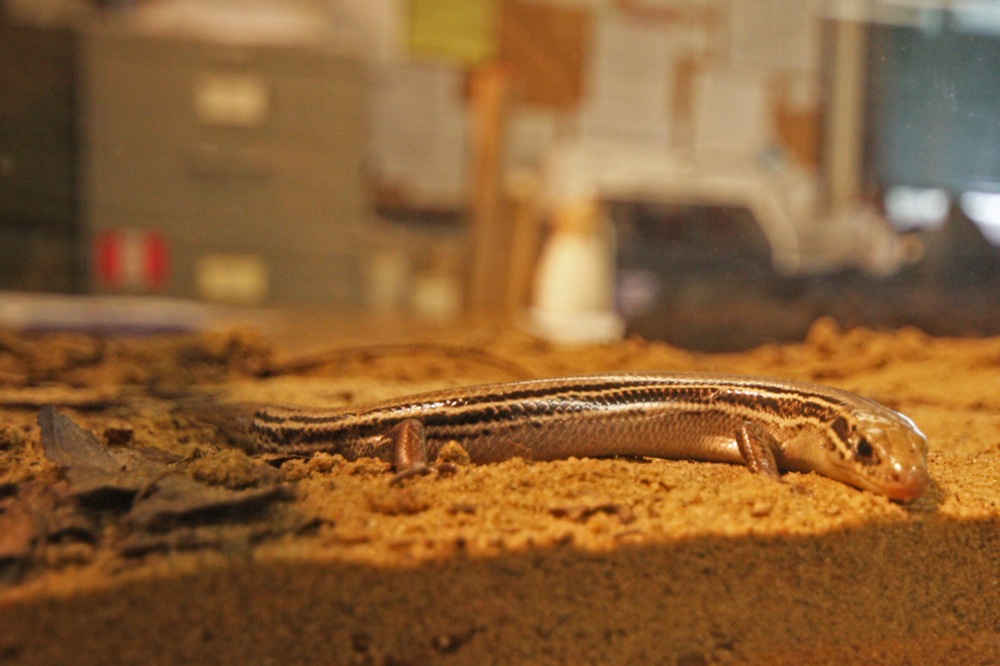
The tail itself will flop around for up to 15 minutes, allowing the lizard to escape. It takes about a year for the skink to regrow its tail.
The Skink Fest event also draws attention to the hog-nosed snake, also found in the same area as the skink.
Spruce Woods is home to 12 species of amphibians and reptiles including three species at risk.
» gbruce@brandonsun.com
» Twitter: @grjbruce