
PTSD ‘prevalent’ among nurses report reveals
Advertisement
Read this article for free:
or
Already have an account? Log in here »
We need your support!
Local journalism needs your support!
As we navigate through unprecedented times, our journalists are working harder than ever to bring you the latest local updates to keep you safe and informed.
Now, more than ever, we need your support.
Starting at $15.99 plus taxes every four weeks you can access your Brandon Sun online and full access to all content as it appears on our website.
Subscribe Nowor call circulation directly at (204) 727-0527.
Your pledge helps to ensure we provide the news that matters most to your community!
To continue reading, please subscribe:
Add Brandon Sun access to your Free Press subscription for only an additional
$1 for the first 4 weeks*
- Enjoy unlimited reading on brandonsun.com
- Read the Brandon Sun E-Edition, our digital replica newspaper
*Your next Free Press subscription payment will increase by $1.00 and you will be charged $20.95 plus GST for four weeks. After four weeks, your payment will increase to $24.95 plus GST every four weeks.
Read unlimited articles for free today:
or
Already have an account? Log in here »
Hey there, time traveller!
This article was published 02/05/2015 (4134 days ago), so information in it may no longer be current.
A newly published report paints a bleak picture of widespread post-traumatic stress disorder among Manitoba’s nurses.
According to the report, published by the Manitoba Nurses Union following nearly a year of research, 52 per cent of union members said critical incident stress and PTSD are common in the workplace.
“What we realized is there hasn’t been much work done around PTSD,” said Sandi Mowat, president of the nurses union, which represents some 12,000 workers. “We have noticed over the last couple of years of increased incidents of nurses who have sudden changes in behaviour in the workplace.”
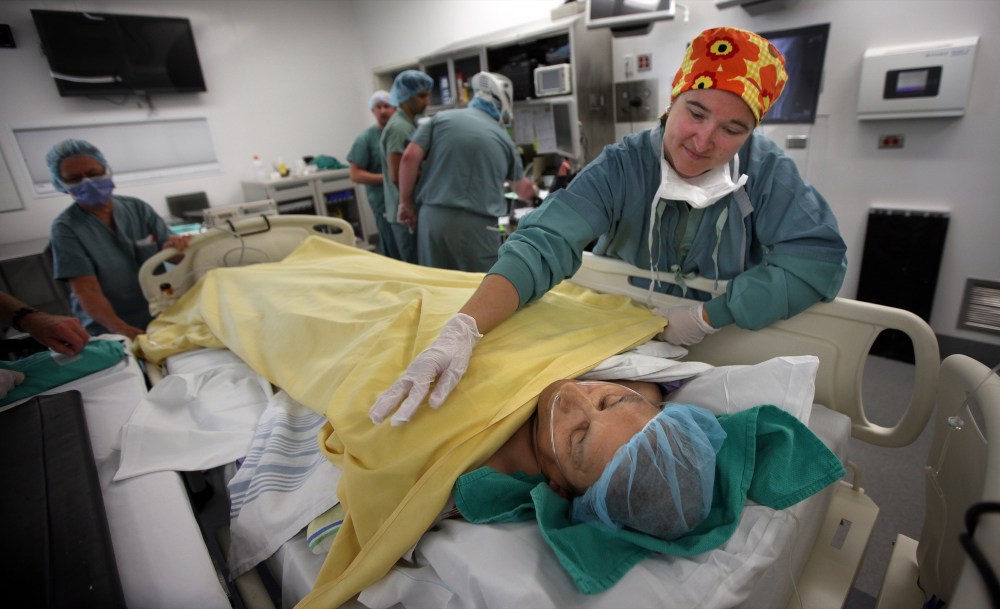
The report serves as a key piece of evidence in the union’s fight to lobby the Manitoba government to change legislation to recognize nursing as a high-risk occupation like police and firefighters.
The union’s report recommends the Workers Compensation Act be changed to enforce presumptive PTSD legislation that includes nurses, meaning the burden of proof wouldn’t lie with the complainant.
“I believe anyone who has a diagnosis of PTSD should be treated through workers comp,” Mowat said. “Nurses have a high-risk profession and should be listed as such.”
If such legislation was to pass, Manitoba would become the only province in Canada to have presumptive PTSD legislation that includes nurses.
Erna Braun, Minister for Labour, Immigration and Workers Compensation Board was unavailable for comment, but said in an emailed statement that the province will introduce legislation that will provide presumptive coverage for workers suffering from PTSD, including nurses, in the spring.
“We are still in the process of developing legislation and the WCB is continuing consultations with stakeholders,” the statement read. “The views of nurses and the recommendations in this report will be shared with WCB and as they move forward with their consultations.
“We will continue to work with our nurses to make sure their workplaces are safe, healthy and allow us to continue to hire nurses at record levels.”
The union’s report, entitled “Helping Manitoba’s Wounded Healers,” goes on to recommend other steps, such as creating supports for employers to address PTSD, creating a healthier work environment within health-care facilities and increase PTSD education for managers.
“What we’re finding is our front-line managers sometimes don’t know how to deal with these issues,” Mowat said.
“The biggest thing for me is that we’ve identified it as prevalent and we have to continue to work on preventative things … and make sure supports are in place.”
<t-5>The report also urges for there to be a way to track and access reported PTSD cases within
the union ranks.
More than half of the nurses surveyed said they’ve been physically abused while on the job and three-quarters have been verbally abused, a number Mowat said has also increased in the last 30 years.
Firefighters in Manitoba, primarily in Winnipeg, were eyeing presumptive legislation last year, which prompted the nurses union to ask questions of their own.
“When you talk about nursing, nurses are just supposed to be able to take care of patients and not worry about anything else. It’s almost like nothing sticks to us,” Mowat said. “People just don’t recognize that nurses spend eight and 12 and 16 hours with patients every single day.”
The top five stressors of PTSD for nurses, according to the report, are death of a child particularly due to abuse, violence at work, treating patients that resemble family or friends, death or injury of a patient after efforts to save a life and heavy patient caseloads.
“We appreciate the report that the Manitoba Nurses Union has provided,” Braun’s statement read. “There is much good advice in here for how we can make nursing not only a more appealing profession, but also one that makes sure the health and safety of nurses remains a top of mind concern.”
» gbruce@brandonsun.com
» Twitter: @grjbruce