
Brandon Research and Development Centre on leading edge of ag tech
Advertisement
Read this article for free:
or
Already have an account? Log in here »
We need your support!
Local journalism needs your support!
As we navigate through unprecedented times, our journalists are working harder than ever to bring you the latest local updates to keep you safe and informed.
Now, more than ever, we need your support.
Starting at $15.99 plus taxes every four weeks you can access your Brandon Sun online and full access to all content as it appears on our website.
Subscribe Nowor call circulation directly at (204) 727-0527.
Your pledge helps to ensure we provide the news that matters most to your community!
To continue reading, please subscribe:
Add Brandon Sun access to your Free Press subscription for only an additional
$1 for the first 4 weeks*
- Enjoy unlimited reading on brandonsun.com
- Read the Brandon Sun E-Edition, our digital replica newspaper
*Your next Free Press subscription payment will increase by $1.00 and you will be charged $20.95 plus GST for four weeks. After four weeks, your payment will increase to $24.95 plus GST every four weeks.
Read unlimited articles for free today:
or
Already have an account? Log in here »
Hey there, time traveller!
This article was published 05/12/2015 (3809 days ago), so information in it may no longer be current.
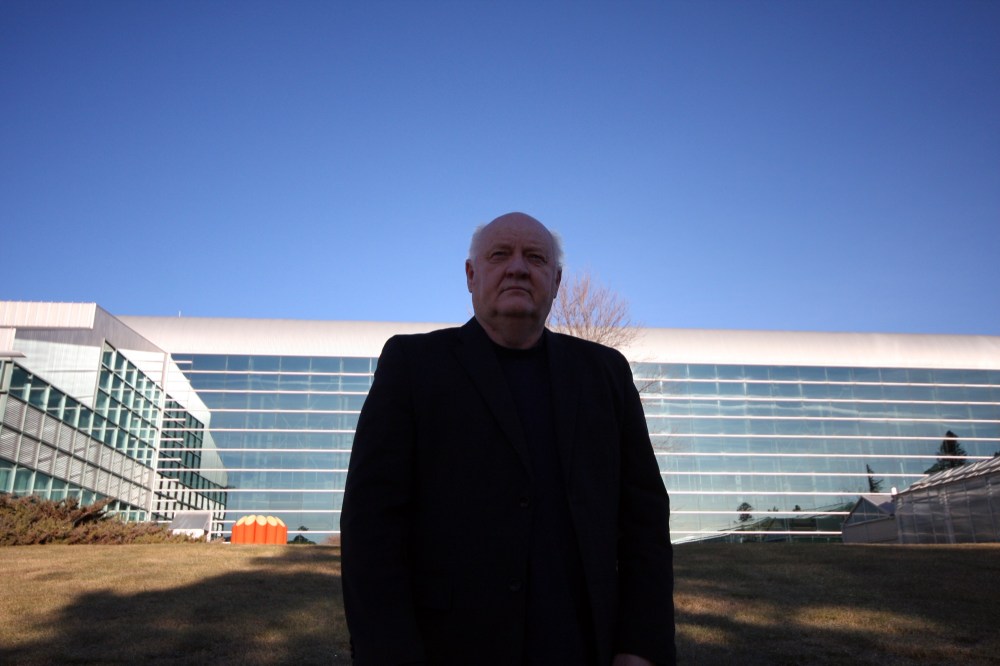
Perched in the valley up a winding road lined with rows of large pine trees is a stately glass building where some of Canada’s top scientists are conducting work on the cutting edge of agriculture technology.
The Brandon Research and Development Centre is one of the original five experimental farms established in 1886.
Associate director Byron Irvine toured The Brandon Sun through the many buildings on the property located on Grand Valley Road on Thursday. The tour is the start of an ongoing series that will profile the centre’s scientists and shed light on their research over the coming year.
Irvine is often asked by the public to explain what the facility does and he admits it’s a challenging task to summarize succinctly.
“It’s a difficult question to answer because we have such diversity of things we do,” he said. “But we’re looking at improving the economic and environmental sustainability of farming.”
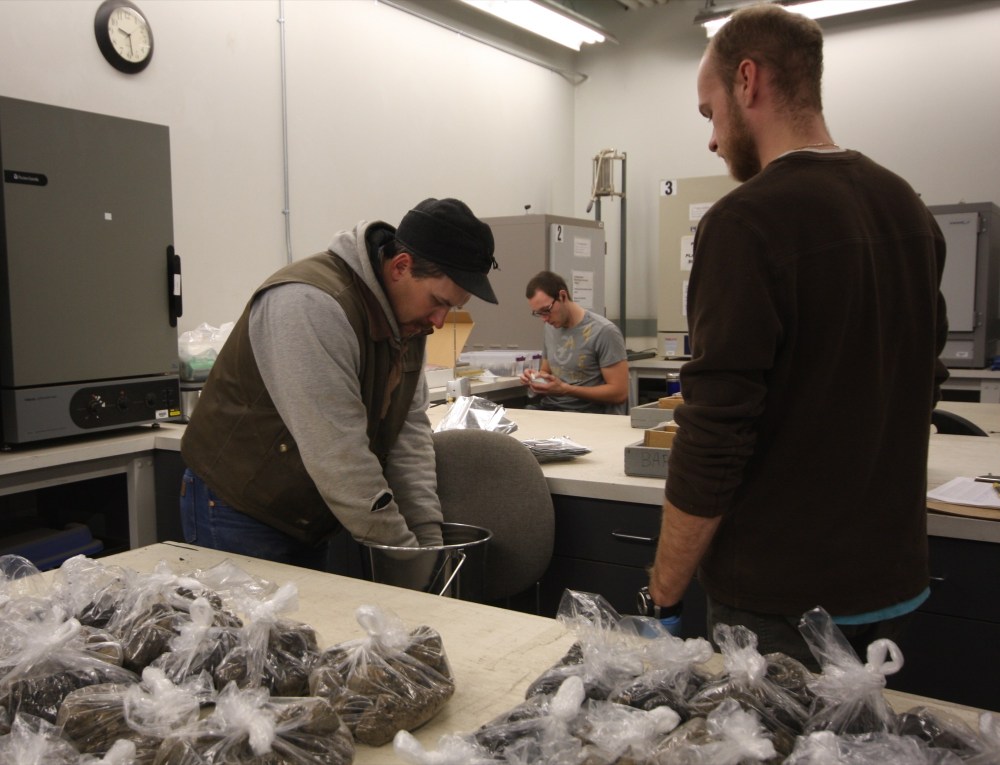
Standing in an older-style quonset with rows upon rows of soil samples from the 2015 crop season, Irvine said the centre focuses its research on two main areas.
“One major program is the plant breeding program with cereal grains,” Irvine said. “The other program is much more diverse, with variants of soil quality, water quality, production, research and a bunch of other areas.”
A farm boy from Melfort, Sask., Irvine said he always had an innate curiosity of how things worked.
While going to school at the University of Saskatchewan, he spent his summers working alongside a researcher who turned him on to the endless questions agricultural science provided.
That curiosity has led to a 37-year career in agriculture research, collaborating with scientists from around the world.
Unlike many researchers — who often spend their entire career at one centre in order to build data sets, protocols and push the science — Irvine said he moved to several research facilities throughout his career.
He started his work in barley breeding, before working on several other projects, including irrigation in Saskatchewan.
“I’m not a very good breeder,” Irvine said with a laugh, adding that the best breeders are often very narrowly focused in their pursuits. “I’m always trying to find out the answers to too many questions for too many crops. Agronomy is my passion.”
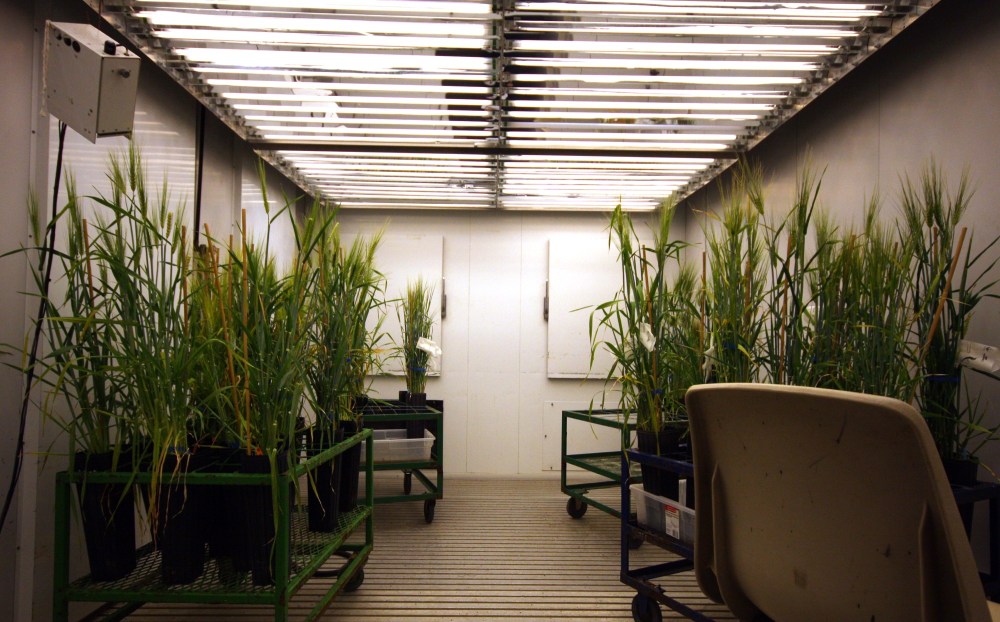
The modern research centre was built in 1992. It houses laboratories, a greenhouse and growth chambers in the basement.
To the southwest of the centre, Irvine walks through a building where senior field operators Jason Ahntholz and Josh Jones break down soil samples to study how nutrients and residues are breaking down in different areas of the province.
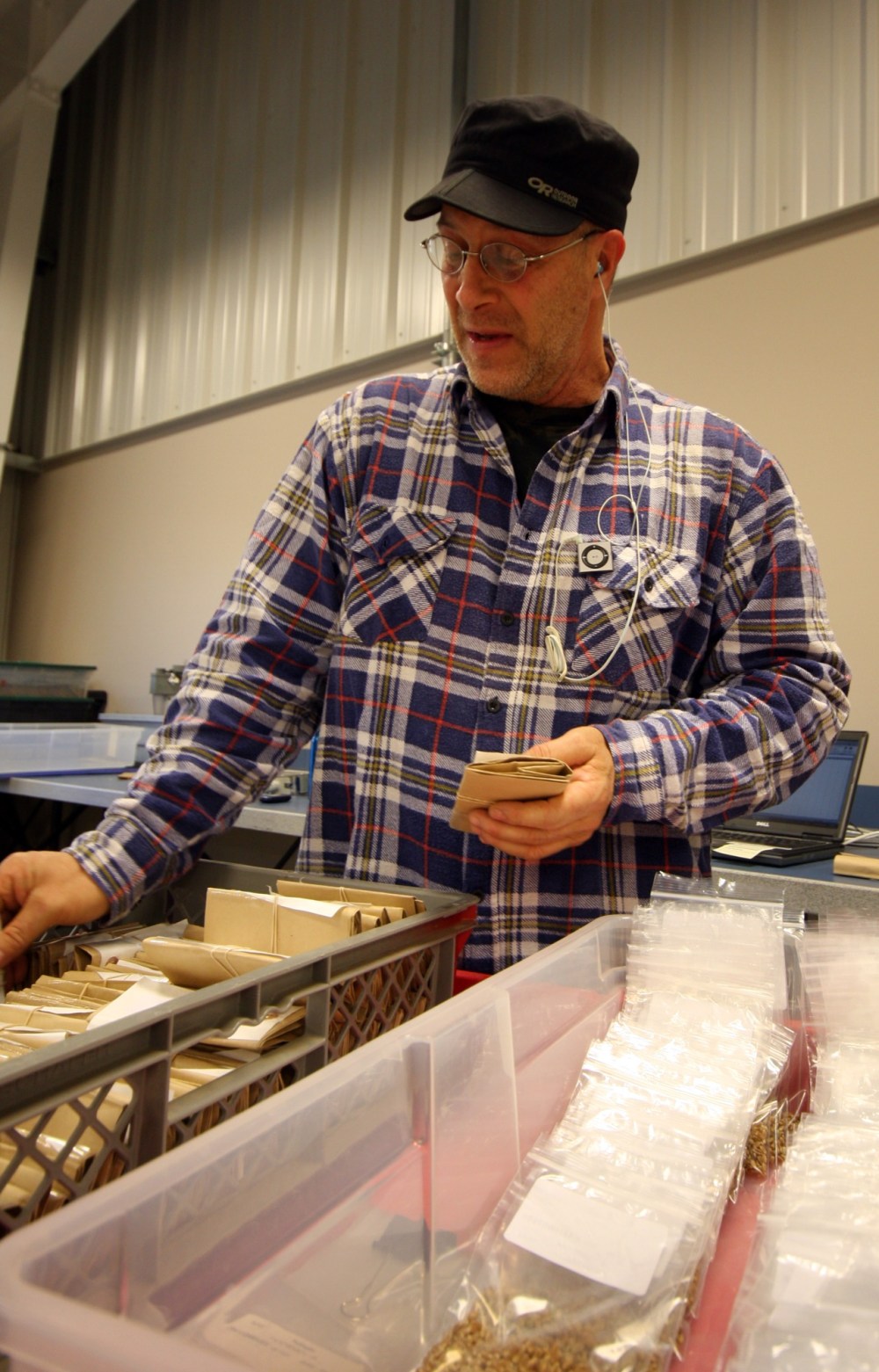
To the north, three connected buildings work in unison as the hub of the breeding program. It’s here that field technician Ray Smith takes measurements on some of the grains grown last year, recording the overall protein content.
Field hands work in conjuction with a host of scientists working in the breeding and agronomy fields.
“Each area integrates like a venn diagram, but they are distinct circles in and of themselves,” Irvine said.
Approximately 90 people work at the centre, although that number fluctuates based on the time of year.
Farming practices such as no-till and, more recently, precision farming, plus breakthroughs in breeding, such as AC Lillian, continue to revolutionize the Prairie landscape, according to Irvine.
What is the next big thing, however, is difficult to predict.
“No one ever knows,” he said. “I’m a little surprised that we haven’t seen more of a shift into nutraceuticals and functional foods.”
Nutraceuticals are foods that have been modified to contain health-giving additives and medicinal benefit.
An example is golden rice, which was engineered to be fortified to combat vitamin A deficiency (VAD) in certain parts of the world.
While VAD results in more than a million deaths each year and hundreds of thousands more people going irreversibly blind, anti-genetically modified organism activists have protested its use and have been able to keep it out of widespread production.
Irvine sidestepped the controversy of GMOs, only to say that the centre’s mandate isn’t to be a regulator and that he trusts the scientists who are charged with making decisions on GMO products.
“We choose to believe that our colleagues in the Canadian government have done a good job testing these things,” Irvine said. “Is there zero risk? I can’t ever say that there is zero risk on any technology that we use.”
The centre lost its beef-grazing program in 2013 when the Conservative government consolidated the research in Alberta.
Irvine said he chooses not to dwell on the past with decisions that are out of his control, and chose not to wade into the controversy about whether the Stephen Harper-led government was too stringent on scientists and their research.
Instead, the centre will continue diligently working where it’s always netted results —the agricultural sector.
“We’re always questioning what is being done, why it is being done and ways to do it better,” Irvine said.
» ctweed@brandonsun.com
» Twitter: @CharlesTweed