
The War From Here — Soldier survives grizzly bear attack in Yukon
Advertisement
Read this article for free:
or
Already have an account? Log in here »
We need your support!
Local journalism needs your support!
As we navigate through unprecedented times, our journalists are working harder than ever to bring you the latest local updates to keep you safe and informed.
Now, more than ever, we need your support.
Starting at $15.99 plus taxes every four weeks you can access your Brandon Sun online and full access to all content as it appears on our website.
Subscribe Nowor call circulation directly at (204) 727-0527.
Your pledge helps to ensure we provide the news that matters most to your community!
To continue reading, please subscribe:
Add Brandon Sun access to your Free Press subscription for only an additional
$1 for the first 4 weeks*
*Your next subscription payment will increase by $1.00 and you will be charged $20.00 plus GST for four weeks. After four weeks, your payment will increase to $24.00 plus GST every four weeks.
Read unlimited articles for free today:
or
Already have an account? Log in here »
Hey there, time traveller!
This article was published 16/01/2016 (3728 days ago), so information in it may no longer be current.
“The Revenant,” Alejandro Iñárritu’s epic 2015 film, has captured the interest of the movie-going public, especially now as it has been nominated for 12 Academy Awards, including best picture.
But the story of American frontiersman Hugh Glass, portrayed by Leonardo DiCaprio, struggling to survive after a grizzly bear attack, is reminiscent of a similar experience closer to home.
Lt. James Murdoc[h] Christie was a Princess Patricia’s Canadian Light Infantry (PPCLI) “original” — one who immediately answered the country’s call to enlist in August 1914. His story of a grizzly bear mauling while in the Yukon made him a minor celebrity overseas. His experience as a hunter and guide in the Canadian north made him one of the formidable pioneering snipers of the Patricias during the Great War.
![Source: Manitoba Free Press, Aug. 15, 1914
Lt. James Murdoc[h] Christie signed with the PPCLI in Winnipeg on 12 August 1914. Mobilized in Ottawa, the PPCLI accepted former soldiers and outdoorsmen from across the country, including Calgary and Winnipeg.](https://www.brandonsun.com/wp-content/uploads/sites/3/2022/04/3-1914-08-15-WFP-PPCLI-Ad.jpg?w=1000)
The legend of Lt. “Jim” Christie endures, his Yukon connection far from forgotten. What receives little mention, however, is his Manitoba connection.
Jim Christie was 19 when he immigrated to Canada from Scotland in 1886. His family made their way to Manitoba and settled near Carman, where Jim farmed alongside his parents, Joseph and “Ellen,” until 1898 when he joined the Klondike Gold Rush.
While living in the Yukon, Christie spent his time prospecting in the summers and trapping in the winters. As well, he acted as a professional hunter and guide, becoming acquainted with many figures famous in Yukon lore such as Dominion surveyor Joseph Keele, journalist Agnes Deans Cameron, RNWMP Insp. Francis Fitzgerald and Const. Sam Carter, and Bishop Isaac Stringer. Christie himself joined the ranks of the famous when he was brutally mauled by a grizzly bear in the fall of 1909 and lived to tell the tale.
Christie reportedly tracked a bear that had raided his hunting cache near his camp 350 miles east of Dawson City. The animal charged and Christie managed to fire two shots from his rifle before sustaining horrific injuries. The bear succumbed to its wounds, but not before it had broken and dislocated Christie’s jaw, torn his scalp, dislodged his eye, snapped his arm and bitten his thigh.
Gravely injured, Christie, following the Rogue River, managed the seven-mile trek to his base camp. There, his trapping partner, George Crisfield, sent Christie to the Lansing trading post, a four-day, 50-mile journey via dog team. After a two-month recuperation, Christie made the 17-day snowshoe and toboggan trip to Dawson City for additional medical care. Doctors forwarded Christie to Victoria via stagecoach so that his jaw and arm could be reset, surgical procedures requiring a six-month hospital stay.
Much to Christie’s disappointment, the bear attack had a greater impact on his health than he expected. Consequently, he returned to Carman, where he worked in the civil service until the war’s outbreak. At one point, Christie clerked in the Manitoba legislative office of the executive council.
Scottish census records show James Christie was born in Perthshire, Scotland, on Oct. 22, 1867. The date is important as Christie did what any resolute enlistee would do when determined to serve his country: he lied about his age. Considerably.
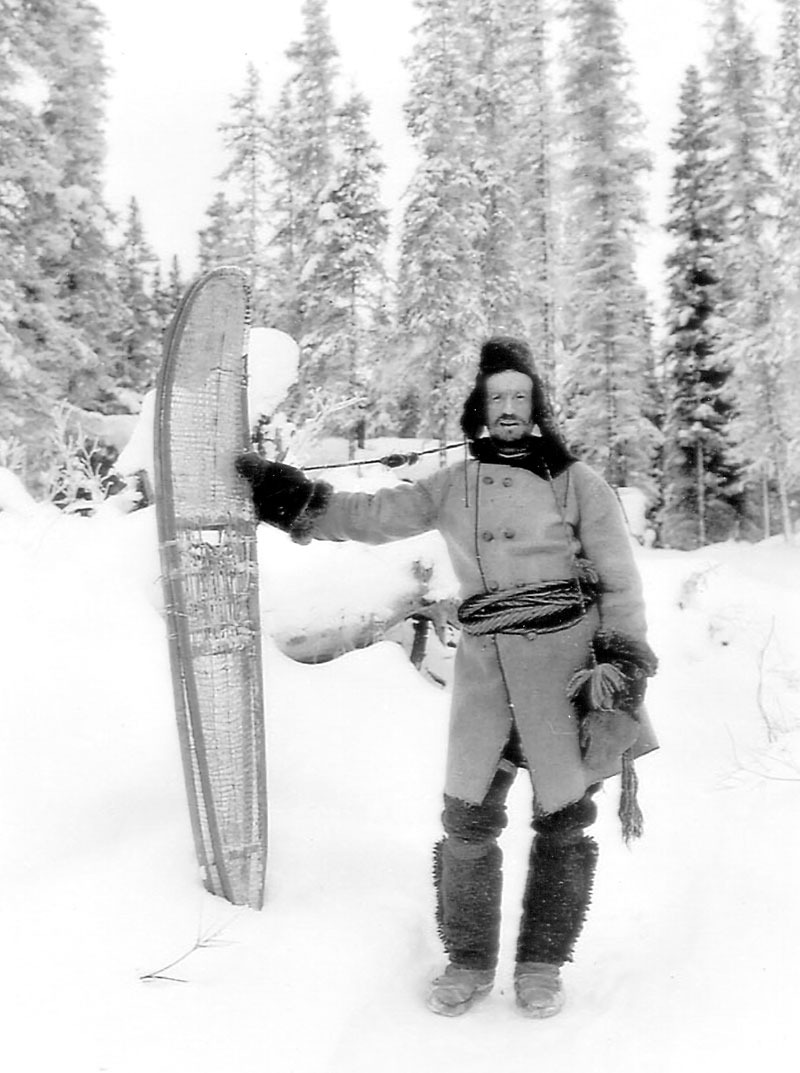
In Christie’s case, he shaved seven years off his age in order to meet the PPCLI’s age limit of 40. Thus when Christie enlisted in Winnipeg, his attestation papers reported his “apparent age” as a convenient 39 years and 10 months. Christie’s occupation as a civil servant was also conspicuously missing from the “trade or calling” section of his attestation papers. James M. Christie, “guide and hunter,” however, had emerged from retirement.
Overseas, Pte. Christie quickly distinguished himself. Patrician historians identify Christie as the “first Patricia sniper.” Scouting officer Lt. Colquhoun recruited Pte. Christie to join the PPCLI’s marksmen section implemented to counteract enemy snipers. The newly formed unit recorded 17 kills on Jan. 25, 1915, in St. Eloi, Belgium, and the PPCLI’s sniping section was born.
In May 1915, Christie was promoted and wounded. Papers stated Cpl. Christie “miraculously escaped death” during a battle where his pocket copy of the New Testament slowed a bullet, leaving him with a minor flesh wound.
In the fall, Cpl. Christie’s sniping and reconnoitering efforts earned him the Distinguished Conduct Medal, the second highest award for “gallantry in action.”
After another promotion in the summer of 1916, Sgt. Christie suffered a gunshot wound to the chest. By then, he had been at the front for 19 months. Days later, he took furlough, returning to Winnipeg and Carman to visit friends and family.
Upon arriving in Manitoba, Sgt. Christie paid a visit to the legislature, where he unexpectedly encountered crown counsel. The following day he testified as an additional witness in the Thomas Kelly trial. (The Manitoba government had filed a civil suit against Kelly to recover costs from the new Manitoba Legislative Building scandal.)
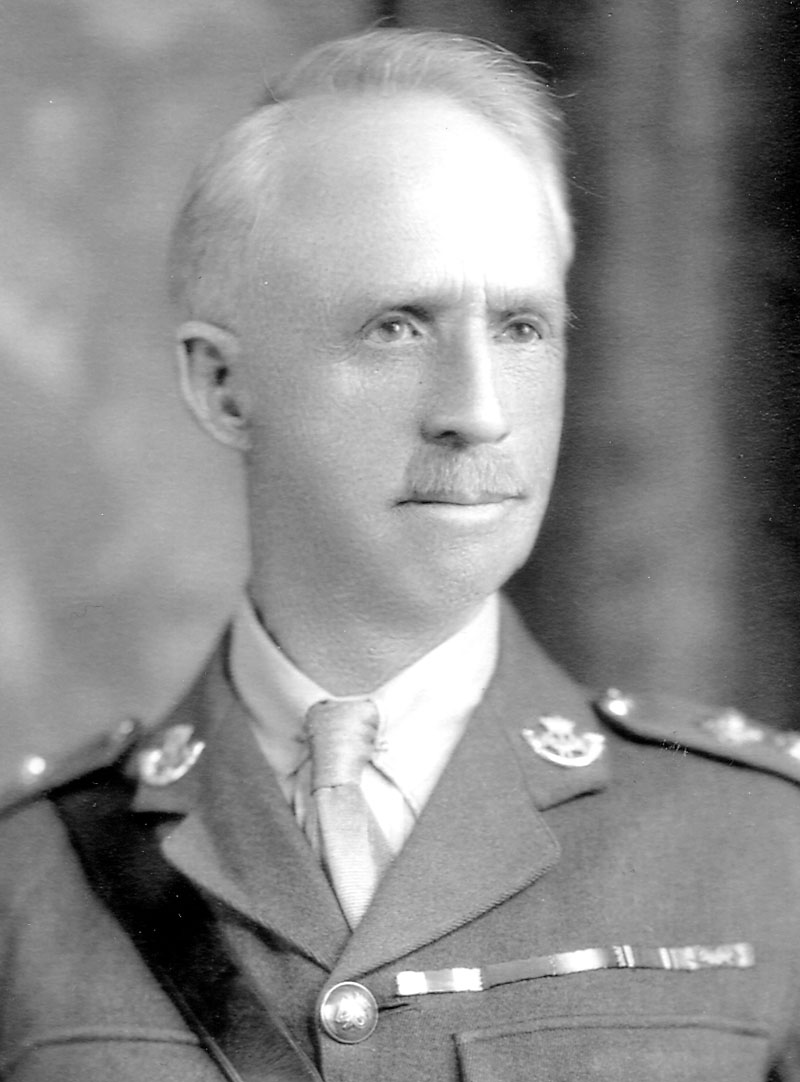
Sgt. Christie eventually returned to the front, not feeling optimistic about surviving the war. He was the last remaining sniper of the 18 first selected by Lt. Colquhoun; all of these men were dead, wounded or captured.
Influenza slowed Christie’s military career in 1918, but not before he was promoted to the rank of temporary lieutenant — or before he distinguished himself in the field at Passchendale, earning the Military Cross.
By then, the lieutenant was complaining of head pain and hand tremors, conditions ruinous to a career as a sniper.
Lt. Christie was a respected sniper and instructor, one who honed his craft and made careful technical notes. Maj. Hesketh-Prichard referenced Lt. Christie in his 1920 book Sniping in France: Notes on the Scientific Training of Scouts, Observers, and Snipers.”
The major believed Christie was the embodiment of the “hunter spirit,” a trait necessary for the successful sniper. While his fellow soldiers boasted Christie never wasted a bullet and made hundreds of kills, the lieutenant did not believe in celebrating numbers. In fact, the press had him on record as stating he never mentioned killing any men in reports he submitted.
Discharged on Aug. 21, 1918, Lt. Christie, 51, returned to Manitoba as “medically unfit.” Newspapers reported Christie returned to Winnipeg and Carman to visit for “a season” while recovering from the effects of gas. Records show Christie worked as a miner in Jasper Park in 1922, but he could not resist the call of the north. Christie worked as a linesman on the Yukon Telegraph Trail before marrying and entering retired life on Salt Spring Island.

According to a great niece’s blog, Christie married a spinster (Elizabeth Calder) who knitted socks for soldiers during the war. She allegedly left a note in one of the socks and maintained a correspondence with Lt. Christie until they married in 1933.
On June 1, 1939, Lt. James Murdoch Christie, MC, DCM, died after having lived a life as remarkable as anything read in the legends or seen in the movies.
» Suyoko Tsukamoto is a Brandonite who has spent three seasons in the archeology field at the Camp Hughes National Historic Site.