
Marking 100 years of women’s suffrage
Advertisement
Read this article for free:
or
Already have an account? Log in here »
We need your support!
Local journalism needs your support!
As we navigate through unprecedented times, our journalists are working harder than ever to bring you the latest local updates to keep you safe and informed.
Now, more than ever, we need your support.
Starting at $15.99 plus taxes every four weeks you can access your Brandon Sun online and full access to all content as it appears on our website.
Subscribe Nowor call circulation directly at (204) 727-0527.
Your pledge helps to ensure we provide the news that matters most to your community!
To continue reading, please subscribe:
Add Brandon Sun access to your Free Press subscription for only an additional
$1 for the first 4 weeks*
- Enjoy unlimited reading on brandonsun.com
- Read the Brandon Sun E-Edition, our digital replica newspaper
*Your next Free Press subscription payment will increase by $1.00 and you will be charged $20.95 plus GST for four weeks. After four weeks, your payment will increase to $24.95 plus GST every four weeks.
Read unlimited articles for free today:
or
Already have an account? Log in here »
Hey there, time traveller!
This article was published 23/01/2016 (3900 days ago), so information in it may no longer be current.
A century after women first won the right to take political office, local women in politics say there’s still progress to be made on gender parity issues.
“As a female, honestly, I do feel that I have to prove myself more than a male would,” said Coun. Vanessa Hamilton (Riverview).
On Jan. 28, 1916, women were granted the right to hold provincial office and to vote in Manitoba provincial elections — a first for provinces across Canada.
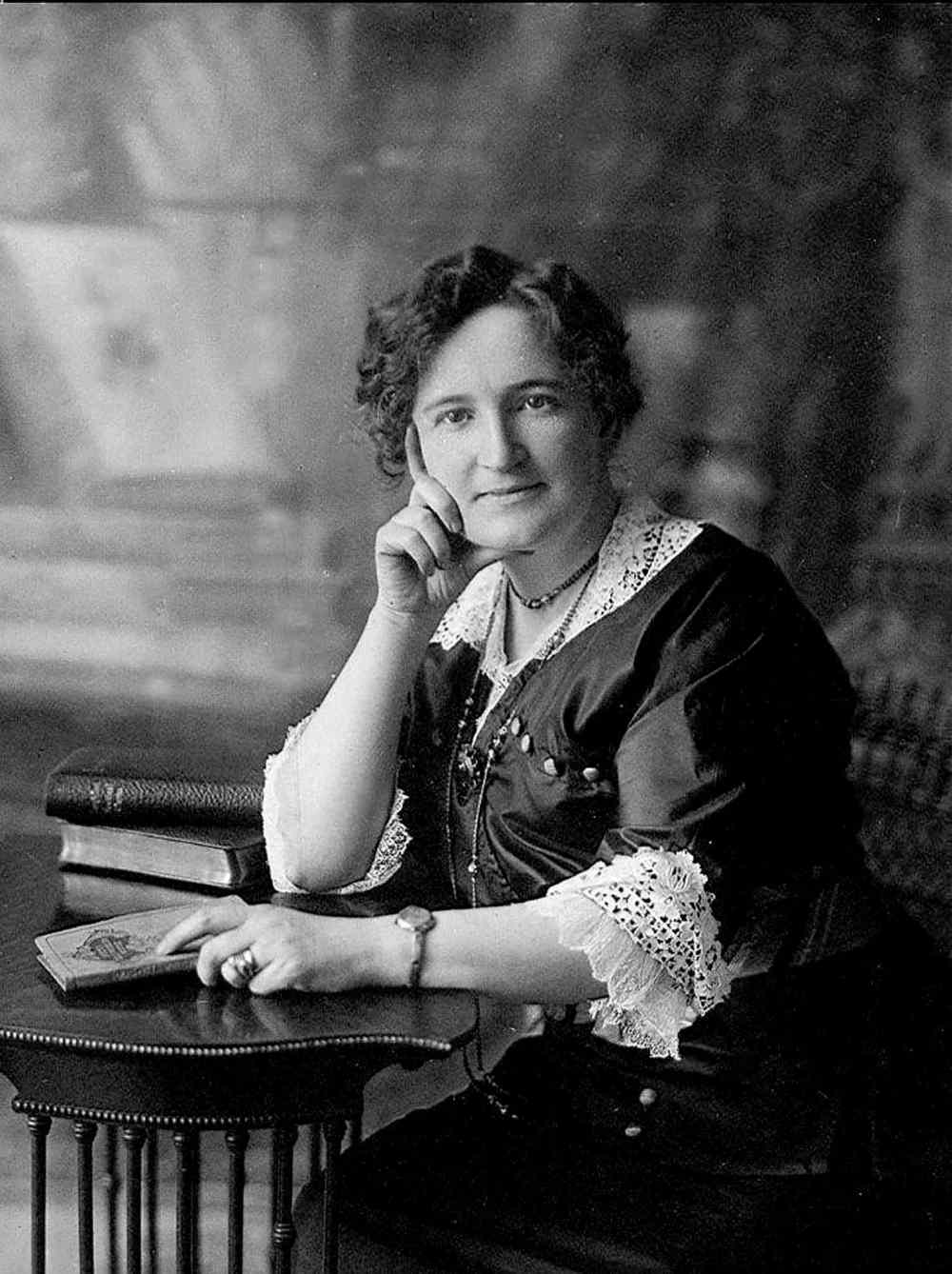
It was a movement that had roots in the Westman region.
A woman’s right to vote was a hot topic locally in the years leading up to 1916.
In a March 1912 edition of the Brandon College Quill (now Brandon University’s student newspaper, The Quill) a poll suggested “only twenty per cent were in favour (of) unrestricted woman’s suffrage.”
The author, an E. Simpson from the Class of 1913, concluded by writing: “We may be sure that in time women will take their place in helping forward the world’s large social interests by the use of the ballot and at that time Brandon college girls will not be behind their sisters in other places.”
She was right.
One of the main drivers behind the movement, Nellie McClung, has a connection to Westman.
McClung moved to Milton, a now-extinct town near Wawanesa, as a small child in 1880. There, she went to — and was eventually married in — the Presbyterian church. Marguerite Cory, the curator of the Sipiweske Museum in Wawanesa, said the area is still proud of McClung.
“We’re sort of hoping, we have a celebration day in Wawanesa, to get a bus and take people around to the places that she (frequented).”
McClung eventually married at a local church and moved to Winnipeg, where she became involved in the suffrage cause.
“They were married at 7:45 in the morning, so they could get the train to Winnipeg for the honeymoon,” she said. Cory is hoping to have a monument created at the church.
McClung’s parents are buried in the Milford cemetery and this summer, a display on the suffrage movement from the Canadian Museum of History will be at the Sipiweske Museum.
It was in Winnipeg where McClung became involved in the suffrage cause in the capital. In collaboration with the Canadian Women’s Press and Women’s Political Equality League, she applied political pressure to spark change.
A skilled and witty writer and public speaker, McClung contrasted the argument for women’s suffrage against politicians pushing for the status quo, targeting then-Manitoba premier Sir Rodmond Roblin in particular.
Roblin lost the 1915 election, and shortly thereafter McClung moved to Alberta. Early in 1916, on the back of an election promise and several petitions, the suffrage bill was passed.
The Brandon Daily Sun afforded the story three paragraphs at the very bottom of its front page of the Jan. 29 edition, under the headline “Women of Manitoba May Be Candidates or Plain Voters.” Given more prominence were stories with headlines like “To Rebuild Bigger and Better” and “Men Volunteering Now, Real Heros.”
Coun. Lonnie Patterson (South Centre) grew up in Wawanesa.
“Knowing who Nelly McClung was and the Suffragettes and their work was something that I learned at a young age,” she said. “Sitting at the council table today, I feel my voice is just as valid as my other colleagues around the table. Would I like to see more women in municipal office, in federal and provincial politics? For sure.”
Patterson said an example was the Association of Manitoba Municipalities annual general meeting last November.
“I know our AMM executive do a lot of work, but there was only one woman that was piped in with that group,” she said.
Patterson said without more women at the table, policymakers will struggle to get a handle on issues like pay inequity, representation and threats to personal safety.
The public-yet-personal nature of politics, Hamilton says, requires a tremendous amount of confidence.
“We need to give those girls, at a young age, the confidence to be able to be in leadership positions,” she said.
Leanne Rowat had that confidence.
She won’t be seeking re-election to the provincial legislature this spring after serving as MLA for the Minnedosa area for two terms. She said there was a common theme on doorsteps during her first campaign, when she was 40 years old and a mother to two young children.
“They said, ‘Leanne, you can’t do this — you can’t leave your kids,’” she said.
Rowat, who has deep political roots in a constituency long held by Conservatives, barely won her first election.
“A lot of it was concern about this young mom driving two or three hours away to represent … and could she do it?” she said.
She could. Rowat won her next election by more than 1,000 votes. She remembers one of her kids running after her car after she was elected and heading off to Winnipeg. That, she said, supplied her passion for the legislature.
“I had a job to do and I felt I needed to make my time worthwhile and validate it to myself and to my constituents.”
Now, Rowat can rattle off names from either side of the legislature who can manage the biggest portfolios in government.
“Those gender stereotypes are leaving.”
But they are still there. South of the border, Rowat says it’s clear Carly Fiorina, the only prominent female Republican presidential candidate, has to work harder to prove her credibility than her male counterparts.
“She’s strong, she knows her stuff and she has to know it in a more confident way, to a more detailed factor,” Rowat said.
Patterson has similar experiences.
“I do find myself in different rooms where I am one of a few or the only female voice in the room. There certainly are times where the male folks in the room, they can raise their voice to make a point. But I have found when I raise my voice to make a point, there’s a reaction, right? You do deal with those subtle things on a regular basis because of different perceptions or thoughts,” she said.
For Patterson, that means the work isn’t over.
“Their work has certainly given us a great foundation to leap off of, but we’re not done in terms of suffrage and inequality.”
» tbateman@brandonsun.com
» Twitter: @tombatemann