
Brandon mom critical of judge’s findings
Advertisement
Read this article for free:
or
Already have an account? Log in here »
We need your support!
Local journalism needs your support!
As we navigate through unprecedented times, our journalists are working harder than ever to bring you the latest local updates to keep you safe and informed.
Now, more than ever, we need your support.
Starting at $15.99 plus taxes every four weeks you can access your Brandon Sun online and full access to all content as it appears on our website.
Subscribe Nowor call circulation directly at (204) 727-0527.
Your pledge helps to ensure we provide the news that matters most to your community!
To continue reading, please subscribe:
Add Brandon Sun access to your Free Press subscription for only an additional
$1 for the first 4 weeks*
*Your next subscription payment will increase by $1.00 and you will be charged $20.00 plus GST for four weeks. After four weeks, your payment will increase to $24.00 plus GST every four weeks.
Read unlimited articles for free today:
or
Already have an account? Log in here »
Hey there, time traveller!
This article was published 14/04/2016 (3650 days ago), so information in it may no longer be current.
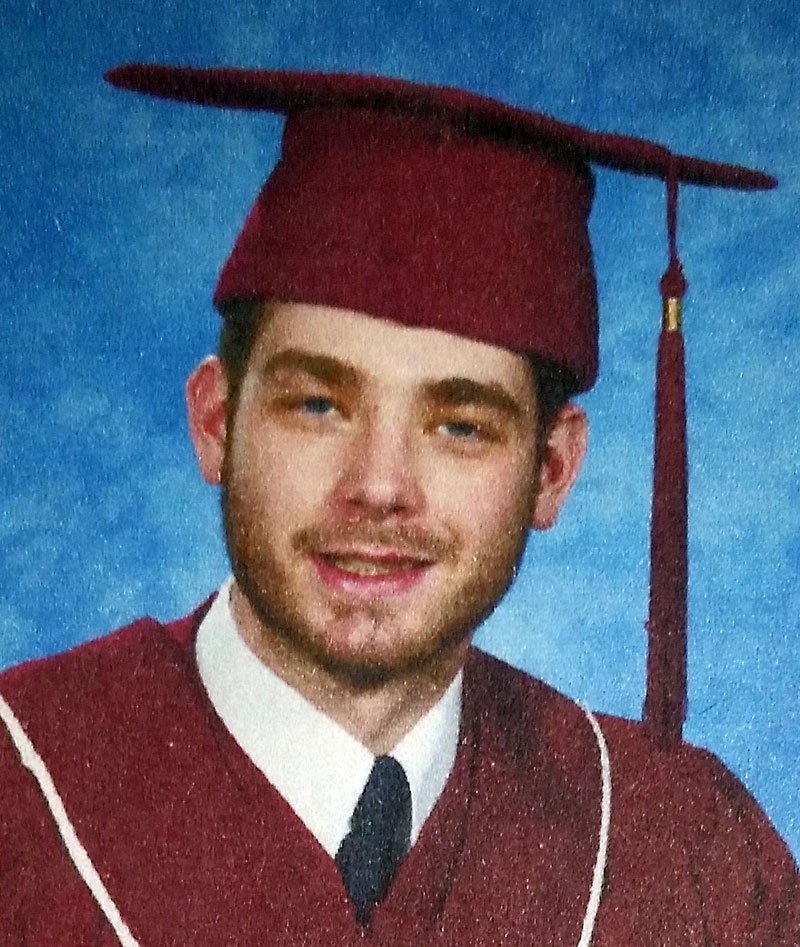
Nearly four years after his death, Sharon Kucher flips through the scrapbook she made of her son.
She’s visibly proud of his accomplishments, but is also still moved to tears with his loss.
“Such a waste,” she said on Wednesday as she leafed through photographs of her son over the years and his awards, certificates and writings.
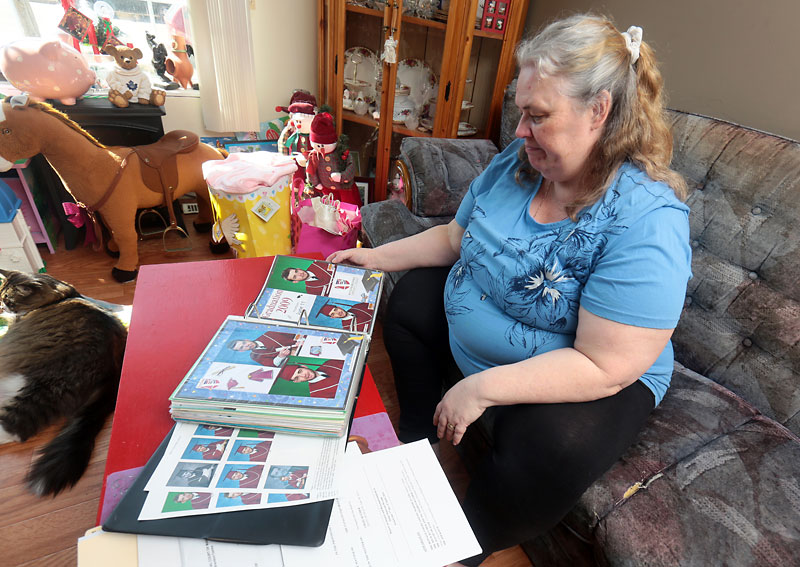
Now, Sharon says disappointment has been added to her “emotional roller-coaster.”
She says the death of her son, Craig Frank Kucher, who struggled with mental illness throughout his life, was an accident and couldn’t have been prevented.
But she believes that an inquest into her son’s death failed to address one of her key concerns when it comes to better care for the mentally ill.
“I really strongly feel that we need unified record-keeping systems in the medical and psychiatry fields so that everybody’s on the same record,” Kucher said.
On June 18, 2012, Craig was run over by a train and killed along the CPR tracks near First Street.
Foul play was ruled out and, while the medical examiner couldn’t conclusively determine if the death was an accident or suicide, it’s believed it was an accident.
His mom says her son would jump on trains as a way to get around town. He may have been doing that when he fell from the train and underneath its wheels.
Sharon has heard that Craig had gone to the Crystal Hotel down the tracks from his home where he had drinks, and was returning home.
Craig, 24, was an in-patient at the Centre for Adult Psychiatry (CAP) at the time. He had been released on a two-day leave into his mother’s care and was living at the family home on the 700 block of Rosser Avenue East.
Because he was a resident of a psychiatric facility when he died, an inquest was called.
It was held in Brandon on Oct. 5-7, 2015, and on Wednesday, the report of inquest Judge Donovan Dvorak was released to the public, and in it he made the following findings.
Craig had a long history of mental health issues and behavioural problems that went back to his adolescence.
Shortly after starting school, it was found that he had attention deficit disorder and obsessive compulsive disorder. His mother has added that he was also diagnosed with Asperger syndrome in his early 20s.
Over the years, he had been admitted to the Child and Adolescent Treatment Centre three times, and was previously admitted to CAP in December 2007.
He’d had a psychiatric assessment in relation to a number of criminal charges in 2011.
Delusional on June 7, 2012, Craig was taken to the emergency department at the Brandon hospital and admitted to CAP as an involuntary in-patient the next day.
Initially, delusional disorder was cited as a significant factor in the death, but Dvorak said the inquest made it clear that Craig no longer had a delusion at the time of his death.
In his report, Dvorak concludes that Craig’s release from CAP was appropriate. His condition had improved, and he was no longer delusional and was taking medications.
“There was nothing to suggest that he might harm himself or anyone else,” Dvorak wrote. “I find that there was no demonstrated causal connection between the care that Mr. Kucher received at the Centre of Adult Psychiatry and his death.”
Due to that finding, Dvorak noted in his report that counsel for Prairie Mountain Health and Manitoba Corrections had suggested that the judge didn’t have jurisdiction to make recommendations.
Dvorak disagreed — he could address a forseeable issue that could lead to another death in similar circumstances.
Prior to Craig’s release from CAP, the staff psychiatrist who agreed to the release met with him and his mother.
They discussed where he was going to stay and the medications he would take. Craig was given pills to take home, and told to contact mental health services for help obtaining medications.
However, while the doctor had previously warned Craig of the effects of mixing medication with alcohol or illicit drugs, the physician didn’t inform Craig’s mom of that concern at the meeting.
There was no evidence at the inquest of a CAP policy directing the discharging psychiatrist to provide instruction on the patient’s care to caregivers when it comes to temporary release.
In his report, Dvorak recommends that protocols for the temporary release of patients should be in place at all mental health facilities.
Those protocols should ensure that the authorizing physician provide the patient and caregiver with written expectations about supervision, signs of relapse, medications, and possible interactions between prescribed medications and alcohol or illicit drugs.
Patients to be released on temporary leave should be informed what circumstances may require them to be brought back to the mental health facility.
Under The Mental Health Act, information can be given to caregivers without the patient’s consent. Otherwise, a patient’s consent could be made a condition of release, Dvorak concluded.
On behalf of Craig’s parents, inquest counsel also expressed concern about the ability to share medical information between, and even within, medical facilities.
The inquest heard that medical staff would call or write other medical facilities asking for them to send a paper medical file.
Some medical records are on paper, while different facilities store digital records in different forms and programs.
But Dvorak stopped short of recommending a computer system that would speed care by making digital psychiatric records widely accessible.
He concluded there was no evidence that communication barriers played a part in Craig’s death, or that removing them would prevent other deaths.
Sharon said that disappoints her.
“If you go to different hospitals, all doctors have different ways of keeping record systems, so access is very limited,” Kucher said. “Emergency can’t see you’ve been to doctor A, B and C and these are your issues.”
Doctors and nurses have to rely on patients for information, she said, which is not always accurate.
Privacy needs to come second to care, she suggested. Caregivers need appropriate information.
For instance, when she took her son to the emergency department at the Brandon hospital, staff didn’t seem to be “getting it.”
They put him in a side room for observation, and he wound up barricading himself inside.
With better access to records, she said, her son could have been diagnosed and helped quicker.
Sharon said her son shouldn’t have been granted leave and raised that concern at CAP, but it was suggested Craig would be fine.
Despite his problems, Sharon says she wants people to remember that most of the time her son was a loving, regular guy.
He enjoyed playing soccer as a boy, ran marathons in his teens, graduated from Vincent Massey High School, earned a computer systems technology diploma with distinction from Assiniboine Community College and ran his own computer business.
Prairie Mountain Health issued a release on Wednesday in which it stated it was pleased with Dvorak’s finding that there was no direct connection between Kucher’s care at CAP and his death. It plans to address the protocols recommended by the judge.
“Prairie Mountain Health will be moving forward to formalize protocols reflective of these recommendations,” the statement read.
» ihitchen@brandonsun.com
» Twitter: @IanHitchen