
First Nation, city working on land development deal
Advertisement
Read this article for free:
or
Already have an account? Log in here »
We need your support!
Local journalism needs your support!
As we navigate through unprecedented times, our journalists are working harder than ever to bring you the latest local updates to keep you safe and informed.
Now, more than ever, we need your support.
Starting at $15.99 plus taxes every four weeks you can access your Brandon Sun online and full access to all content as it appears on our website.
Subscribe Nowor call circulation directly at (204) 727-0527.
Your pledge helps to ensure we provide the news that matters most to your community!
To continue reading, please subscribe:
Add Brandon Sun access to your Free Press subscription for only an additional
$1 for the first 4 weeks*
- Enjoy unlimited reading on brandonsun.com
- Read the Brandon Sun E-Edition, our digital replica newspaper
*Your next Free Press subscription payment will increase by $1.00 and you will be charged $20.95 plus GST for four weeks. After four weeks, your payment will increase to $24.95 plus GST every four weeks.
Read unlimited articles for free today:
or
Already have an account? Log in here »
Hey there, time traveller!
This article was published 30/08/2017 (3331 days ago), so information in it may no longer be current.
The City of Brandon is working with Gambler First Nation on what could lead to its first urban reserve deal.
Negotiations are underway for a municipal services agreement, a significant step toward the creation of a First Nations Urban Development Area.
“I think collectively — Gambler (First Nation) and the city — we’ve made a lot of progress,” said Sandy Trudel, Brandon’s director of economic development. “We’ve got a really solid working relationship, and I think it’s a positive message to share.”
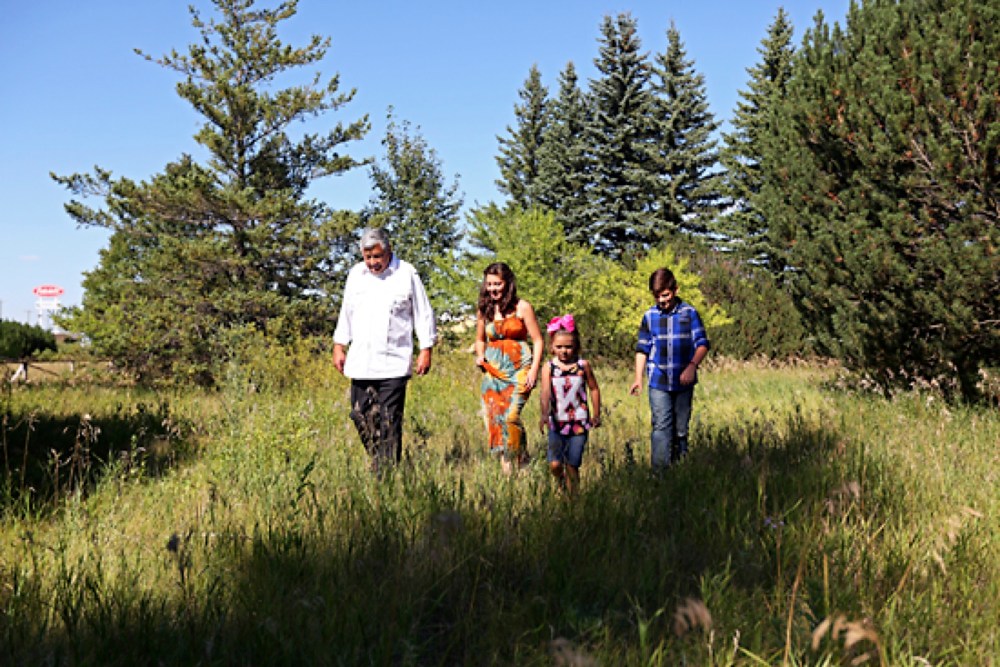
The property in question is located on the North Hill — nearly eight acres at the corner of 18th Street and Clare Avenue. Gambler First Nation Chief David Ledoux said they are working with current landowners Crane Steel Structures and the Kokonas family.
A range of commercial options are being considered for the location, such as gas bar, convenience store, car wash, mini mall and hotel.
“What we’d like to see happen is a new way of doing business for the First Nations in our area,” Ledoux said.
Seeing the success of other urban reserves, Ledoux said its time to bring it to this part of the province.
“What I’m hoping to do is set this up for the youth,” he said, as he looked out at the property with three of his grandchildren in tow. “That’s my vision for this property, making sure the youth have a future.”
Gambler First Nation is a small community located west of Binscarth, with a population of less than 300 people.
Ledoux noted there is a long list of benefits to not only for Gambler, but to the City of Brandon. It would create jobs and provide financial stability for Gambler so they are no longer a “have-not” community.
The benefits for Brandon include job creation, and increased amenities/services in the community. Trudel noted that the city’s population is roughly 11 per cent Aboriginal.
“If we’re able to enhance the employment opportunities for them, then everybody wins,” she said. “You have a stronger labour pool, you have people gainfully employed — all of those type of good things come out of there.”
In addition, there would be revenue generated for the city through water/sewer and permitting fees.
Ledoux said he is amazed by the support and encouragement of everyone involved thus far, from city staff to Indigenous and Northern Affairs Canada. Just this week, they received a letter of support from INAC.
Over the past year, city administration has been working with Brandon Urban Aboriginal Peoples’ Council and Brandon Chamber of Commerce, with the goal of stimulating economic prosperity among First Nations communities.
“It’s something that we’ve really seen starting to take shape over not just our local Prairie provinces but across our nation of Canada,” said Jason Gobeil, Aboriginal community co-ordinator with BUAPC.
“We’re so proud that our community has taken this approach of an open door process now, and looking to build on those relationships when it comes to business opportunities.”
There are multiple processes running parallel as Gambler pursues the project. They have applied for an Addition to Reserve through the federal government, to have the lands transferred to reserve status.
It is difficult to predict a timeline, but Trudel said the land designation process could take around 18 months.
“We’ve seen projects elsewhere in Canada and some in Manitoba that have taken a decade to bring into place, and then we’ve seen other municipalities where they’re able to get them well within those (18-month) time frames,” Trudel said.
A municipal services agreement with the city is a critical part, as that needs to be in place before it moves to the next step. The agreement is a legal document that defines, among other things, how city services will be supplied to the First Nation, how land development will occur, reimbursement to the city in lieu of taxes and applicable development costs.
“We’re almost ready to sign,” Ledoux said. “It’s just being fine-tuned between the lawyers now.”
» jaustin@brandonsun.com
» Twitter: @jillianaustin