
Rain gardens can help cut water use and storm runoff
Advertisement
Read this article for free:
or
Already have an account? Log in here »
We need your support!
Local journalism needs your support!
As we navigate through unprecedented times, our journalists are working harder than ever to bring you the latest local updates to keep you safe and informed.
Now, more than ever, we need your support.
Starting at $15.99 plus taxes every four weeks you can access your Brandon Sun online and full access to all content as it appears on our website.
Subscribe Nowor call circulation directly at (204) 727-0527.
Your pledge helps to ensure we provide the news that matters most to your community!
To continue reading, please subscribe:
Add Brandon Sun access to your Free Press subscription for only an additional
$1 for the first 4 weeks*
*Your next subscription payment will increase by $1.00 and you will be charged $20.00 plus GST for four weeks. After four weeks, your payment will increase to $24.00 plus GST every four weeks.
Read unlimited articles for free today:
or
Already have an account? Log in here »
Hey there, time traveller!
This article was published 31/03/2018 (2925 days ago), so information in it may no longer be current.
As another growing season nears, the Assiniboine Hills Conservation District hopes more homeowners will consider installing their own rain garden.
Made up of wild flowers and native vegetation, rain gardens are not only esthetically pleasing, but environmentally friendly.
“It reduces the amount of water that you need to use to water your lawns, and then it also reduces stormwater that’s going into the city infrastructure,” said manager Neil Zalluski.

The gardens are landscaped areas with permeable soil that slowly soaks up water following a rainstorm.
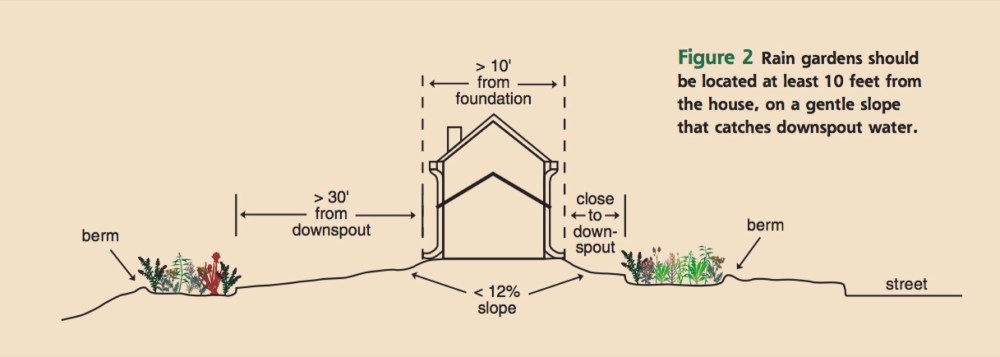
As explained in a how-to manual published by the Wisconsin Department of Natural Resources, rain gardens are a good option for urban sites, as stormwater runoff from developed areas increases flooding; carries pollutants from streets, parking lots and lawns to local waterways; and leads to costly municipal improvements in stormwater treatment structures.
Greg More of Brandon installed his own rain garden a few years ago. It is an oval shape, approximately 15 feet by 20 feet.
After digging out the clay, a permeable layer of soil was put in, along with landscaping cloth and rock.
“It’s probably about two feet deep, but it doesn’t look like it because they filled it up with rock,” More said.
More said he became interested in the concept through his involvement with the Turtle Mountain Conservation District.
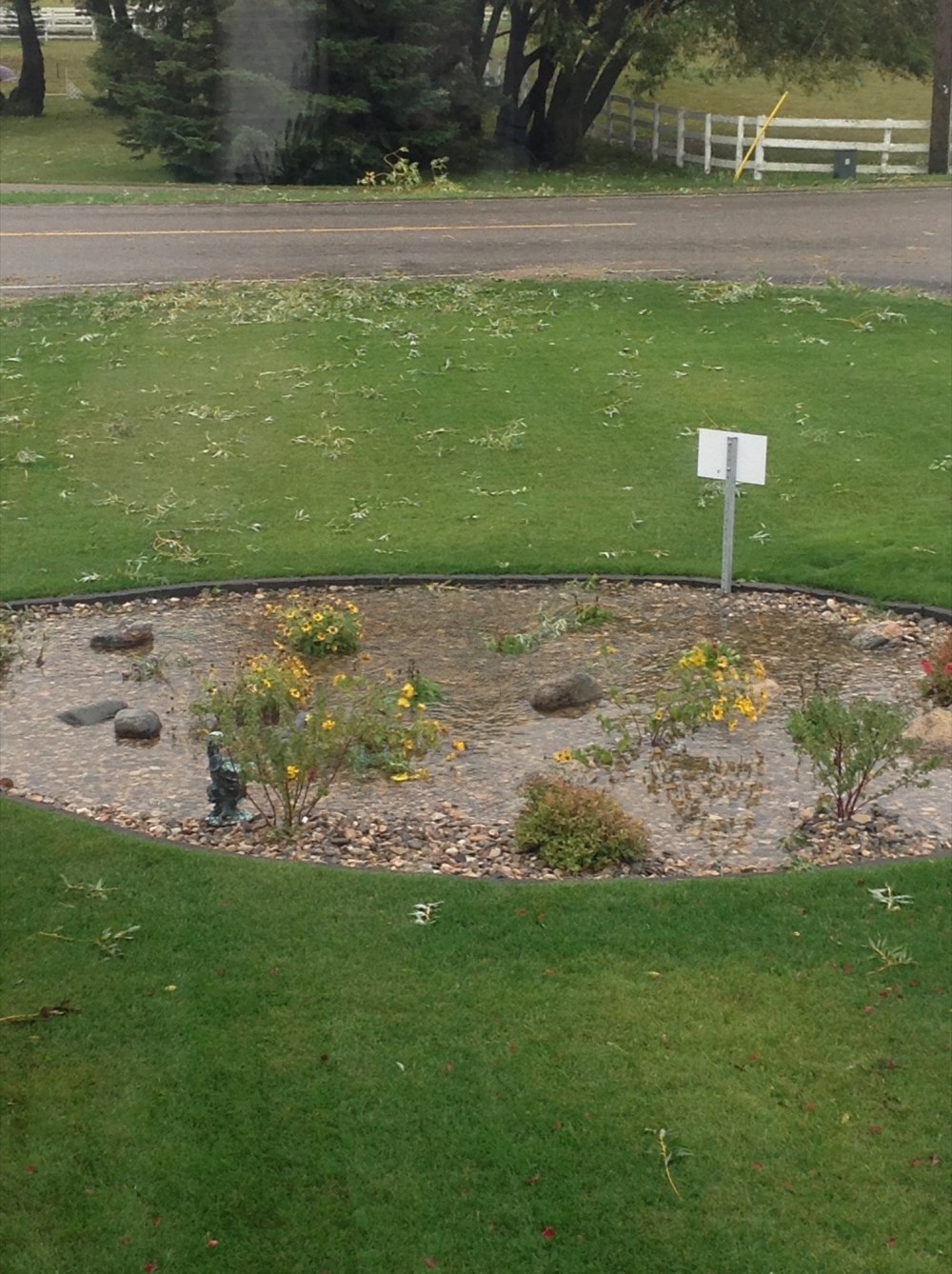
“It helps the environment because it traps water off our roof, and the neighbour’s roof … and then it soaks into the ground, rather than running down the street to the sewer system,” More said.
After a heavy storm, More said it takes up to a day and a half for the rain garden to soak into the ground.
More’s garden cost $2,600, funded in part by a grant through the Assiniboine Hills Conservation District. He hopes others will pick up on the concept, and consider adding rain gardens to their property.
“There’s so much development and as soon as you put a roof up or pave a lot, then all that water has to go somewhere, it can’t soak in anymore,” he said. “These really help that idea. It gives the water a chance to soak back in, into the ground rather than run to the sewer system, where it could overload the city plant.”
Lindsay Hargreaves, the city’s environmental initiatives co-ordinator, said a rain garden will be planted at Brandon Municipal Airport this spring. If residential property owners are interested in building their own, they can view the how-to manual at brandonenvironment.ca/ water-conservation/make-a-rain-garden.
» jaustin@brandonsun.com
» Twitter: @jillianaustin