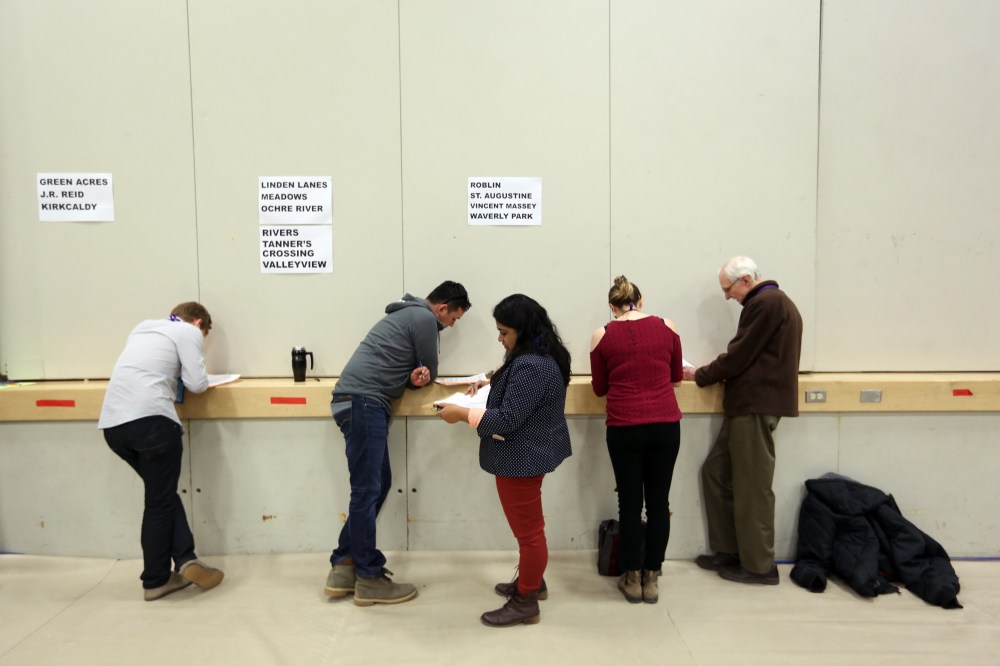
Students show off projects at science fair
Advertisement
Read this article for free:
or
Already have an account? Log in here »
We need your support!
Local journalism needs your support!
As we navigate through unprecedented times, our journalists are working harder than ever to bring you the latest local updates to keep you safe and informed.
Now, more than ever, we need your support.
Starting at $15.99 plus taxes every four weeks you can access your Brandon Sun online and full access to all content as it appears on our website.
Subscribe Nowor call circulation directly at (204) 727-0527.
Your pledge helps to ensure we provide the news that matters most to your community!
To continue reading, please subscribe:
Add Brandon Sun access to your Free Press subscription for only an additional
$1 for the first 4 weeks*
*Your next subscription payment will increase by $1.00 and you will be charged $20.00 plus GST for four weeks. After four weeks, your payment will increase to $24.00 plus GST every four weeks.
Read unlimited articles for free today:
or
Already have an account? Log in here »
Hey there, time traveller!
This article was published 11/04/2018 (2904 days ago), so information in it may no longer be current.
Twelve-year-old Sebastian Stone stepped onto the seat of his homemade hovercraft and flipped the switch of a battery-powered leaf blower.
In an instant, the Grade 6 student from Boissevain was lifted off the ground as the plastic bag attached to his makeshift vehicle filled with air.
Stone turned off the leaf blower, descended back to the floor and got back up, saying when he first proposed the idea of building a hovercraft as his science fair project, his parents and others thought it was crazy.
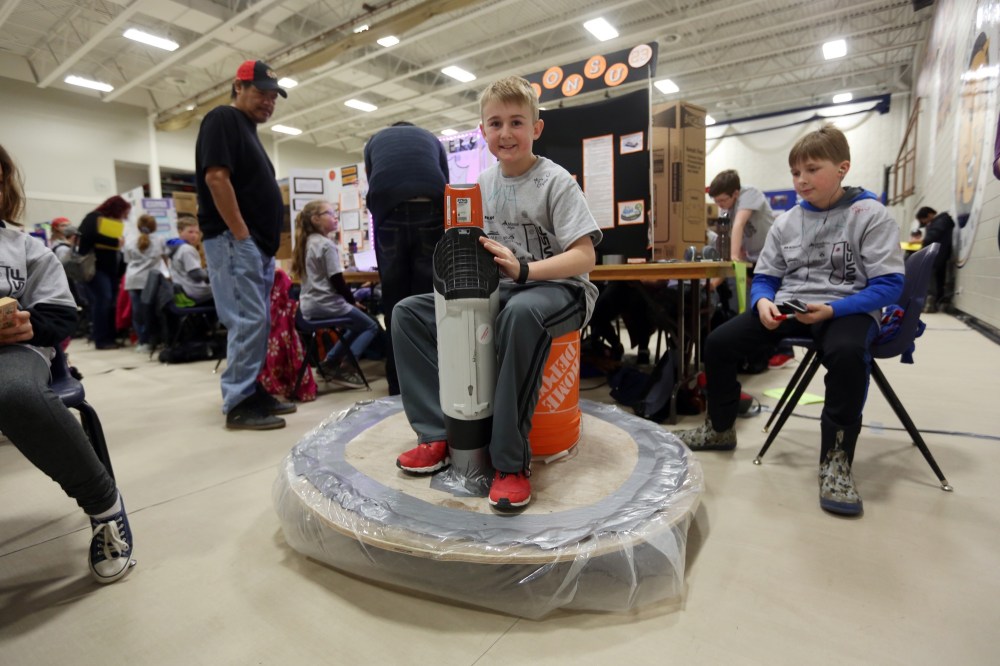
“I didn’t even think it was going to work,” he said.
Stone was one of more than 380 students from grades 1 to 12 who took part in the Western Manitoba Regional Science Fair at Brandon University’s Healthy Living Centre on Tuesday.
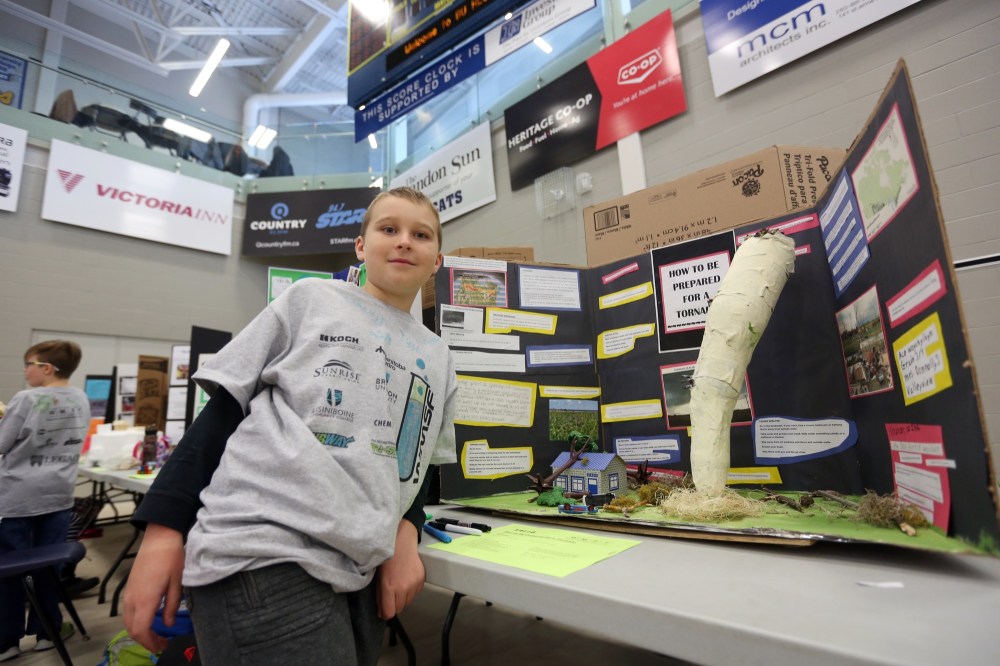
Among them was nine-year-old Ace Woychyshyn, a Grade 3 student from Valleyview Centennial School, who did his project on tornadoes.
Tornadoes can reach speeds of up to 250 miles per hour and are capable of lifting two-storey buildings, Woychyshyn said.
Throughout his research, he found a number of helpful tips he wanted to share in the event a tornado hits: stay in the centre of your basement, avoid glass windows and don’t approach a tornado, even if it appears to have died down.
Part of his project focused on the June 22, 2007, tornado in Elie that was classified as an F5 on the Fujita Scale, the highest possible category for determining the strength of a tornado.
“All I want to do is help people stay safe in tornadoes,” he said.
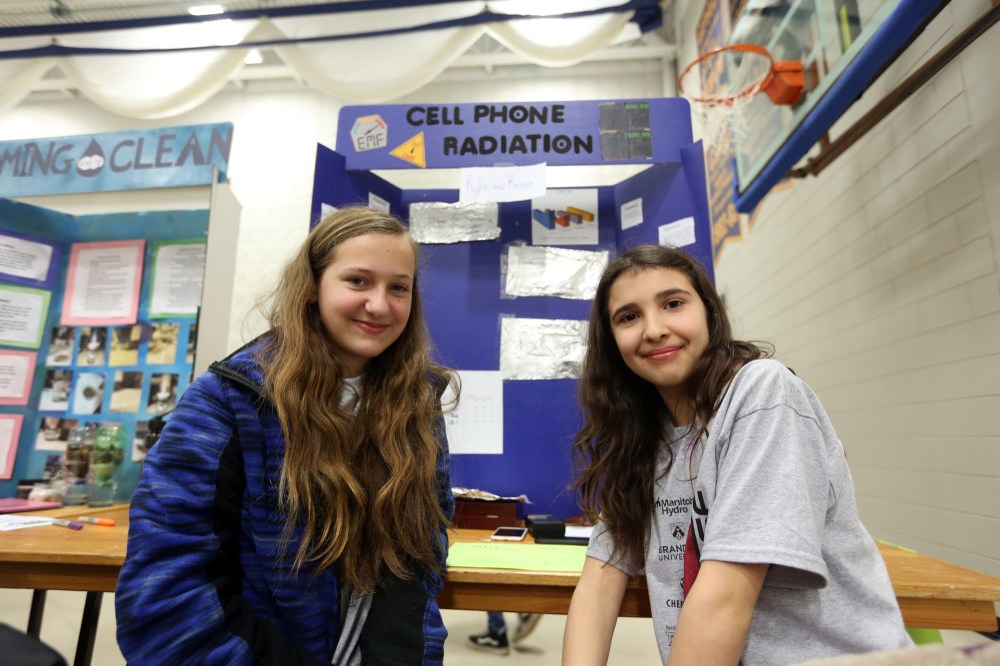
Grade 7 École New Era School students Keisa and Kylie decided to examine the electromagnetic fields, or EMFs, coming from smartphones as part of their joint science fair project.
Using an acoustimeter they got on eBay, the two 13-year-olds tested four phones used by their family members and were surprised to find that the iPhone 4, in particular, registered a reading of 704 teslas.
“That’s pretty bad,” Keisa said.
By comparison, a Samsung Galaxy S6 used by a Brandon Sun reporter had a reading of approximately 200 teslas.
When asked what gave them the idea to look into EMFs, the two girls laughed and said they found pictures of people wearing tin-foil hats on the internet.
Around since 1969, the regional science fair moved from its longtime location at the Keystone Centre to BU as part of a renewed partnership with the university.
Although attendance was down compared to previous years, Trevor Maguire, who chairs the fair’s organizing committee, said the number of judges went up to 130, which gave them more time to evaluate each project.
Students were also given tours of the university’s science building.
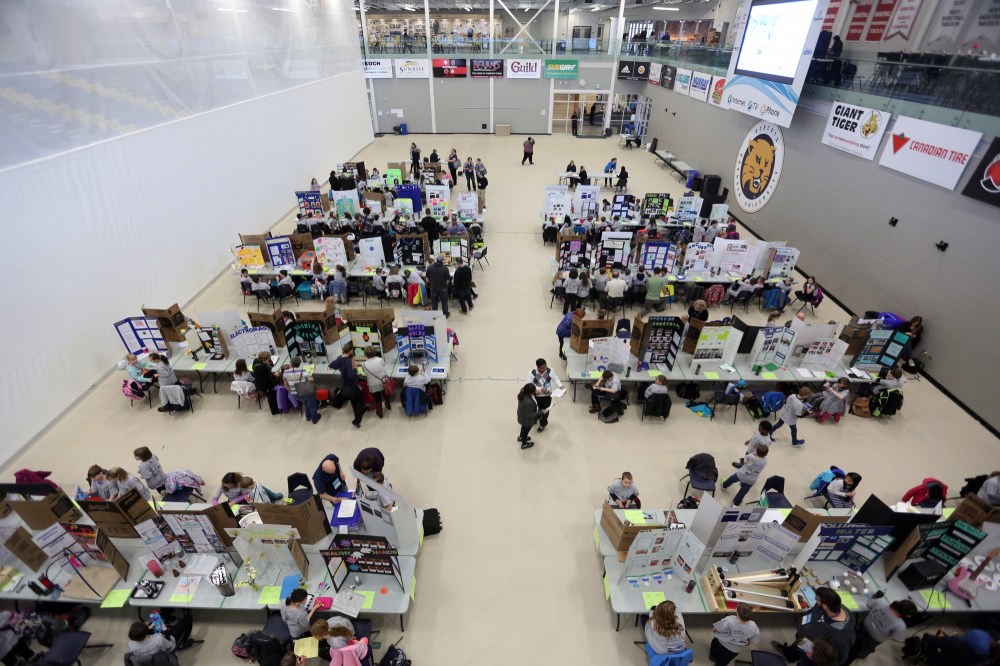
“It makes a huge difference, we’re really noticing it,” Maguire said about working with BU. “Our committee went from six or seven people to 25, because we got the university on board.”
Having been involved with the fair for more than 20 years, Maguire said what matters to him is giving students a chance to explore their ideas.
“It’s that spark, that’s the future of our innovation,” he said. “Whether they wind up in engineering, or science, or any other field, they’re learning how to be creative.”
» mlee@brandonsun.com
» Twitter: @mtaylorlee