
Second World War aircraft ready for its wings
Advertisement
Read this article for free:
or
Already have an account? Log in here »
We need your support!
Local journalism needs your support!
As we navigate through unprecedented times, our journalists are working harder than ever to bring you the latest local updates to keep you safe and informed.
Now, more than ever, we need your support.
Starting at $15.99 plus taxes every four weeks you can access your Brandon Sun online and full access to all content as it appears on our website.
Subscribe Nowor call circulation directly at (204) 727-0527.
Your pledge helps to ensure we provide the news that matters most to your community!
To continue reading, please subscribe:
Add Brandon Sun access to your Free Press subscription for only an additional
$1 for the first 4 weeks*
*Your next subscription payment will increase by $1.00 and you will be charged $20.00 plus GST for four weeks. After four weeks, your payment will increase to $24.00 plus GST every four weeks.
Read unlimited articles for free today:
or
Already have an account? Log in here »
Hey there, time traveller!
This article was published 28/09/2018 (2776 days ago), so information in it may no longer be current.
The Commonwealth Air Training Plan Museum is in the midst of restoring a rare Second World War aircraft.
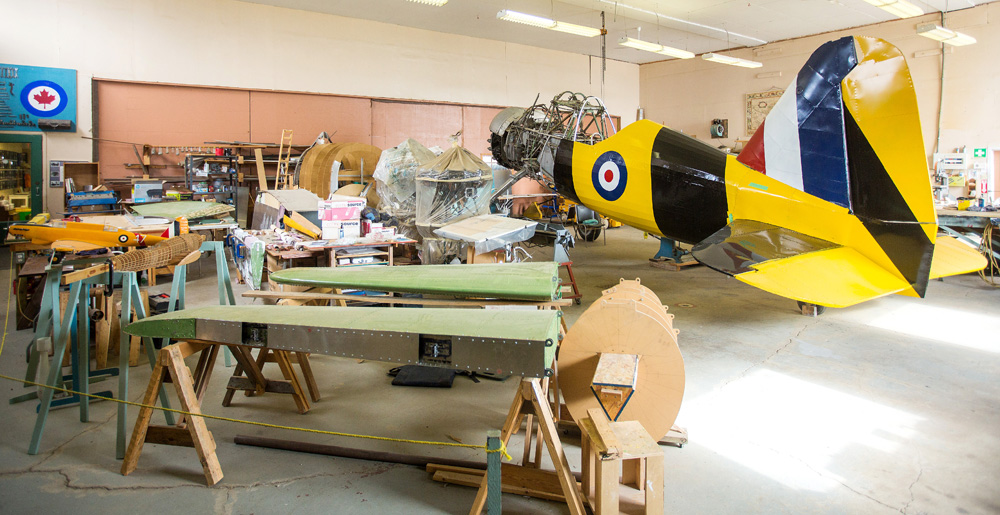
A 1942 Westland Lysander, which was both a training and operations aircraft during the war effort, is waiting for its wings in a hangar of the The Commonwealth Air Training Plan Museum.
“It’s wonderful. It’s a fascinating story of training and operations,” the museum’s executive director Stephen Hayter said. “This particular airplane led a double life.”
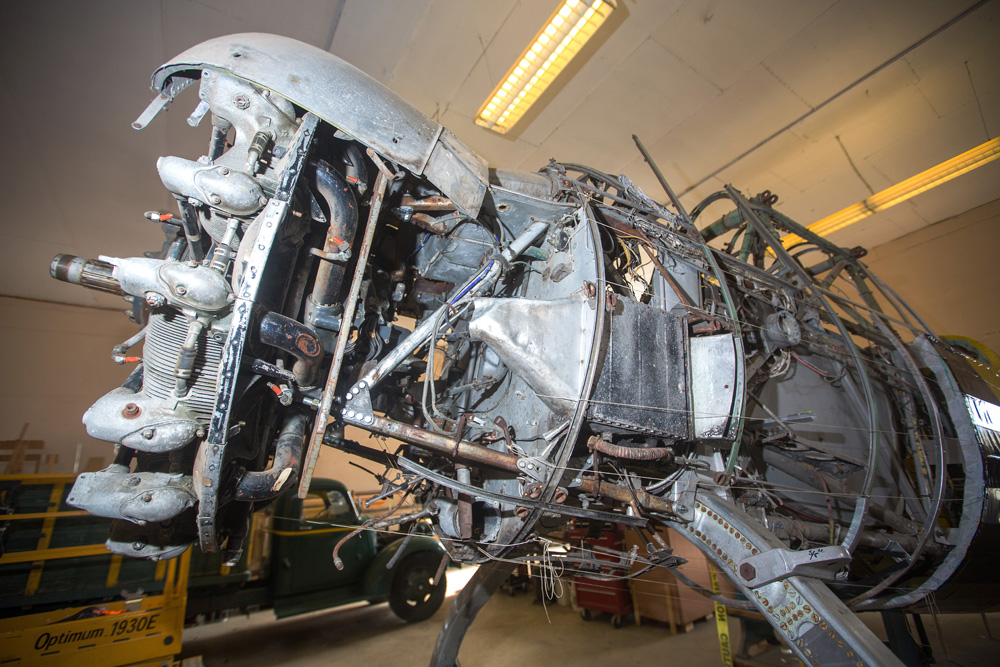
The Lysander was uncovered in Howden, a hamlet approximately 30 minutes south of Winnipeg.
Its restoration began with volunteers rewiring the aircraft in 2016.
“The building blocks are there to have a really nice restored aircraft that people can learn that history from,” Hayter said.
Two volunteers have been working on restoring the aircraft, with help at times from other volunteers.
The remaining work on the Lysander is one of the most difficult aspects — recreating its the detailed wings.
“It’s all about angles,” Hayter said. “It takes someone who has a background and skill in doing that … It’s complex.”
The hope is to have the aircraft in the main hangar in a year or two as a standing display.
Museum volunteers are working at unpacking the Lysander’s rich history, including finding the aircraft’s original service number.
Once the museum finds the number, they can learn more about where the Lysander was stationed and its service history.
The Lysander will have a unique painting scheme at the museum, which will help it stand out in the museum’s collection.
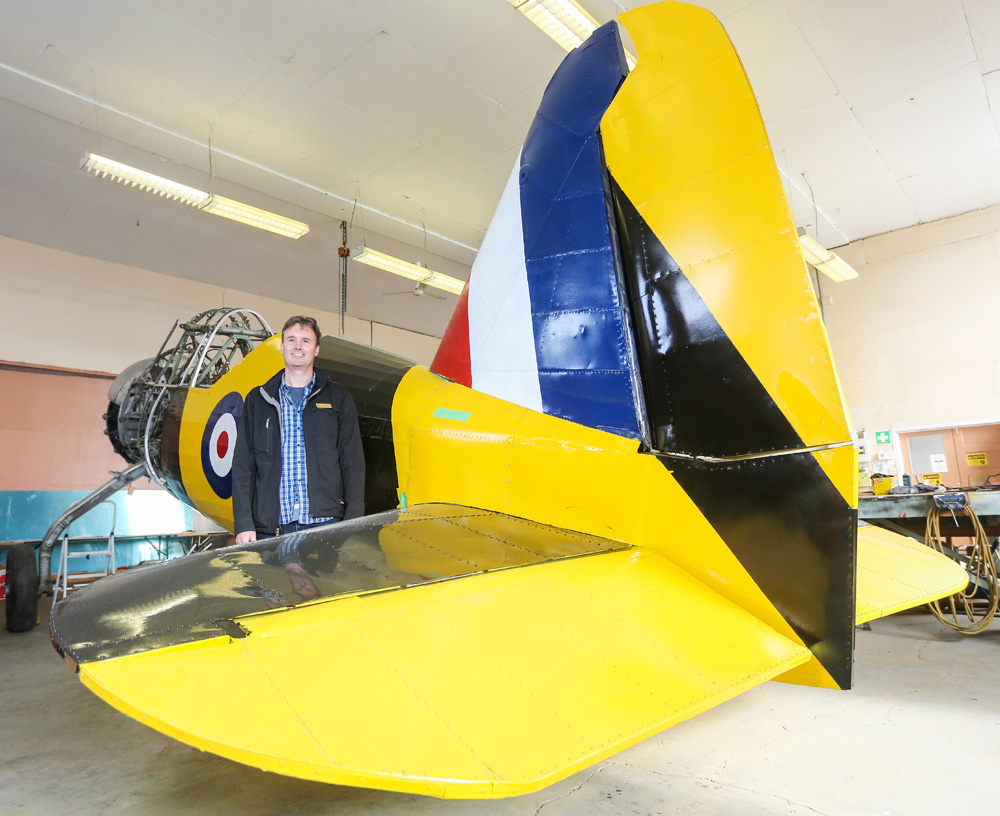
“In training, it looked a little bit like a bumble bee. It was yellow- and black-striped,” Hayter said. These colours were likely chosen so it was highly visible during training exercises.
To help prepare pilots for war, the Lysander would pull a drogue, also commonly referred to as a windsock, at least a hundred feet behind the aircraft. Another plane, the Fairey Battle, would follow, shooting at the drogue with wax-covered bullets. The wax was left on the drogue, allowing for an assessment of pilots’ shooting accuracy.
These practice sessions helped to train air gunners to use a 303 machine gun.
However, the Lysander led a double life and was also used for a number of operational jobs, inducing secret missions.
“One of the most fascinating jobs for a Lysander was to actually fly. You could call them ‘spies.’ They were being slipped into France during its occupation and smuggling people back and forth,” Hayter said.
The Lysander was painted black for these operations, and was effective at its job because it required an incredibly short takeoff and landing strip. It needs about 50 yards for takeoff and landing.
“It was a very clandestine, gutsy kind of position to be in,” Hayter said.
The aircraft was “hiding in plain sight,” before its discovery.
The museum only learned of its existence after the fuselage of the Lysander was found, and the owner expressed interest in donating it to the museum.
Finding aircraft in this manner is becoming an increasingly rare occurrence, Hayter said.
In the early days of the museum, a number of aircraft were found by museum volunteers in farmers’ fields and in the bush.
Volunteers would find airplane parts in trees, the bushes, farmers’ fields and even chicken coops at times.
“They were all over the place, partly due to the fact that at the end of the war farmers bought up aircrafts and used them for all sorts of things,” Hayter said.
There was the odd aircraft that was discovered after a crash, but these cases were considerably rarer.
“Typically, it was just discovered in the bush on some farmer’s property.”
» ckemp@brandonsun.com
» Twitter: @The_Chelseakemp