
Auto Tech pairs practical, theoretical knowledge
Advertisement
Read this article for free:
or
Already have an account? Log in here »
We need your support!
Local journalism needs your support!
As we navigate through unprecedented times, our journalists are working harder than ever to bring you the latest local updates to keep you safe and informed.
Now, more than ever, we need your support.
Starting at $15.99 plus taxes every four weeks you can access your Brandon Sun online and full access to all content as it appears on our website.
Subscribe Nowor call circulation directly at (204) 727-0527.
Your pledge helps to ensure we provide the news that matters most to your community!
To continue reading, please subscribe:
Add Brandon Sun access to your Free Press subscription for only an additional
$1 for the first 4 weeks*
*Your next subscription payment will increase by $1.00 and you will be charged $20.00 plus GST for four weeks. After four weeks, your payment will increase to $24.00 plus GST every four weeks.
Read unlimited articles for free today:
or
Already have an account? Log in here »
Hey there, time traveller!
This article was published 08/11/2018 (2630 days ago), so information in it may no longer be current.
Melding hands-on experience, practical knowledge and theoretical training, automotive technology instructors at Crocus Plains Regional Secondary School look to set their students up for success.
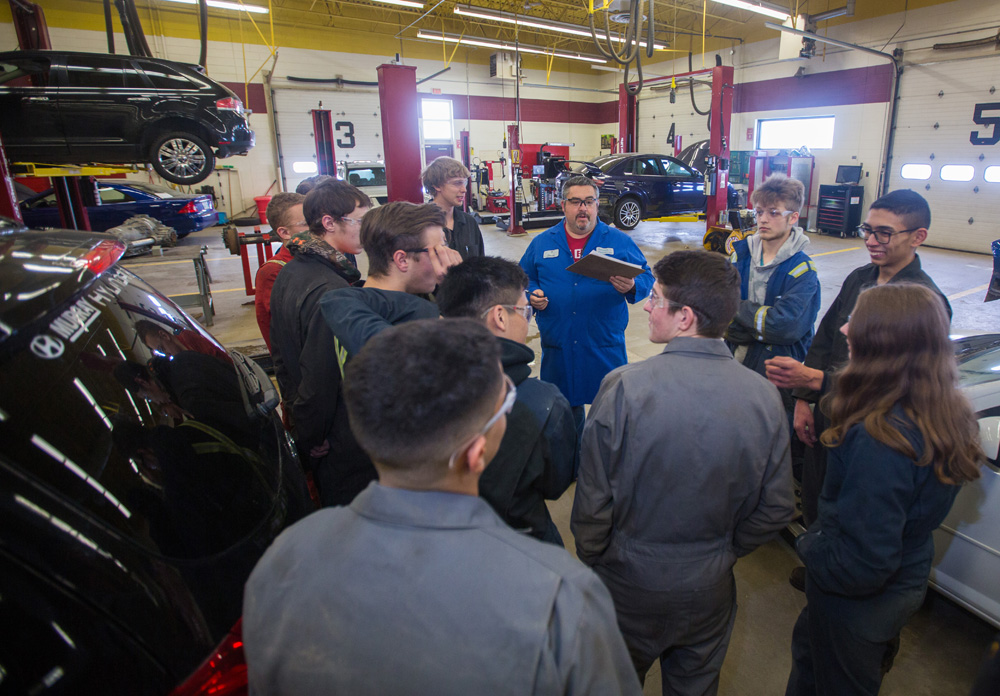
Teachers Jeff Kasprick and Trent Sloane spend each week working with students, imparting a passion for automobiles paired with years of experience.
“You’re teaching what you love. I’ve always loved automotive and now I get to pass on that knowledge,” Kasprick said.
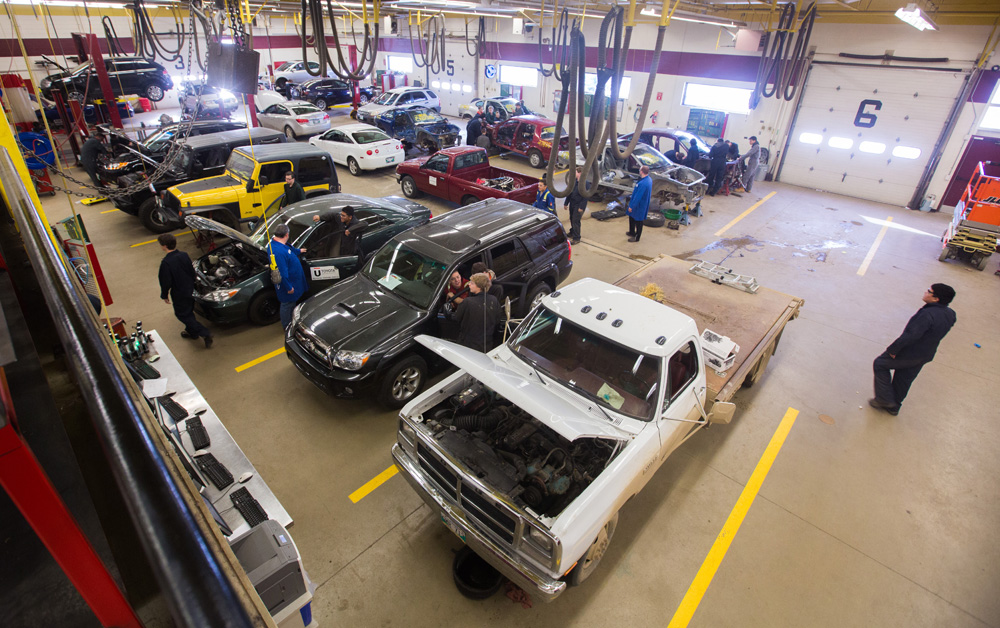
The school offers nine courses in automotive technology, with the first course an introductory class for students in Grade 9. Opportunities in the shop expand from there.
If students take all nine classes offered in the vocation and maintain a 70 per cent average, they qualify for a Level One accreditation through Apprenticeship Manitoba.
With each class bringing in new kids with different levels of experience, every semester offers something new.
“That’s probably the hardest thing; balancing enough experience with not over burdening the kids or letting them be bored,” Sloane said.
Each semester sees about 160 students from Grades 9 to 12 in the shop. The garage itself can hold between 20 and 25 cars for the kids to work on.
“Our shop here is bigger than a good number of the dealerships in town,” Sloane said. “It’s one of the best laid out shops that I’ve seen in the province,”
Working hard to keep the shop clean, bright and current, the classroom offers a chance for a hands-on learning experience in automotive technology.
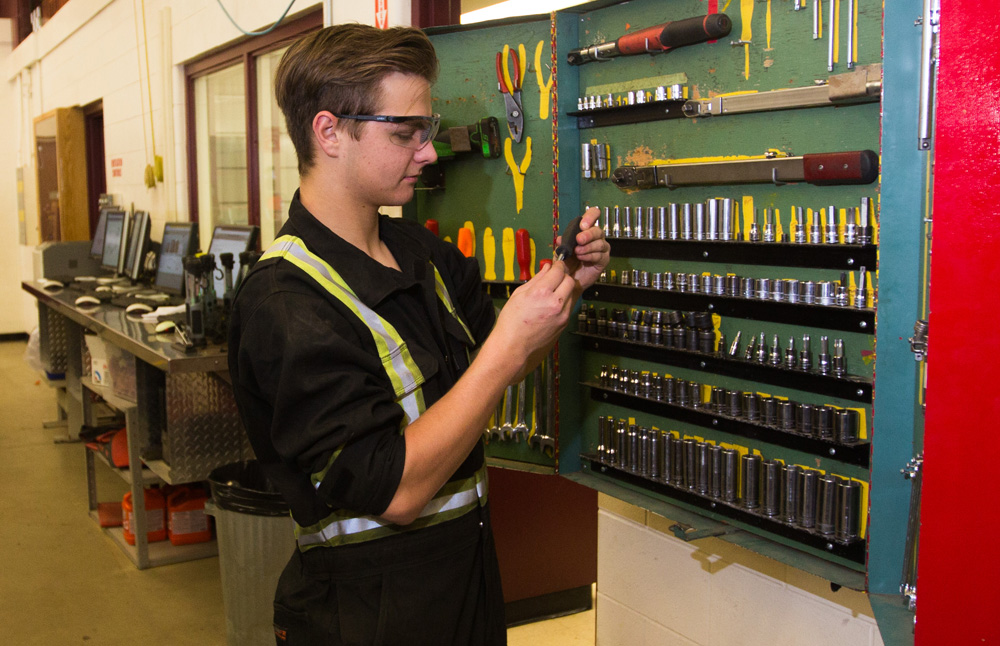
Students are first introduced to the course with tool and safety training. Once that is complete the kids get to tear apart a car, gutting everything from the interior to the dashboard, engine and everything in between. Cars are supplied by Westman Salvage, giving the class around five cars to work with.
“By the time the Grade 9s finish, they have touched every aspect of that car, and things we’ll cover in our program all the way into Grade 12,” Sloane said.
Over the course of the four years students will be in the automotive technology classroom, teachers work hard to create an environment that is a mirror to the shops one would see in the trade.
The experience teaches the students safety, tool work and typical procedures of automotive repairs, preparing them to graduate and find success upon entering into the automotive industry.
Approximately 80 per cent of graduates are able to achieve careers in the industry, Sloane said.
After completing work on their first car, students then begin working on a fleet of cars owned by the school.
When they reach Grade 12, students are given the opportunity to work on customer cars — typically teachers — tackling a range of diverse issues.
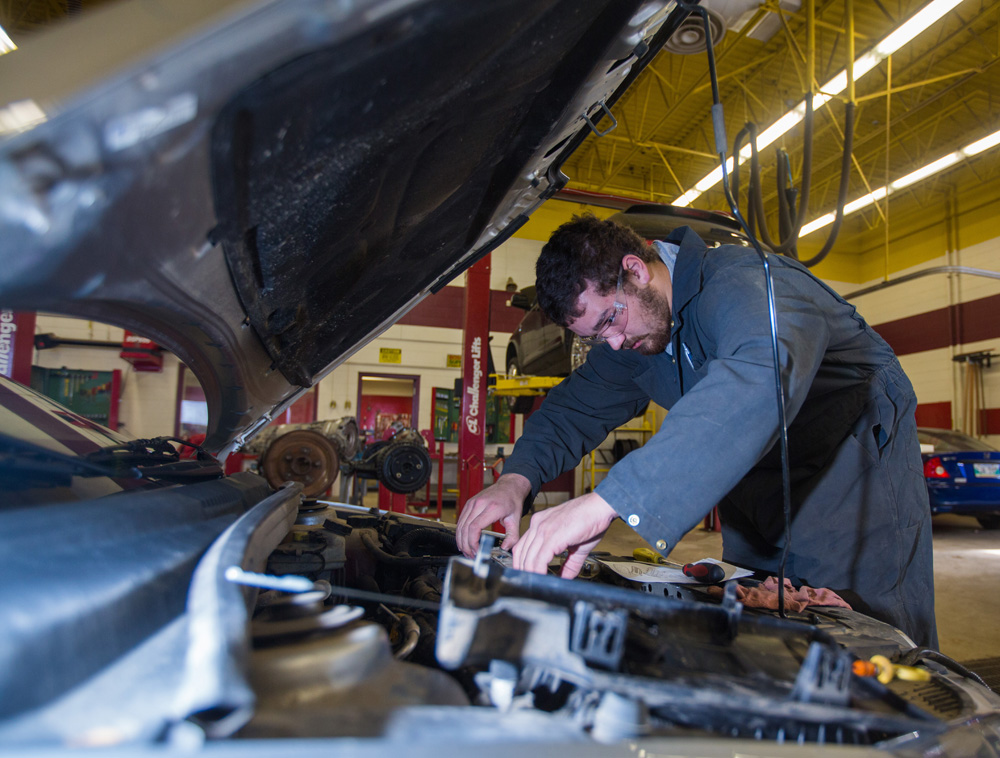
The only catch is that any repairs or work that needs to be done has to match up with what the classes offered at that time.
As the students’ skills grow, Kasprick said one of the best parts of his job is seeing their passion for the craft bloom.
Teachers let the students struggle with different aspects of automotive technology, using each experience as a learning opportunity.
Especially inspiring moments are the times when a student is able to conquer a concept they have been struggling with, or as Kasprick describes it, “a-ha moments.”
With the growing prevalence of electrical components in vehicles, students need their math, science and English need to be at an especially high level so they can work with the newer technologies.
“Reading our manuals are technical writing. They’re hard to read. They’re not meant for high school students — they’re meant for people in the trade,” Kasprick said.

Most projects typically last a week or two — the perfect length to keep a teenager’s attention, Sloane joked.
“The long-term projects are harder to keep kids motivated on,” he said.
However, there are two automobiles that have been under construction in the garage for a few years.
Work continues on a 1975 Ford F100 Truck and a 1979 Fiat Spider 124. When the cars are eventually finished, they will be raffled off or tendered.
The only change the teachers would like to see in the classroom is for more girls and women to enter the automotive technology workshop.
While the numbers are slowly increasing, Sloane said there is still room for girls and women women in the shop to expand both inside the classroom and in the industry.
“It still has that stigma that auto is for guys.”
» ckemp@brandonsun.com
» Twitter: @The_ChelseaKemp