
Lessons in Anishinaabe parenting
Advertisement
Read this article for free:
or
Already have an account? Log in here »
We need your support!
Local journalism needs your support!
As we navigate through unprecedented times, our journalists are working harder than ever to bring you the latest local updates to keep you safe and informed.
Now, more than ever, we need your support.
Starting at $15.99 plus taxes every four weeks you can access your Brandon Sun online and full access to all content as it appears on our website.
Subscribe Nowor call circulation directly at (204) 727-0527.
Your pledge helps to ensure we provide the news that matters most to your community!
To continue reading, please subscribe:
Add Brandon Sun access to your Free Press subscription for only an additional
$1 for the first 4 weeks*
*Your next subscription payment will increase by $1.00 and you will be charged $20.00 plus GST for four weeks. After four weeks, your payment will increase to $24.00 plus GST every four weeks.
Read unlimited articles for free today:
or
Already have an account? Log in here »
Hey there, time traveller!
This article was published 22/02/2020 (2264 days ago), so information in it may no longer be current.
Sherry Copenace’s great-grandmother Aazhawaashiik, a midwife in her community, kept her children away from residential school.
Aazhawaashiik, also known as Rosie, knew how to live off the land.
“She just moved around the lake,” said Copenace, who is from Ojibways of Onigaming First Nation to the east of Lake of the Woods in Ontario.
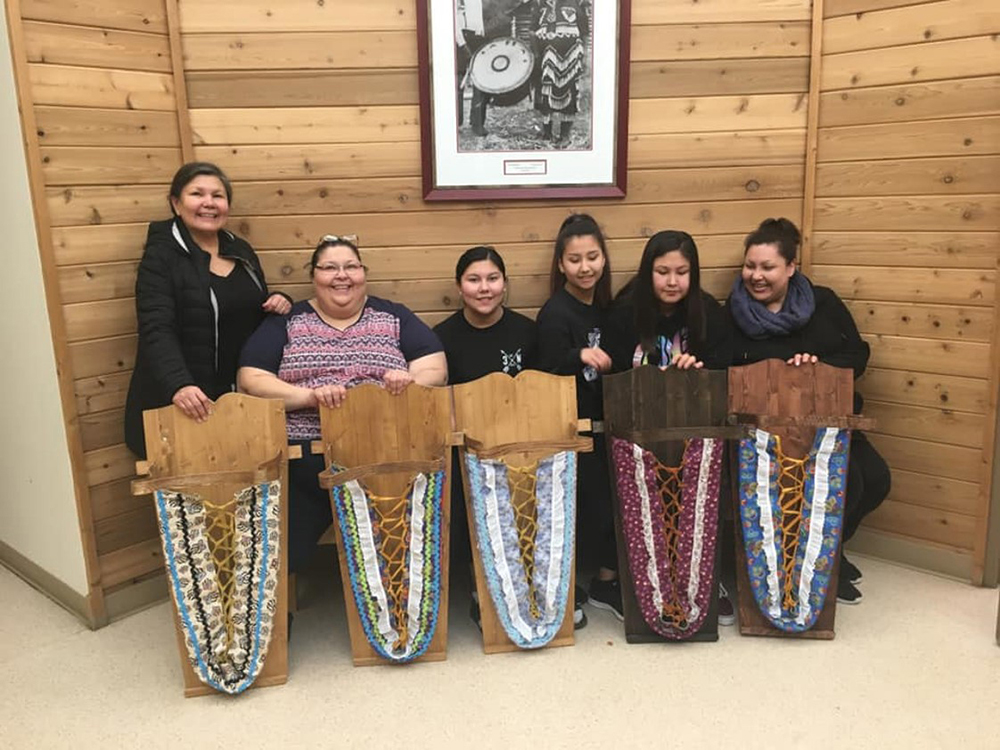
Since Shawon, Aazhawaashiik’s daughter and Copenace’s grandmother, only spoke Ojibway, Copenace didn’t learn English until kindergarten. She has retained her language.
“I was fortunate to be raised with our original way of life,” she said.
Shawon was humble and wouldn’t call herself a medicine person, but Copenace said she was.
“She knew the plants and people would come to her for different ailments. She knew what kinds of medicines to give to people. So I knew our ways of life, our teachings, our practices, the tools our ancestors left us. I knew they are preventative. I knew they have a strength. And I knew if we know them, follow them and live them that we’d have a healthy life,” she said.
Some of this knowledge is what she will share in her upcoming Brandon workshop, with the blessing of her elders whose knowledge it is.
“I asked if I could write it down and share,” said Copenace, who is a former nurse.
The elders said yes, because while the lodge was the traditional place of learning, that’s not so much the case now due to the heavy hand of colonial policies. And people remain afraid, due to being told the traditional knowledge wasn’t good.
Residential school is often cited for breaching the bond between Indigenous parents and their children. As Copenace says, a baby raised in the sophisticated, traditional way, which fostered belonging, bonding and attachment, lives that way every day.
“So when you were thinking or had that intent to become a parent, you already had that knowledge with you. You didn’t wait until you got pregnant and had a baby. You were raised up like that.”
But Copenace learned something else from an aunt about the breach in parenting in countless Indigenous families: “Don’t let anyone ever make you believe that you don’t have parenting within you, because you do. You have your ancestral knowledge. You just need to activate that knowledge.”
That’s why Copenace teaches Anishinaabe Ombigiiowsowin (Raising up your child Anishinaabe), which will be offered March 13, thanks to an invitation from SHIFT (Supporting and Honouring Indigenous Families Together).
SHIFT is a committee that’s been around since 2009, offering a variety of workshops and conferences throughout the years in keeping with its mission: to build healthy Indigenous families through reclaiming traditional and cultural knowledge.
Lisa Ramsay is on the committee.
“A couple of our committee members had heard her give workshops in the past and were very impressed with what she had to offer,” she said.
“So we thought we could bring her here and invite parents, community service providers to come and hear her talk.”
Copenace will begin the workshop – which she’s taught to moms, dads, grandmas, grandpas, aunts, uncles and Indigenous and non-Indigenous people – with “the story of us.” She moves from the “good things to the not-so-good things to the good things again.” The good things begin back when the Indigenous population thrived at 90 million to 120 million. The not-so-good is European diseases, colonialism and government policies, and the near-decimation of Indigenous peoples and their cultures.
“Even today that still happens. We’re overrepresented in all the social and medical (categories). I tell them about the 11,000 children in care in Manitoba and 90 per cent of them are Indigenous,” she said.
“But it doesn’t have to be like that. We have our ways to heal ourselves, to go back to our ways, and adapt them in today’s contemporary world. We can do that. We can do that. And we have that inner blood memory.”
Copenace said medical professionals now call blood memory genetic memory. And she said the medical professionals focus more on trauma.
“But, me, I focus more on the strengths that our ancestors left for us. We still have that.”
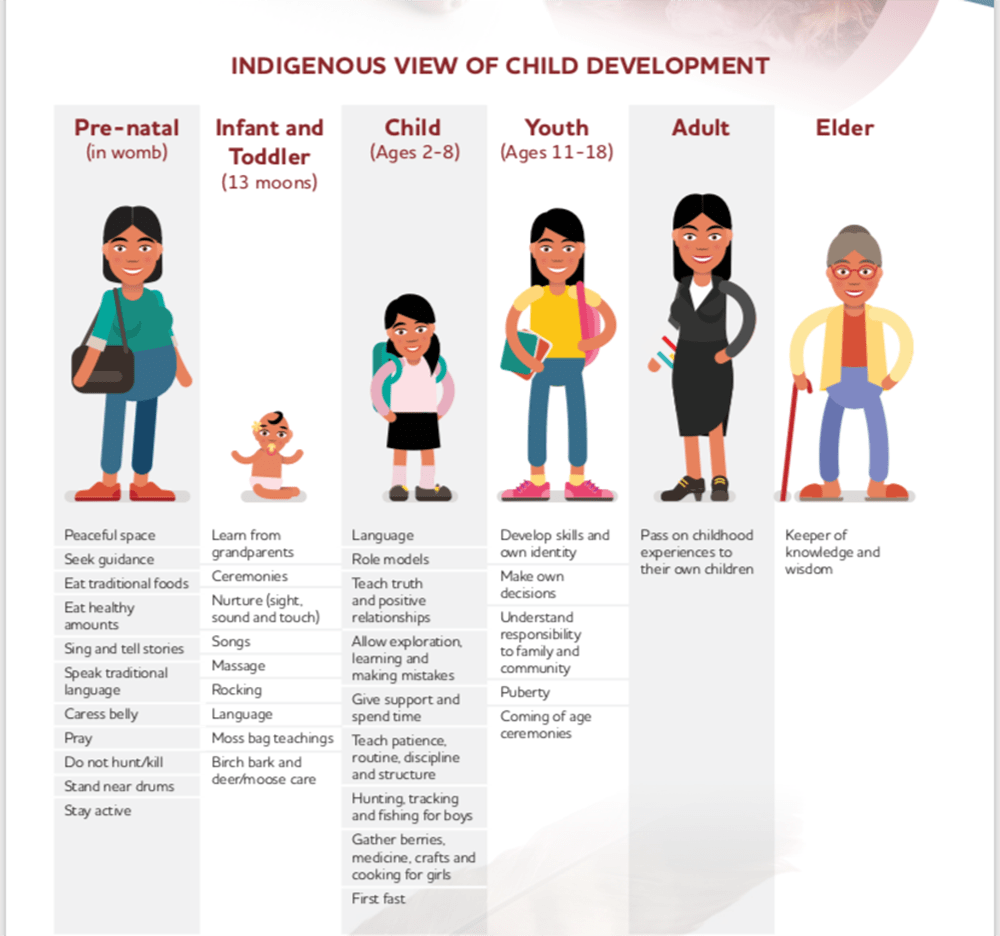
She leads the group through a variety of activities centred on identity, purpose and aspirations, as human beings, and as parents. She shares a bit of the Anishinabe creation story, Anishinabe child development knowledge, as well as western child development knowledge.
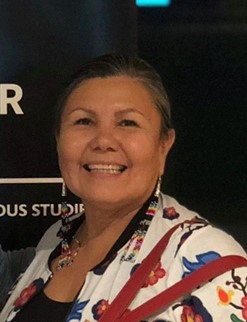
“For me, raising up our children to be Anishinabe is to be a human being,” she said.
That’s what Anishinabe means: human.
“I’m just grateful that people are asking for this, that people know it can help them in their day-to-day life, in their family’s life, their nation’s life.”
For more information, contact In a Good Way at 204-571-0670 or Little Teaching Lodge at 204-729-0788.
» mletourneau@brandonsun.com
» Michele LeTourneau covers Indigenous matters for The Brandon Sun under the Local Journalism Initiative, a federally funded program that supports the creation of original civic journalism.