
Birdtail practising virus vigilance
Advertisement
Read this article for free:
or
Already have an account? Log in here »
We need your support!
Local journalism needs your support!
As we navigate through unprecedented times, our journalists are working harder than ever to bring you the latest local updates to keep you safe and informed.
Now, more than ever, we need your support.
Starting at $15.99 plus taxes every four weeks you can access your Brandon Sun online and full access to all content as it appears on our website.
Subscribe Nowor call circulation directly at (204) 727-0527.
Your pledge helps to ensure we provide the news that matters most to your community!
To continue reading, please subscribe:
Add Brandon Sun access to your Free Press subscription for only an additional
$1 for the first 4 weeks*
*Your next subscription payment will increase by $1.00 and you will be charged $20.00 plus GST for four weeks. After four weeks, your payment will increase to $24.00 plus GST every four weeks.
Read unlimited articles for free today:
or
Already have an account? Log in here »
Hey there, time traveller!
This article was published 13/03/2020 (2212 days ago), so information in it may no longer be current.
With the arrival of COVID-19 to Manitoba, it has become ever more pressing for First Nations communities to have a plan in hand.
Birdtail Sioux First Nation Chief Ken Chalmers said in his own community there is concern but not panic. At the school, students are being taught to wash their hands at all times, while the custodial staff is doubling down of keeping the building sanitized. Only a small percentage of the population is over 70 years of age, and overcrowding — which would increase transmission rates — is not of great concern at Birdtail.
“There are a few homes with seven or eight people in them. But we do have a lot of underlying health factors. We always struggle with the health factors in our community that could add up to make it worse, like poverty, diet and all the stuff we’re dealing with now,” said Chalmers, who said there have been council-level discussions.
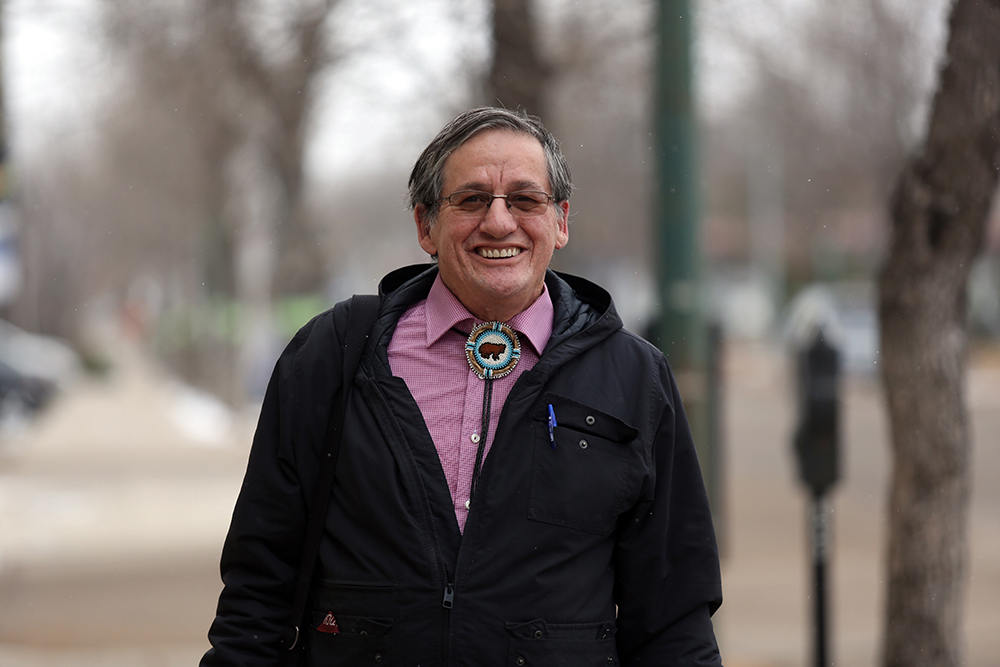
So far, it has been a wait-and-see approach, Chalmers said.
He added that he’s depending on the professionals. Chalmers is also chair of the Dakota Ojibway Tribal Council. At that level, director of health Gloria Rach has been working with individual First Nation health directors, regional health authorities and federal authorities to create a plan for the half-dozen member nations.
“The emergency plan is coming down next week,” Chalmers said. “They’re going to have some protocols ready for us, for all our communities. All the chiefs will meet. It’s a comprehensive plan.”
Rach could not be reached by press time.
Chalmers also said the Assembly of Manitoba Chiefs has an executive meeting planned for this morning, where he assumes COVID-19 discussions will take place.
The Manitoba Metis Federation has been busy planning since December. It stated in a news release Thursday afternoon that Manitoba Métis are especially at risk due to being among those with the highest levels of chronic disease and diabetes.
Along with cancelling a variety of meetings to help prevent transmission and continuing to do so on a case-by-case basis, the federation is implementing a communication plan to share information with Métis in the towns and villages they call home.
“To help our people, the MMF Housing Department will be making available three mobile tiny homes for emergencies in the villages or towns where families or family members need to self-isolate,” according to the release.
“In addition, N4 Metis Construction, a Manitoba Metis Government-owned company under the direction of MMF Minister Jack Park, is mobilizing two secure 48-bed camps as fully accessible health facilities as part of a larger action of community supports for people entering self-isolation and for those with special needs.”
The federation stated it will do everything necessary to protect and care for its people.
“We will not sit by and wait for the federal or provincial governments to address our community’s needs,” stated the federation.
Meanwhile, Indigenous Services Canada Minister Marc Miller’s press secretary, Vanessa Adams, stated by email that the minister “is a member of the COVID-19 Cabinet committee that meets regularly to co-ordinate a government-wide and Canada-wide approach.”
“Our government is working at every level with Indigenous leadership and communities on awareness and confirming necessary resources are in place. We will continue to work with partners to ensure that Indigenous communities are prepared to respond to a COVID-19 outbreak should one occur,” Adams stated.
The department has reached out to Indigenous leadership, including Assembly of First Nations, Inuit Tapiriit Kanatami and the Métis National Council, according to the email.
Further, Adams stated the federal department is working with First Nations communities to ensure pandemic plans are in place and updated, and supporting communities with putting these in place and revising where needed.
Adams mentioned a five-year, $79-million pot of money that supports this “ongoing work.”
Chalmers did say he dreads the day the virus gets to Brandon or another centre where Birdtail Sioux residents shop.
» mletourneau@brandonsun.com
» Michele LeTourneau covers Indigenous matters for The Brandon Sun under the Local Journalism Initiative, a federally funded program that supports the creation of original civic journalism.