
Local Indigenous hunter unaffected by ban
Advertisement
Read this article for free:
or
Already have an account? Log in here »
We need your support!
Local journalism needs your support!
As we navigate through unprecedented times, our journalists are working harder than ever to bring you the latest local updates to keep you safe and informed.
Now, more than ever, we need your support.
Starting at $15.99 plus taxes every four weeks you can access your Brandon Sun online and full access to all content as it appears on our website.
Subscribe Nowor call circulation directly at (204) 727-0527.
Your pledge helps to ensure we provide the news that matters most to your community!
To continue reading, please subscribe:
Add Brandon Sun access to your Free Press subscription for only an additional
$1 for the first 4 weeks*
*Your next subscription payment will increase by $1.00 and you will be charged $20.00 plus GST for four weeks. After four weeks, your payment will increase to $24.00 plus GST every four weeks.
Read unlimited articles for free today:
or
Already have an account? Log in here »
Hey there, time traveller!
This article was published 21/05/2020 (2172 days ago), so information in it may no longer be current.
Indigenous hunters in southwestern Manitoban seem unaffected by the recent federal gun ban — at least, those who recently spoke with The Brandon Sun.
Referring to the mass shooting by a lone gunman in Nova Scotia in mid-April that left 22 people dead, Prime Minister Justin Trudeau banned 1,500 models and variants of assault-style firearms.
Trudeau also referred to the 2017 attack at the Centre culturel islamique de Québec, where six died and 19 were injured, and the attack that took place in 1989 at École Polytechnique de Montréal, where 14 women died and 10 women and four men were injured.
The ban included an exception for Indigenous peoples who have Aboriginal or treaty rights to hunt. The exception is in place for two years, as is the amnesty for other gun owners with the banned models and some of their components.
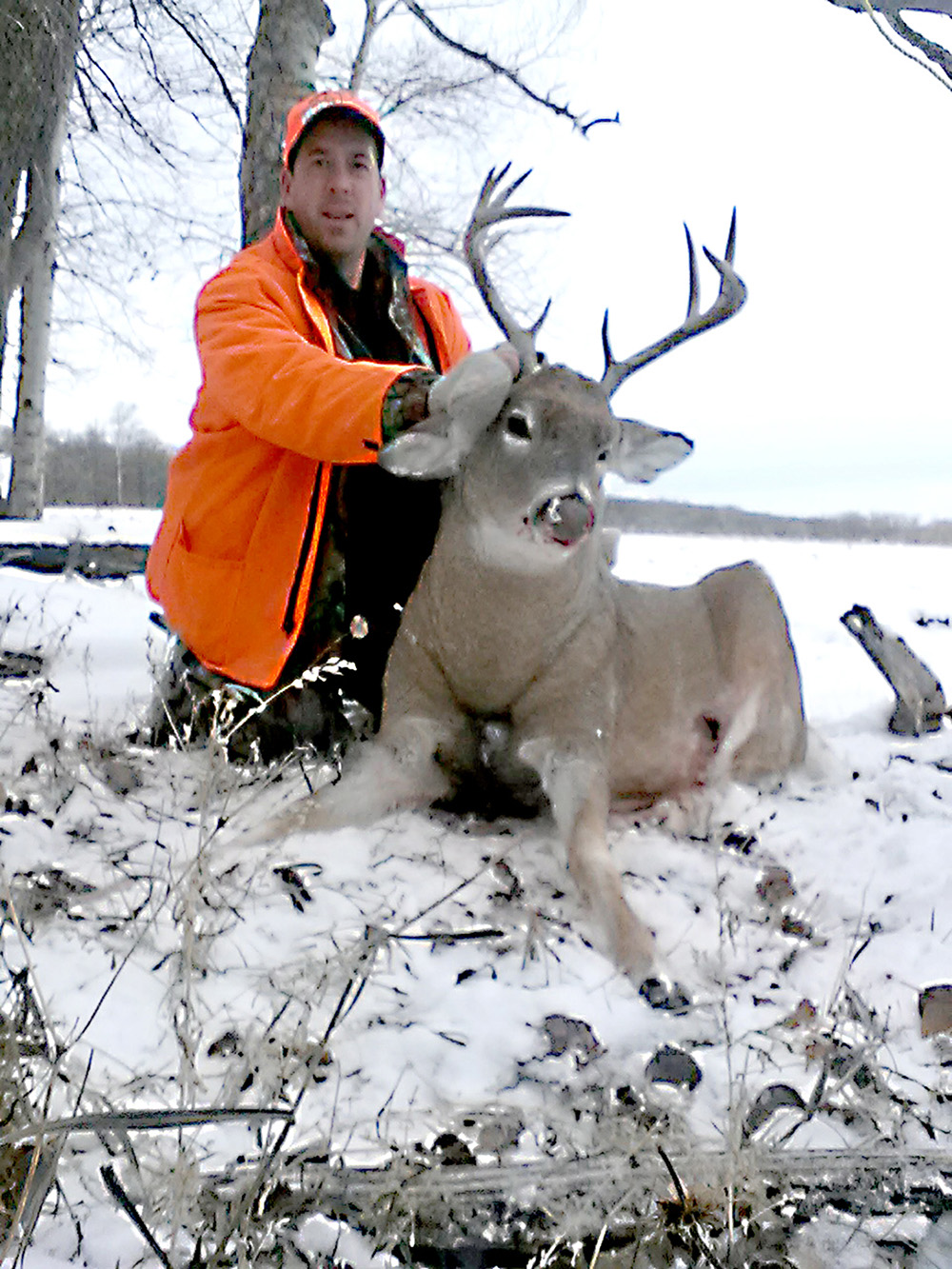
“I use a bolt-action rifle,” said Métis hunter Joel McCrimmon, who hunts around the Sandy Lake and Oak Lake areas.
McCrimmon said he has used the same rifle since he began hunting at 19. That’s almost 30 years.
“I have one other gun. It’s a semi-automatic, but it’s only a four-shot clip. It’s not a 15- or 30-shot clip like some of those assault weapons have.”
McCrimmon does plan to use it.
“I do know a lot of hunters. They’re all traditional bolt action, four-shot clip. Nothing remotely resembling these assault-style, as I call them. Never come across one yet,” he said.
“I have a friend that has one, but he bought it for target practice only.”
He said, in his experience, there are two kinds of rifles. The old-style hunting rifle, which is usually a bolt action, sometimes a pump style, a shotgun. Sometimes a semi-automatic. But they all have the four-bullet capacity in common. The other is the assault-style, such as the AR-15 and similar, which have upwards of 30 rounds.
“In my opinion, there’s no room for an assault-style rifle in hunting,” McCrimmon said.
“The only people I know who have those guns are target shooters.”
Keeseekoowenin First Nation’s Chief Norman Bone said about the banned firearms, “We’re not at war.”
But he can understand the ban in the context of what happened in Nova Scotia.
“If that’s what the guy was using,” he said.
“Every once in a while we see some people around with those kinds of guns.”
But Keeseekoowenin hunters use standard hunting rifles for deer, elk and moose.
With a semi-automatic, he said, you wouldn’t have to load every time you shoot.
“But the only semi-automatic I’d be familiar with is a .22,” Bone said.
Typically, a .22 rifle can hold 10 to 15 rounds, depending on the magazine.
“Most of the guys in the community are either using the bolt-action or the lever-action. Our guys have become pretty good shooters when they’re shooting at game on the run,” Bone said, adding some hunting areas are limited, so you have to become a pretty good shot to get what you need.
But he agrees with the Indigenous exception.
“It’s a right. From Ontario west to the mountains you have the treaty territories. A lot of our people have said, ‘We want to make sure we have access to all of our animals, in terms of harvesting.’ So that’s the position he’s (Trudeau) taken,” Bone said.
Keeseekoowenin is a Treaty 2 nation.
Birdtail Sioux Dakota Nation Chief Ken Chalmers had similar comments.
“It’s not an issue. Most of our guys, their rifles are passed down generationally,” Chalmers said.
“I don’t think there’s any AR-15s on our reserve. I always see the old .30-30, .270 or .30-06 hunting rifles. They’re basic big-game rifles.”
» mletourneau@brandonsun.com
» Michele LeTourneau covers Indigenous matters for The Brandon Sun under the Local Journalism Initiative, a federally funded program that supports the creation of original civic journalism.