
New BU study tackles distanced relationships
Advertisement
Read this article for free:
or
Already have an account? Log in here »
We need your support!
Local journalism needs your support!
As we navigate through unprecedented times, our journalists are working harder than ever to bring you the latest local updates to keep you safe and informed.
Now, more than ever, we need your support.
Starting at $15.99 plus taxes every four weeks you can access your Brandon Sun online and full access to all content as it appears on our website.
Subscribe Nowor call circulation directly at (204) 727-0527.
Your pledge helps to ensure we provide the news that matters most to your community!
To continue reading, please subscribe:
Add Brandon Sun access to your Free Press subscription for only an additional
$1 for the first 4 weeks*
- Enjoy unlimited reading on brandonsun.com
- Read the Brandon Sun E-Edition, our digital replica newspaper
*Your next Free Press subscription payment will increase by $1.00 and you will be charged $20.95 plus GST for four weeks. After four weeks, your payment will increase to $24.95 plus GST every four weeks.
Read unlimited articles for free today:
or
Already have an account? Log in here »
Hey there, time traveller!
This article was published 05/08/2020 (2132 days ago), so information in it may no longer be current.
Two Brandon University professors are launching a new research project into academics who are in relationships but live apart most of the time.
Similar to a long-distance relationship, people in “living apart together” situations are in committed relationships but do not live in the same household.
The idea came to professors Serena Petrella and Breanna Lawrence before the COVID-19 pandemic started, but the virus has added an extra dimension to the study.
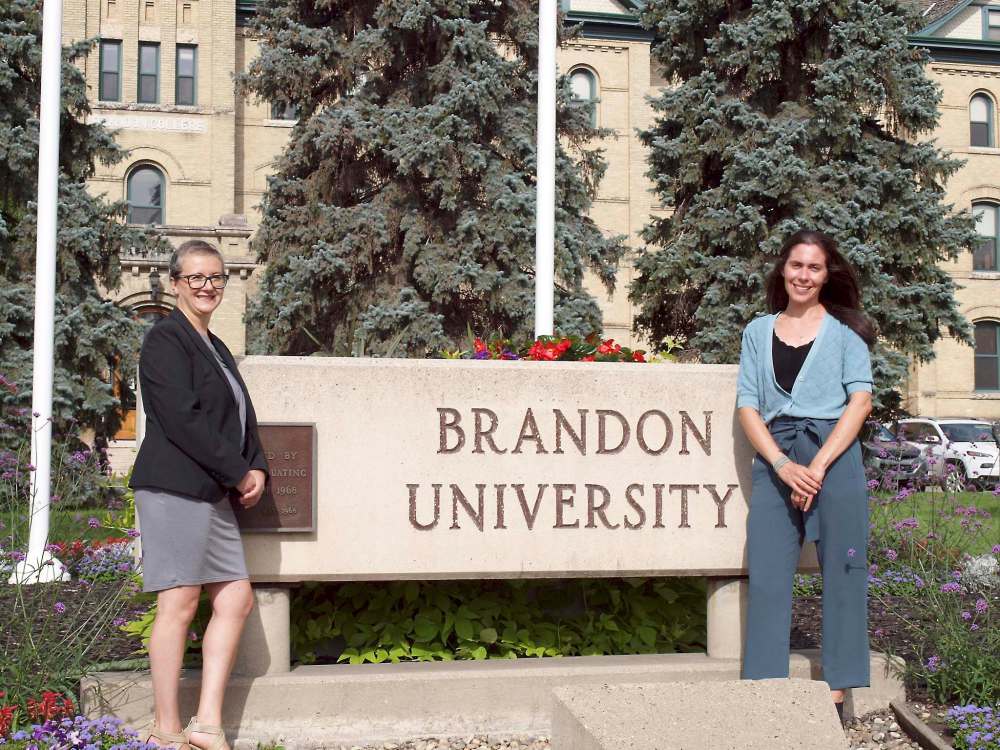
“The pandemic was particularly interesting because as you can imagine, it created very strange situations,” Petrella said during a Tuesday morning interview. “In some situations, it stranded relationships apart for longer periods of time, especially when borders closed down. In other cases, it actually allowed for people to stay with their families for longer periods of time. You can imagine that this can create a different kind of friction.”
Petrella is an associate professor and chair of the sociology department, while Lawrence is an assistant professor of educational psychology.
“The reason we’re specifically looking at this group (academics), is because they actually present demographic characteristics somewhat different from other living apart together relationships happening in larger society,” Petrella said. “Specifically, what’s happening at an academic level is we have really different typologies of living apart together, which are kind of driven by the way the academic field is organized.”
Asked if studying academics would lead to them studying their own co-workers, Petrella chuckled and said only if they volunteer.
According to Petrella, there are a lot of academics who live apart from their families either within the same province, in different provinces or in different countries altogether. The study was originally going to focus on Canadian academics, but they realized that there were a lot of academics in Canada with partners in other countries, so they broadened their horizons.
This leads to situations where partners can only see their loved ones during weekends or over the summer in the case of a smaller distance or only on special occasions in the case of a larger physical separation.
“Another piece that we’re really interested in are the implications for families,” Lawrence said. “It could be relationship counselling, family counselling. We’re curious about the impact on things like parenting. My background is also in career development so we’re wondering about how it influences people making decisions about where they work and how they work.”
Lawrence is also interested in the effects on mental health that a living apart together relationship has. One of the goals the two have for the study is that it will provide some information on how to support people who are in relationships like these.
Phase one of their study involves a survey that started circulating on Friday of last week, getting people in living apart together relationships to answer questions about them. As of Tuesday, 67 people had already responded to the survey, including people as far away as New Zealand and Turkey.
“We’re curious about where people are living, how far apart people are, how long it’s been going on for, what their specific situation looks like, how often do they see each other,” Lawrence said. “We’re even wondering about some of the financial implications of it, asking them to estimate that.”
Phase two will involve participants filling out a daily diary-style report about their relationship experiences.
Phase three will consist of interviews with participants, debriefing them on their experiences.
This study is focusing on academics, but the professors are hoping that they can do similar studies into the living apart together relationships of people in other situations and careers in the future. Petrella listed the petroleum industry as another sector with common living apart together relationships with people away for weeks at a time at a worksite before returning home.
The pair are hoping to have the academics-focused study finished by December 2021. Academics interested in participating in the survey can find it online at surveymonkey.com/r/SY25NB9.
» cslark@brandonsun.com
» Twitter: @ColinSlark