
MMF plans limited moose harvesting
Advertisement
Read this article for free:
or
Already have an account? Log in here »
We need your support!
Local journalism needs your support!
As we navigate through unprecedented times, our journalists are working harder than ever to bring you the latest local updates to keep you safe and informed.
Now, more than ever, we need your support.
Starting at $15.99 plus taxes every four weeks you can access your Brandon Sun online and full access to all content as it appears on our website.
Subscribe Nowor call circulation directly at (204) 727-0527.
Your pledge helps to ensure we provide the news that matters most to your community!
To continue reading, please subscribe:
Add Brandon Sun access to your Free Press subscription for only an additional
$1 for the first 4 weeks*
- Enjoy unlimited reading on brandonsun.com
- Read the Brandon Sun E-Edition, our digital replica newspaper
*Your next Free Press subscription payment will increase by $1.00 and you will be charged $20.95 plus GST for four weeks. After four weeks, your payment will increase to $24.95 plus GST every four weeks.
Read unlimited articles for free today:
or
Already have an account? Log in here »
Hey there, time traveller!
This article was published 30/09/2020 (2043 days ago), so information in it may no longer be current.
The Manitoba Metis Federation is moving ahead with a very controlled and limited bull-moose hunt, citing Section 35 of the Canadian Constitution and the Métis right to harvest.
Since 2011, Métis hunters have not been able to hunt moose due to their low population. As MMF president David Chartrand stated in a news release, it was in consultation with elders that the federation agreed to a moratorium as part of conservation efforts.
“There was enough information put out by the government in regards to Duck Mountain (game hunting areas 13 and 13A) and Porcupine (18, 18A, 18B, 18C). We were able to make a very a good decision on whether to harvest or not and how many to harvest based on those numbers,” said the federation’s minister of natural resources, Leah LaPlante.

“Turtle Mountain (29 and 29A), on the other hand, did not have enough of the provincial government information for us to make an assessment on that and still be very conservation-minded. So it’s out for this year.”
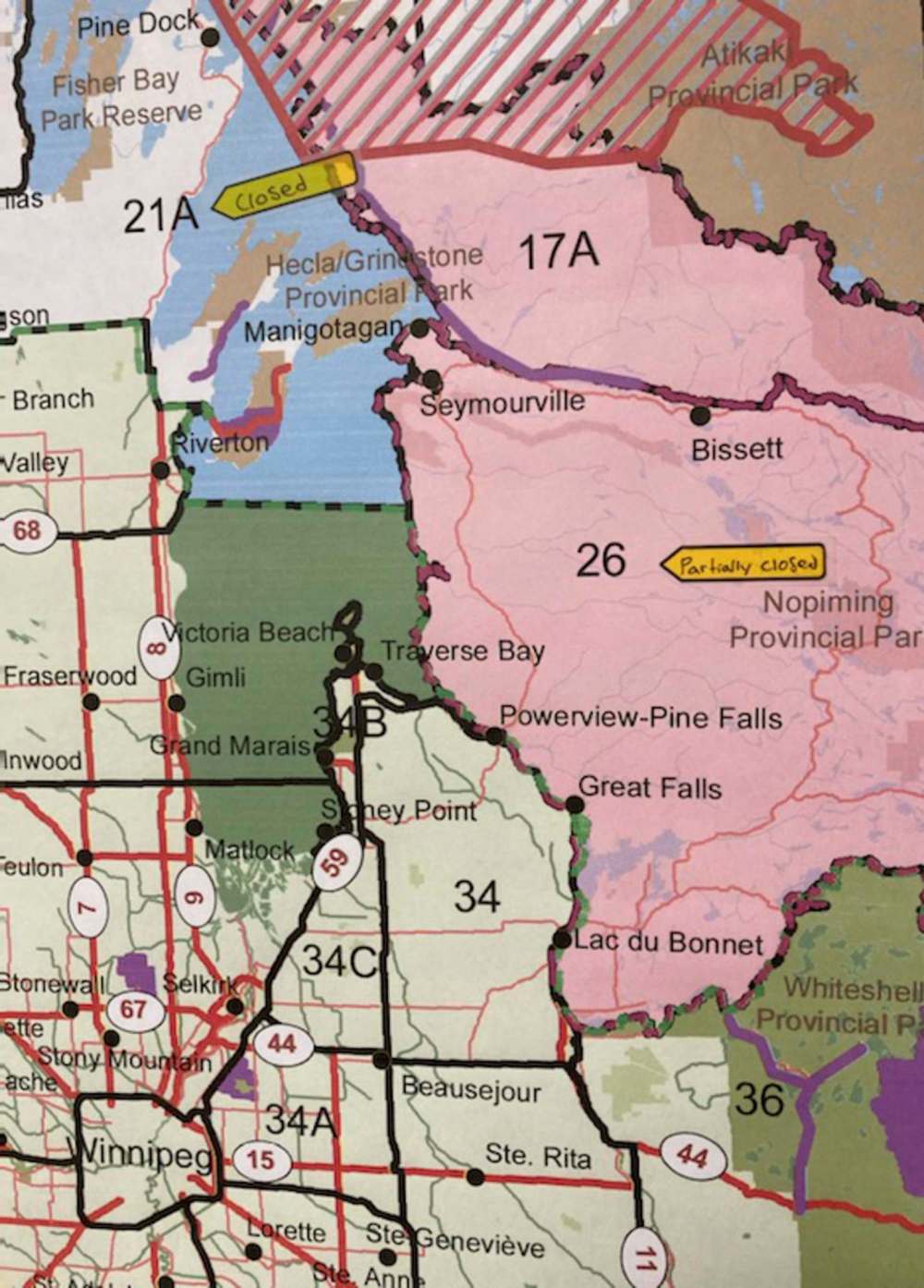
Game hunting area 26 — Nopiming — closed to moose hunting by the federation, will now be reopened.
Game hunting areas that remain closed along with Turtle Mountain are 12, 14, 14A, 19A, 21, 21A.
In a 2018 letter to the federation and at town halls, the provincial government stated their surveys showed that the moose populations in Porcupine Mountain and Duck Mountain areas were stable, which meant two per cent of the population, or 60 animals, could be harvested.
But the federation has chosen to provide only 16 tags to Métis harvesters in the Duck Mountain game hunting area and eight tags in the Porcupine Mountain area — for a total of 24. The hunt will be carried out by parties with a minimum of four hunters, who need to apply for a unique conservation moose tag, to be issued to the captain of the hunt for each party. The captain is then required to return the tag and report on the hunt.
“As the president made very clear, they’re not going in as an individual harvester. It will also be their (captain’s) responsibility to make sure that in their community, the elders, as much as possible, are given meat, and families, single moms or single dads,” LaPlante said.
The federation plans on conducting its own aerial surveys over the areas that remain closed. The idea is to use the numbers from all monitoring to fully assess the situation. LaPlante said harvesters in the Turtle Mountain area are reporting moose are making a comeback.
On this file, as with many others, the federation and the province are not meeting. The federation states that, since the hunting moratorium, there is no record of consultation on this matter, despite a 2019 federation letter requesting such.
“The Métis Government and the Métis laws of the harvest place a priority on conservation-minded harvesting. The MMF is seeking a cooperative approach with the province of Manitoba in these conservation efforts,” Chartrand stated.
“We are going to be engaging with First Nations leadership to come to an agreement on how First Nations and Métis harvesters will move forward on moose harvesting and sharing in a fair and equitable manner and will further engage with other stakeholders.”
LaPlante said that in 2011, the agreement was to discuss the moratorium in five years time. That never happened.
“Our people in the Ducks and the Porcupines that harvest in that area haven’t been able to have moose meat for 10 years. Our tradition of harvesting and sharing is important to us, because that’s how we all survived,” LaPlante said.
“We had elders in our communities, two elders who lived alone, who couldn’t harvest. There was always someone who harvested for them and took it to them to them, cleaned up and ready for the frying pan. It’s just a part of who we are. As much we can live in both worlds, our preference is to live the way we always lived, when it comes to what we eat and our practices in our community.”
The entire federation cabinet discussed two options — to stick with the province’s 10-year-old decision or to plan a small harvest.
“I think we’re doing it the right way and I’m fully supportive of this as the minister,” LaPlante said, adding it is a conservation-minded and community-minded decision.
“And our people are happy. They’re happy someone is going to have a chance to harvest and to bring some moose meat back into the community.”
The development of tags and the detailed process should be completed by the end of this week or early next week.
So far, a co-management system does not exist, and LaPlante said the federation wants to work on that with First Nations and the province.
“I want my children and grandchildren to be able to have traditional foods the same way we did, and I want non-Indigenous people, too,” she said.
“But, this year, this decision was important to us, to our community, especially our elders who are waiting to have some meat in their freezer.”
LaPlante stressed, also, that during the pandemic the ability to feed themselves may have been a tipping factor for Métis.
Métis harvesters will have until Jan. 15 to use the moose tags, at which time big game hunting will shut down for the season.
The province did not comment on the federation’s decision by deadline.
» mletourneau@brandonsun.com
» Michele LeTourneau covers Indigenous matters for The Brandon Sun under the Local Journalism Initiative, a federally funded program that supports the creation of original civic journalism.