
Métis to seek vaccine from manufacturers
Advertisement
Read this article for free:
or
Already have an account? Log in here »
We need your support!
Local journalism needs your support!
As we navigate through unprecedented times, our journalists are working harder than ever to bring you the latest local updates to keep you safe and informed.
Now, more than ever, we need your support.
Starting at $15.99 plus taxes every four weeks you can access your Brandon Sun online and full access to all content as it appears on our website.
Subscribe Nowor call circulation directly at (204) 727-0527.
Your pledge helps to ensure we provide the news that matters most to your community!
To continue reading, please subscribe:
Add Brandon Sun access to your Free Press subscription for only an additional
$1 for the first 4 weeks*
- Enjoy unlimited reading on brandonsun.com
- Read the Brandon Sun E-Edition, our digital replica newspaper
*Your next Free Press subscription payment will increase by $1.00 and you will be charged $20.95 plus GST for four weeks. After four weeks, your payment will increase to $24.95 plus GST every four weeks.
Read unlimited articles for free today:
or
Already have an account? Log in here »
Hey there, time traveller!
This article was published 27/02/2021 (2066 days ago), so information in it may no longer be current.
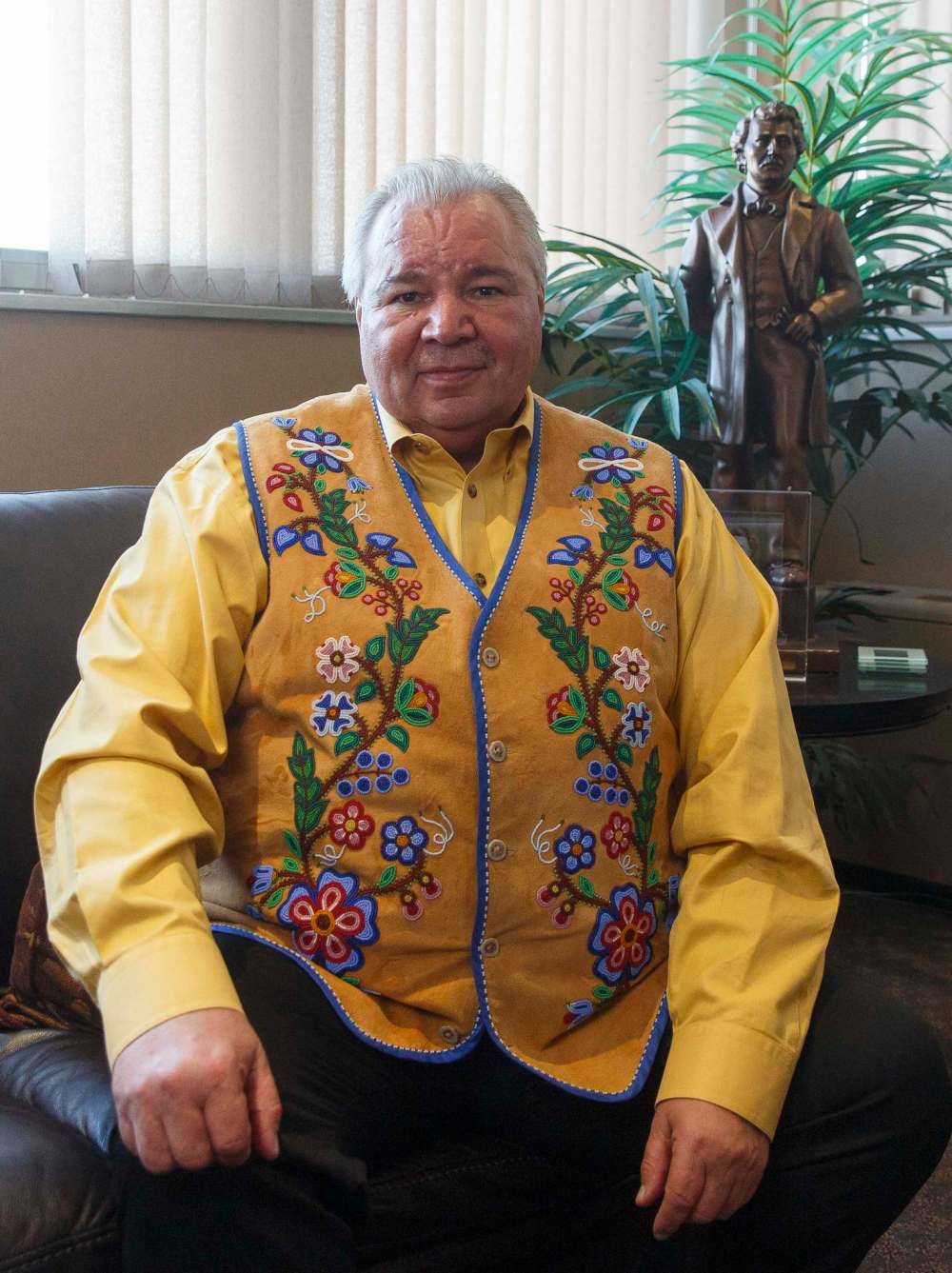
At his wits end with the province and in fear for his most vulnerable people, David Chartrand, president of the Manitoba Metis Federation, is approaching COVID-19 vaccine manufacturers in the hopes of purchasing doses directly.
“I’m sending a letter out to every one of them pleading with them to consider allowing me to buy direct, that my people are going to die and likely probably going to continue to suffer mental anguish and everything else that comes with it,” Chartrand said.
In British Columbia, Métis and other Indigenous people are eligible to get their shots sooner and at 15 years younger than the rest of the population, meaning they can get their shot at 65 when 80-year-old residents are being called.
Dr. Daniele Behn Smith, the deputy provincial health officer for Indigenous Health, said they’ve been working hard to make Métis people “feel seen” during the vaccination process.
Alberta is taking a similar approach and the Métis Nation Saskatchewan is working with the provincial government to work out a vaccine rollout.
Here, in Manitoba, the age differential is 20 years — when eligibility for the vaccine is at 95 for the general population, it is 75 for First Nations. That does not include Métis.
When asked by The Brandon Sun for the rationale for Manitoba not engaging with Métis in similar ways, when the conditions, vulnerabilities and disproportionate effect in the Métis population are the same, if not worse, than First Nations, Dr. Joss Reimer spoke about data.
“Our initial decisions were based on the epidemiology and the data that we had in front of us. The data was very clear that our First Nations, the First Nations people in Manitoba, were experiencing worse health outcomes and at younger ages,” said Reimer, medical lead for the vaccine implementation task force.
She said the province does not have the same access to data when it comes to the Métis population in Manitoba.
When asked if the task force would consider the same age differential for Métis, Reimer said nothing is off the table.
“If we have data to demonstrate that something is essential to provide the best possible care for Manitobans, we absolutely move in that direction. Right now, we don’t have that data to depend on. But that’s something that we’re trying to work on together,” she said.
Chartrand said that’s false. He said the federation has been making efforts to resolve the matter since the summer, to no avail. Further, he says the government is in possession of a four-year study that clearly shows the health vulnerabilities of Métis.
“We started asking, why are you not signing one (data sharing agreement) with us? They just basically said, well, we’ll get back to you. And nobody had an answer. We had nowhere to turn. Everybody we turned to said, we’ll get back to you. We’ll get back to you. I can go through emails and letters and meeting minutes. They’re all gonna give you the same response, we’ll get back to you,” said Chartrand. “Nobody ever gets back to you. No reason whatsoever. Not to say, it’s complicated. Not to say, can’t be done. Not to say, we don’t have any data in our own health system.”
Chartrand said the federation has plenty of data it can provide.
“We could provide you with ours, and give you a really good surface view of where we’re stating our position and even the health state of our people. We can share that with you. We have sufficient data that any statistician would have been embracing and kissing you for it, because it would (be) such a valuable tool of information. They still wouldn’t work with us. They never provided an answer why,” he said.
When Pine Creek First Nation, which is between the Métis villages of Camperville and Duck Bay, saw two cases of COVID-19 in January, Chief Karen Baston put the area on lockdown. Chartrand told his people to stay put for two weeks.
“We delivered hampers to every house whether they were First Nation, whether they were Métis, whether they were not Indigenous. We took hampers to every house. We told them, don’t go out and shop. Stay locked up for two weeks, and we’ll bring more supplies. Whatever you need, contact us. We delivered to 275 houses,” Chartrand said.
“Those are some big families. Some are $400 hampers some $150 hampers for a smaller family.”
Currently, the federation is delivering 40,000 pounds of fish through its partnership with Freshwater Fish.
These actions are possible with financial help from the federal government.
Chartrand said, while there have been COVID-19 cases and death in the Métis population, so far the federation’s pandemic action plan has been minimizing spread. There have been no outbreaks in Métis communities.
The federation even recently set up its own testing site for its citizens, to collect its own data.
Acquiring vaccines independently is the next step.
– with files from the Canadian Press
» mletourneau@brandonsun.com
» Michele LeTourneau covers Indigenous matters for The Brandon Sun under the Local Journalism Initiative, a federally funded program that supports the creation of original civic journalism.