
Officials react to planned education reforms
Advertisement
Read this article for free:
or
Already have an account? Log in here »
We need your support!
Local journalism needs your support!
As we navigate through unprecedented times, our journalists are working harder than ever to bring you the latest local updates to keep you safe and informed.
Now, more than ever, we need your support.
Starting at $15.99 plus taxes every four weeks you can access your Brandon Sun online and full access to all content as it appears on our website.
Subscribe Nowor call circulation directly at (204) 727-0527.
Your pledge helps to ensure we provide the news that matters most to your community!
To continue reading, please subscribe:
Add Brandon Sun access to your Free Press subscription for only an additional
$1 for the first 4 weeks*
- Enjoy unlimited reading on brandonsun.com
- Read the Brandon Sun E-Edition, our digital replica newspaper
*Your next Free Press subscription payment will increase by $1.00 and you will be charged $20.95 plus GST for four weeks. After four weeks, your payment will increase to $24.95 plus GST every four weeks.
Read unlimited articles for free today:
or
Already have an account? Log in here »
Hey there, time traveller!
This article was published 17/03/2021 (2007 days ago), so information in it may no longer be current.
Westman school administrators are voicing their concerns about the Manitoba government’s plan to revamp the education system, which includes dissolving most school boards in favour of a single provincial authority.
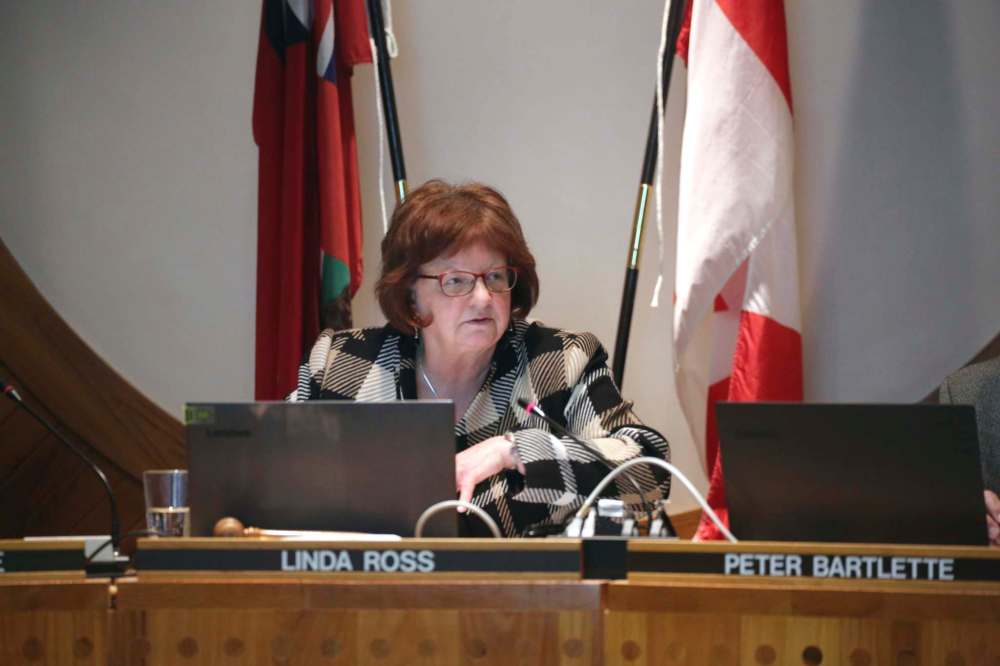
Brandon School Division board of trustees chair Linda Ross told the Sun that she was quite disappointed by Monday’s announcement from Education Minister Cliff Cullen, who laid out the province’s plan for reform following the release of its K-12 education review.
“We knew that there were going to be changes,” said Ross on Tuesday. “What I’m surprised at is the extent to which control of education will be centralized with the provincial government, and the loss of the local autonomy and local input.”
Cullen justified these proposed changes on Monday by stating that Manitoba’s current education system is not cost-effective at the administrative level, and that a new streamlined approach is needed to improve the academic performance of students.
However, Ross is not convinced that this overarching provincial education authority will be able to properly address the unique needs of individual schools compared to the efforts of local elected officials.
For example, Ross said the division’s trustees were only able to roll out speciality programs such as all-day, every-day kindergarten because of their close ties to the community.
“I don’t see any way in which those local initiatives are going to be possible (under this new structure),” she said. “And my concern is that the government is going to be much more of a cookie-cutter model.”
Ross was also concerned about how many BSD jobs will be lost because of this new governance structure, since the province plans to cut $40 million in administration costs and redirect the money to the classroom through this new system.
“So everybody’s question is: ‘where is that going to come from and am I going to have a job by the end of the day?’” she said. “With the information that we have and the information that we don’t have, there’s a lot of anxiety out there about the security of their jobs.”
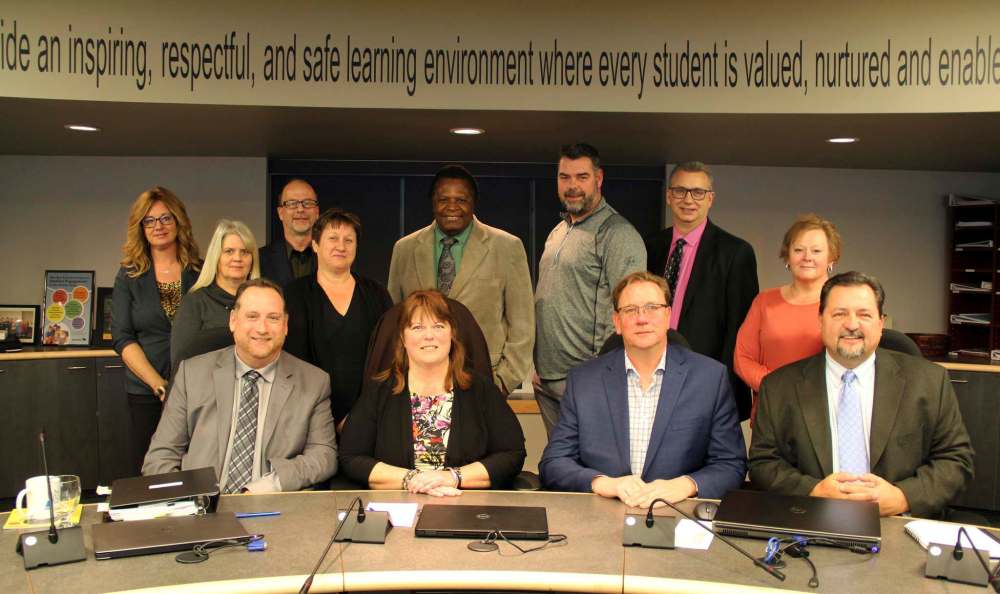
Fellow Westman board chair Gary Wowchuk said the province’s plan to merge 37 school divisions into 15 regional catchment areas also presents problems for smaller entities like the Swan Valley School Division.
Under the province’s proposed plan, Swan Valley will be grouped in with nearby Mountain View and Turtle River divisions, with this region being largely governed by a single education director.
“I think the biggest concern for us is that being one of the smaller divisions in such a large entity, that we wouldn’t necessarily be at the top of the list for consideration by whoever is appointed as director,” said Wowchuk.
“We only have 1,400 students, so how do you integrate that into a larger division? I’m not entirely sure. And, really, what does that do to some of our smaller communities and schools in the long run?”
Premier Brian Pallister addressed some of these concerns during a Tuesday morning news conference, reminding the public that each school in these regions will also be represented by a school community council that is designed to give much more decision-making power to parents, teachers and principals.
“When a parent has a problem with their child in school, they don’t go to a trustee. They don’t go to a superintendent, not with great frequency,” said Pallister. “They go to a teacher, and we want to empower teachers and parents to have that relationship and that’s a big part of (the) strengthening of our education system going forward.”
However, Mountain View School Division board chair Floyd Martens fears that Manitoba is repeating the same mistakes that other provincial governments have made trying to streamline their own education system.
As a longtime trustee, Martens remembers when New Brunswick and Prince Edward Island abolished their school boards in the mid-1990s and early 2010s, respectively, even though those entities eventually came back in some form due to shifting public opinion.
“They realized that by not having an elected board that’s closer to the community … you lose that community voice,” said Martens. “Communities become disengaged, disenfranchised and feeling like they don’t have a voice, and that’s not helpful in education.”
Plus, Martens believes that the province’s plan for education reform isn’t in keeping with the findings of the K-12 education review, since this report specifically recommends consolidating the existing 37 school boards into six to eight similar entities with elected trustees.
Despite all these concerns, the province is still moving ahead with its plans to codify this proposed education reform into law through Bill 64, the Education Modernization Act.
If this legislation passes in a timely fashion, the provincial education authority could be established as early as November 2021, with changes to the school trustees system expected by July 2022.
“At the end of the day, the government is ultimately responsible for education. I get that,” said Martens. “But having individuals who you actually choose to represent your voice, who you can also un-elect, that at least gives you some sense of democratic process.”
Anyone interested in learning more about the province’s K-12 education review or proposed education reform can visit bettereducationmb.ca.
» kdarbyson@brandonsun.com
» Twitter: @KyleDarbyson
Proposed school region breakdown
If the province’s proposed education system is passed into law, Manitoba’s 37 pre-existing school divisions will be organized into 15 regional catchment areas. Here is what these groupings look like:
• Winnipeg, St. James-Assiniboia, Louis Riel, Pembina Trails, Seven Oaks and River East Transcona
• Frontier, Kelsey, Flin Flon and Mystery Lake
• Beautiful Plains, Park West and Rolling River
• Mountain View, Swan Valley and Turtle River
• Fort La Bosse, Southwest Horizon and Turtle Mountain
• Brandon
• Portage la Prairie and Pine Creek
• Prairie Spirit and Prairie Rose
• Garden Valley and Western
• Evergreen and Lakeshore
• Interlake and Lord Selkirk
• Hanover
• Sunrise and Whiteshell
• Seine River
• Border Land and Red River Valley
» Source: Province of Manitoba