
Manitoba to continue carbon tax challenge
Advertisement
Read this article for free:
or
Already have an account? Log in here »
We need your support!
Local journalism needs your support!
As we navigate through unprecedented times, our journalists are working harder than ever to bring you the latest local updates to keep you safe and informed.
Now, more than ever, we need your support.
Starting at $15.99 plus taxes every four weeks you can access your Brandon Sun online and full access to all content as it appears on our website.
Subscribe Nowor call circulation directly at (204) 727-0527.
Your pledge helps to ensure we provide the news that matters most to your community!
To continue reading, please subscribe:
Add Brandon Sun access to your Free Press subscription for only an additional
$1 for the first 4 weeks*
- Enjoy unlimited reading on brandonsun.com
- Read the Brandon Sun E-Edition, our digital replica newspaper
*Your next Free Press subscription payment will increase by $1.00 and you will be charged $20.95 plus GST for four weeks. After four weeks, your payment will increase to $24.95 plus GST every four weeks.
Read unlimited articles for free today:
or
Already have an account? Log in here »
Hey there, time traveller!
This article was published 26/03/2021 (2039 days ago), so information in it may no longer be current.
The provincial government is taking the Supreme Court of Canada’s upholding of the carbon tax as a win.
On Thursday morning, the court ruled in a 6-3 split decision that the federal carbon tax is constitutional, quashing an appeal filed by the Saskatchewan government after that province’s own Court of Appeal dismissed a constitutional challenge against the tax last year.
Though Alberta Premier Jason Kenney and Saskatchewan Premier Scott Moe expressed disappointment in the decision, Manitoba Premier Brian Pallister found a silver lining in the ruling.
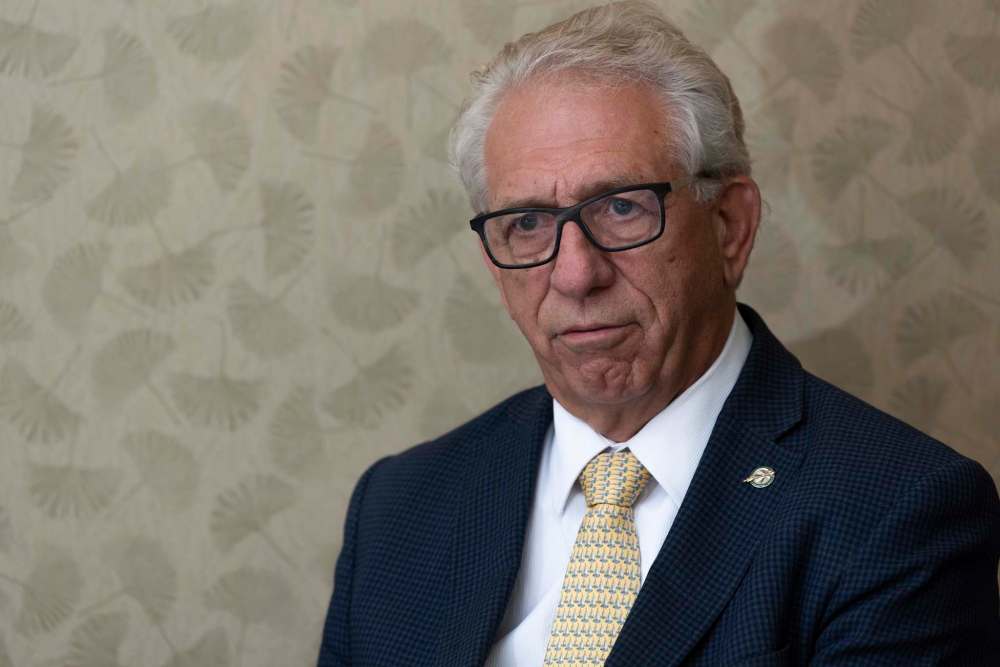
Manitoba has its own appeal of the carbon tax in the works after Pallister proposed a flat price on carbon for the province last year that wouldn’t see costs rise like the federal plan.
The decision, which was authored by Chief Justice Richard Wagner, states that the federal government can only impose its own carbon pricing on a province that has an insufficient price in place.
“It reaffirms that this is a national issue, an international issue that needs to be addressed,” Pallister said during a Thursday morning media conference. “I think it also affirms pretty clearly that the federal government doesn’t have an unfettered right how to address it.
“We have a made-in-Manitoba plan. Our plan is more stringent than many of the provinces the federal government said could go ahead with theirs, and Manitoba’s green plan will work best if we have Manitobans working together on it as we did when we developed it. We’re optimistic with the decision and the wording in it that we have a case to make.”
The premier argued that the federal plan is damaging to Manitoba because significant portions of the province are rural or northern, so the province is more impacted than provinces with more urban economic bases.
“Also, the federal government has given us zero credit for the billions of dollars that we have been forced to borrow to invest in our green economy and in large part, Hydro,” Pallister said.
“Hydro was built by the previous government with the intention of satisfying American markets that simply aren’t coming to the foreground, so we’re focusing on developing Canadian markets like the market in Saskatchewan that was somewhat discussed yesterday.”
Wednesday’s edition of the Winnipeg Free Press featured a story stating that the recent Wall report on Manitoba Hydro had failed to disclose that Manitoba had made two power sales valued at $5 billion to Saskatchewan.
During his media conference on Thursday, Pallister said that allegations his government had covered up the deals were “a frivolous and false accusation.”
He also said that like how Manitoba has been successful with public health measures during the COVID-19 pandemic by involving the public in the process, Manitoba’s green plan will be better and in some cases more stringent than the federal plan because Manitobans and stakeholder groups are building it together.
Asked how Manitoba’s chances appear to be in winning its appeal, the premier was hesitant to provide a firm answer.
“I learned a long time ago that what seems common sense to most people isn’t necessarily what happens in a court,” Pallister said. “And so I’ll only say I’m very hopeful.”
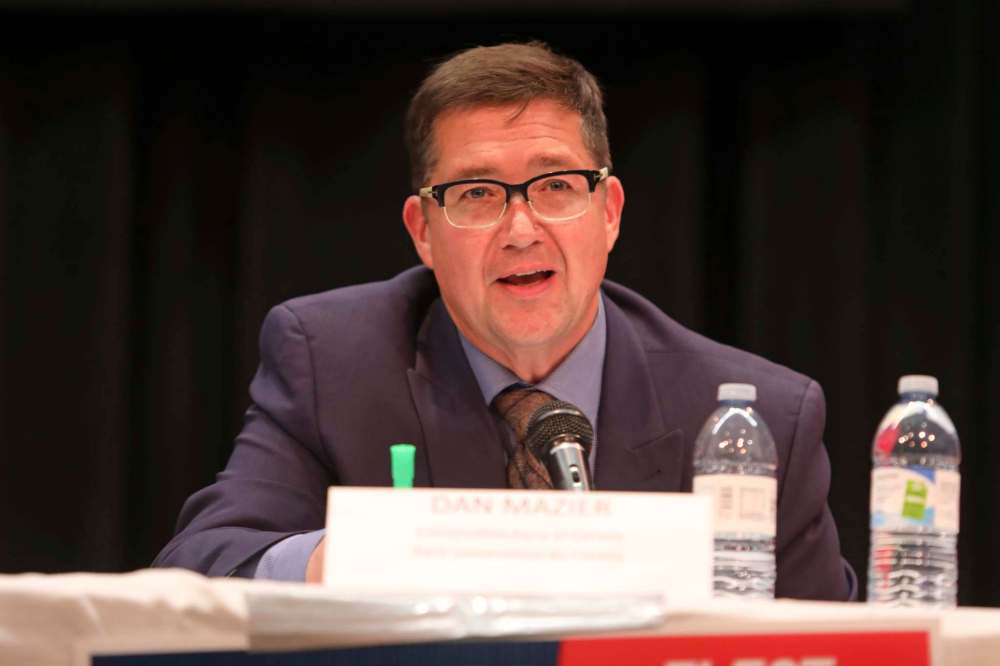
Dauphin-Swan River-Neepawa Conservative MP Dan Mazier said by phone from Ottawa that he was thankful the Supreme Court came to a decision as several plans and decisions were being held up by the wait.
He was glad the Supreme Court’s ruling recognized that there is a spillover of carbon emissions between jurisdictions.
“When you have a carbon tax imposed in one country and you don’t have one in another like the United States … that puts us, our businesses and everything at a disadvantage,” Mazier said. “Why would a person come to Canada to invest in if all of a sudden you’re under the gun with a carbon tax.”
The Conservatives’ recent online policy convention featured Opposition Leader Erin O’Toole saying in a speech that the debate on the existence of climate change must end as it is real.
However, the convention also featured a vote in which 54 per cent of delegates voted against adding “We recognize that climate change is real. The Conservative Party is willing to act” to its policy declaration.
The party still wants to axe the federal carbon tax and Mazier said the in-progress Conservative climate plan will propose an alternative solution that will be cheaper for Canadians and businesses as well as a collaborative approach with the provinces.
“If Manitoba has a better plan that meets our federal goals, go for it,” he said.
His colleague, Brandon-Souris Conservative MP Larry Maguire, told the Sun that climate change and the environment have long been a concern of his as a politician at the provincial and federal levels as well as being a farmer.
“Emissions are a matter of national concern, there’s no doubt about that,” said Maguire. “But the Liberal carbon tax is not the way to go. All it does is make the poorest people in Canada pay more.”
Maguire said that the process of changing the country’s climate change approach and balancing the budget, if his party were to take power, would need to take place over several years.
Both Mazier and Maguire said they believed the governing Liberals are preparing to call a spring election.
Both men said their party would have its new climate plan ready if an election is called in the short term. Neither MP believed that their party’s climate plan, when announced, would put them at odds with grassroots members.
“A Conservative government led by Erin O’Toole will work with the provinces,” said Mazier about carbon measures. “You can’t say the same about the Liberals.”
A motion proposed by the Conservatives to exempt agricultural producers from being charged carbon tax on grain drying is currently supported by all parties except for the governing Liberals and has reached the committee stage in the House.
» cslark@brandonsun.com
» Twitter: @ColinSlark