
AstraZeneca vaccine remains on hold
Advertisement
Read this article for free:
or
Already have an account? Log in here »
We need your support!
Local journalism needs your support!
As we navigate through unprecedented times, our journalists are working harder than ever to bring you the latest local updates to keep you safe and informed.
Now, more than ever, we need your support.
Starting at $15.99 plus taxes every four weeks you can access your Brandon Sun online and full access to all content as it appears on our website.
Subscribe Nowor call circulation directly at (204) 727-0527.
Your pledge helps to ensure we provide the news that matters most to your community!
To continue reading, please subscribe:
Add Brandon Sun access to your Free Press subscription for only an additional
$1 for the first 4 weeks*
- Enjoy unlimited reading on brandonsun.com
- Read the Brandon Sun E-Edition, our digital replica newspaper
*Your next Free Press subscription payment will increase by $1.00 and you will be charged $20.95 plus GST for four weeks. After four weeks, your payment will increase to $24.95 plus GST every four weeks.
Read unlimited articles for free today:
or
Already have an account? Log in here »
Hey there, time traveller!
This article was published 01/04/2021 (2000 days ago), so information in it may no longer be current.
Two days after she announced Manitoba was pausing the use of the AstraZeneca COVID-19 vaccine for people under 55 years old due to rare side-effects being observed in Europe, vaccine team medical lead Dr. Joss Reimer tried to put the situation in context during a vaccination update on Wednesday afternoon.
“We, along with colleagues across the country, continue to monitor the situation closely, and we will adjust our plans based on the science and the evidence as it comes forward,” said Reimer. “The findings and these side-effects are serious, but we have to remember that COVID is also serious.
“For people in the older age group, the risks posed by COVID, including the risk of blood clots related to COVID infection, are much greater than this possible side-effect from the vaccine. Vaccines are the most studied and closely monitored medical intervention in our history. These types of rare side-effects could occur with other medications, other herbal remedies, but because we don’t have monitoring systems, we wouldn’t be aware of those.”
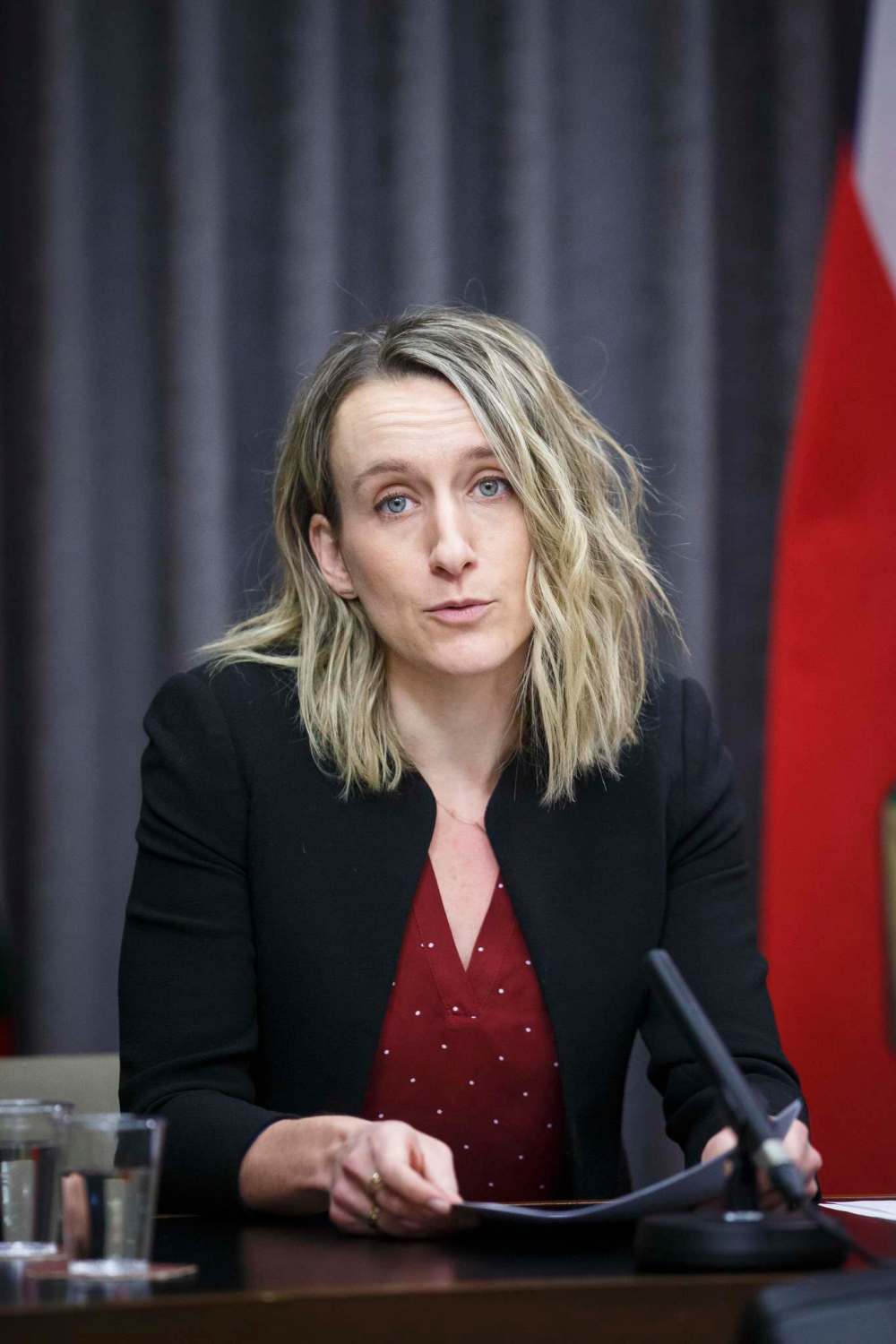
She took time to further explain the symptoms of these rare side-effects.
“We know that a very rare but serious side-effect where people are having blood clots combined with low levels of platelets have been observed among young people in Europe,” said Reimer.
“This increased risk of these serious blood clots with low platelets affects somewhere between one in every 100,000 doses or one in every million doses. Symptoms usually occur between four to 16 days after immunization and those symptoms can look a lot like a stroke or a heart attack.
Platelets are a type of blood cell that clump together in cases of injury to stop bleeding by creating blood clots.
Later on, Reimer said that the blood clots are being formed by a different mechanism than normal where antibodies are triggering something in the platelets that makes them stop working properly.
Because of this, it’s a different situation than people at risk of developing blood clots in their lungs or legs.
The doctor specified that these side-effects have not been observed in Manitoba or in Canada as a whole at this point.
After the AstraZeneca announcement on Monday, some comments on the Sun’s Facebook page questioned why there were still some people eligible to get the vaccine despite the side-effects. Reimer addressed those concerns.
“I think there’s two aspects that weighed into our decision to use the temporary age cutoff,” said Reimer. “The first was that the cases that we were seeing in Europe were occurring in younger populations. Most of them were under 55. We don’t know yet if that’s truly a reflection of younger people being more likely to experience the side-effects or if it had more to do with who was being offered the vaccine in Europe. But because we don’t know that, that’s one of the reasons we decided to pause while we gathered more information from Europe.”
The other reason is that severe outcomes from COVID-19 infection are a higher risk for older people than developing the side-effects.
She also discussed her concerns about how the AstraZeneca situation could affect confidence in the vaccination effort.
“My concerns about communicating the AstraZeneca situation are what keep me up at night,” said Reimer. “I’m very worried about Manitobans feeling worried about the vaccine and losing trust in what we know is a very safe product and so we want to continue to use opportunities like this (media conference) to share information with Manitobans … the last thing we want from this is for people to decide they don’t want to be immunized because they’re fearful of the vaccine.”
Reimer was asked about Wednesday’s news that Pfizer’s vaccine was found to be safe and have protective effects on kids as young as 12 and if this would change Manitoba’s vaccination strategy.
“What we need to wait for in Canada is for Health Canada to approve its use in people under 16,” said Reimer. “At the moment, Pfizer is only approved for people over 16, with the other vaccines only being approved for people under 18. However, if Health Canada were to approve it for younger populations, certainly we would look at how we roll out a vaccine campaign for younger Manitobans as well.”
She did not have any information from Health Canada as to when the approved ages might change.
Vaccine team co-lead Johanu Botha said that with Manitoba reaching its target daily maximum vaccine capacity of administering 20,000 doses per day, the province will run out of doses to administer if it does not receive any more doses in less than a week.
All doses that have arrived in Manitoba have either been injected, allocated to a partner group or booked to be injected between now and April 5.
Data shown during a technical briefing led by Botha on Wednesday morning shows stated that Brandon’s Keystone Centre supersite has administered an average of 250 doses of vaccine a day since it opened.
That’s below Winnipeg (1,054 per day), Morden (476) and Selkirk (378) but above Thompson (134).
Last week, Brandon administered the second-least number of doses of all supersites with 1,904. That was above Thompson (557) in doses administered, but below Selkirk (2,025), Morden (2,078) and Winnipeg (16,551).
In terms of total doses administered, Brandon’s 13,022 ranks second-highest among all supersites, leading Selkirk (4,915), Morden (2,856) and Thompson (2,681) but far below Winnipeg (83,288).
All of these statistics are from the end of day on March 30, though Botha said there was a data entry delay making these statistics lower than the actual totals, especially in Winnipeg.
“My initial assessment would be that especially compared with the Morden site, Brandon was obviously operating before both Selkirk and Morden so it may have gotten through its age eligibility cohort in that area at a faster clip than what we saw in Interlake-Eastern and Morden,” Botha said about Brandon lagging behind last week.
“I would expect Brandon to, given their population, next week be chugging ahead of the rest assuming uptake is even across the province, of course, but behind Winnipeg.”
Approximately 230,000 combined doses of Pfizer, Moderna and AstraZeneca’s vaccines are expected to arrive in April, including approximately 40,000 Pfizer doses and 50,000 AstraZeneca doses supposed to arrive next week.
“We’d like more, we’d like all our supersites to get up to their daily maximum capacity, which will require more Pfizer supply than this,” said Botha. “We’re awaiting information on that piece from the federal government, but the supply stability remains nice to see for Pfizer.”
Botha said there has been a delay in receiving Moderna shipments from the federal government and Manitoba is still waiting on approximately 26,000 doses that should have arrived on March 29. The new estimated delivery date is April 1.
Additionally, next week’s Moderna shipment of approximately 28,000 doses is expected to be delivered the week after.
“We can deal with such difference within a week, although it’s not ideal,” he said. “A much more challenging piece for us is when our confirmed delivery schedule from the federal government is more than a week out or delayed.”
With the new doses arriving, the province projects that it will hit the 200,000 mark for doses administered as of April 3 and the 300,000 dose mark on April 17.
Given Manitoba is holding off on using the AstraZeneca vaccine on people younger than 55, Botha was asked if there was any risk of spoilage due to the delay.
“I don’t have the specific expiry date on hand,” said Botha. “What I do know is that it won’t be near as tight as the one we saw on the first shipment of AstraZeneca. Our physician and pharmacy partners will have more time to administer these, not that they’ve had an issue administering them quickly anyway.”
He said he didn’t foresee any going to waste.
Asked about AstraZeneca during a press conference held later Wednesday afternoon, Premier Brian Pallister said he supports the decision to pause the use of the vaccine until further data and scientific information become available.
» cslark@brandonsun.com
» Twitter: @ColinSlark