
B.C. discovery echoes one closer to home
Advertisement
Read this article for free:
or
Already have an account? Log in here »
We need your support!
Local journalism needs your support!
As we navigate through unprecedented times, our journalists are working harder than ever to bring you the latest local updates to keep you safe and informed.
Now, more than ever, we need your support.
Starting at $15.99 plus taxes every four weeks you can access your Brandon Sun online and full access to all content as it appears on our website.
Subscribe Nowor call circulation directly at (204) 727-0527.
Your pledge helps to ensure we provide the news that matters most to your community!
To continue reading, please subscribe:
Add Brandon Sun access to your Free Press subscription for only an additional
$1 for the first 4 weeks*
- Enjoy unlimited reading on brandonsun.com
- Read the Brandon Sun E-Edition, our digital replica newspaper
*Your next Free Press subscription payment will increase by $1.00 and you will be charged $20.95 plus GST for four weeks. After four weeks, your payment will increase to $24.95 plus GST every four weeks.
Read unlimited articles for free today:
or
Already have an account? Log in here »
Hey there, time traveller!
This article was published 29/05/2021 (1944 days ago), so information in it may no longer be current.
A harrowing discovery in Kamloops, B.C., is reminiscent of one much closer to home, off Grand Valley Road in Brandon.
Yesterday, it was announced the remains of 215 children had been found buried on the site of the former Kamloops Indian Residential School.
Tk’emlups te Secwépemc First Nation Chief Rosanna Casimir described the discovery as an “unthinkable loss that was spoken about but never documented.”
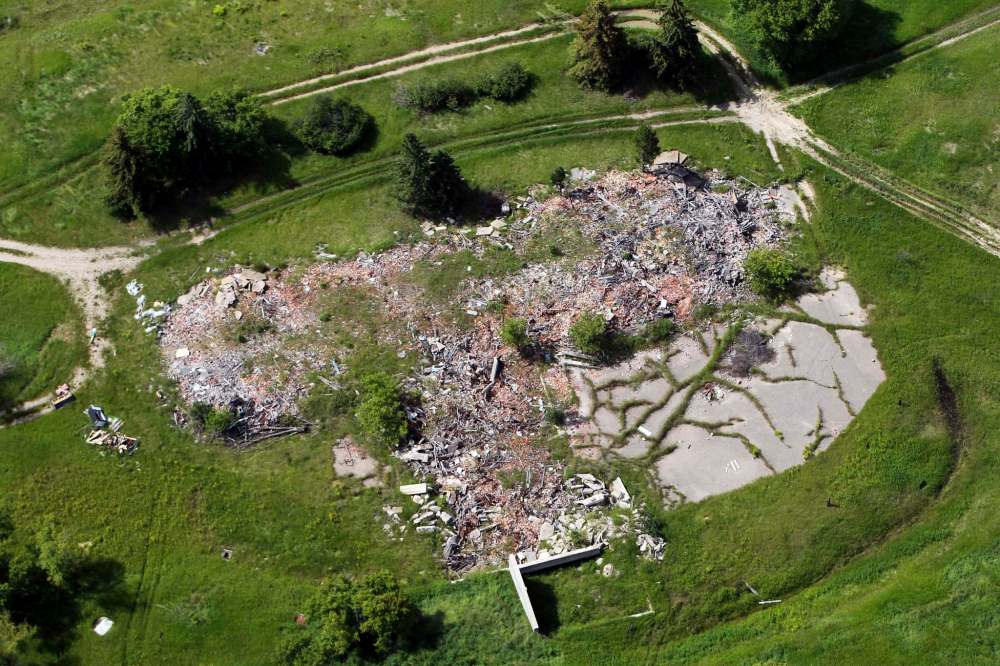
An archivist is working with the Royal BC Museum to see if any records of the deaths can be found.
The dead were as young as three.
The Brandon Industrial/Indian Residential School carries a similar legacy, which University of Manitoba researcher Katherine Nichols helped uncover key details of several years ago.
Drawing from various and sometimes contradictory reports, she discovered the names of at least 70 people, not all of whom pupils, who died at the school during its operations from 1895 to 1972.
While some are buried at the former school site on the north side of Grand Valley Road, on property Sioux Valley Dakota Nation currently owns, approximately 50 are believed to have been buried in historic gravesites called the Assiniboine River Burial Ground, which operated from 1895 to 1912.
Located south of the former school site and north of the Assiniboine River, the property was owned and operated by the City of Brandon as Curran Park from 1972 to 2001, after which it changed between owners until Mark and Joan Kovatch took over in 2007.
Since that time, the new owners have allowed researchers on site, which led to the discovery of the exact locations of graves.
Between themselves, Sioux Valley Dakota Nation, the City of Brandon and the province, Mark said all parties have come to a mutual decision.
“We’ve identified where they are and where they’ve got to go,” he said of the unmarked graves, adding that when he finally gets around to developing the land, those interred on site will be handled in whatever manner their respective First Nations communities determine best.
“We have to either leave them where they are and fence them in and leave a shrine around them, or move them up with the other kids in the graveyard up on the hill.”
Sioux Valley Dakota Nation Coun. Evelyn Pratt said it’s been a complex matter, namely because the majority of bodies are more than 100 years old and “there wasn’t a lot of good record-keeping as far as the residential schools go.”
“There are so many injustices in the residential school system,” she said. “I don’t think any other culture or group in Canada would find that acceptable, to just mass bury them and forget them. They’re not even marked. … It’s just not right.”
Sioux Valley Dakota Nation has established a committee to co-ordinate with elders from various home communities and/or relatives of the deceased to determine how to deal with the bodies in as respectful and culturally relevant manner as possible, following all required protocols.
It’ll help offer closure to some family members, Pratt said, as parents weren’t always told how their children died.
The effort has ground to a bit of a halt during the pandemic, she said, since some elders don’t have access to the technology required to join online meetings.
Another plan, for a treatment centre at the former school site, has also been put on hold, as Pratt said it will depend on what’s done with the burial sites.
Mayor Rick Chrest said it’s of special note that Sioux Va lley Dakota Nation has taken a leadership role in tackling the burial sites, as many of the students who died at the school were not from the community.
“We certainly do want to see appropriate and dignified solution worked out, and the positive thing is that all parties, including the now-property owner, have been very co-operative and collaborative in letting people on the property to do investigations and verify things,” Chrest said, adding the project deserves to be a priority.
“We look forward to picking this back up when COVID gets a little more behind us, and get back to work on this project.”
According to the Truth and Reconciliation Commission of Canada, more than 4,100 children died of disease or accident while attending a residential school.
Sioux Valley Dakota Nation Chief Jennifer Bone did not return a message for comment by Friday’s deadline.
» tclarke@brandonsun.com
» Twitter: @TylerClarkeMB