
PM vows to ‘do more’ after graves found
Advertisement
Read this article for free:
or
Already have an account? Log in here »
We need your support!
Local journalism needs your support!
As we navigate through unprecedented times, our journalists are working harder than ever to bring you the latest local updates to keep you safe and informed.
Now, more than ever, we need your support.
Starting at $15.99 plus taxes every four weeks you can access your Brandon Sun online and full access to all content as it appears on our website.
Subscribe Nowor call circulation directly at (204) 727-0527.
Your pledge helps to ensure we provide the news that matters most to your community!
To continue reading, please subscribe:
Add Brandon Sun access to your Free Press subscription for only an additional
$1 for the first 4 weeks*
*Your next subscription payment will increase by $1.00 and you will be charged $20.00 plus GST for four weeks. After four weeks, your payment will increase to $24.00 plus GST every four weeks.
Read unlimited articles for free today:
or
Already have an account? Log in here »
Hey there, time traveller!
This article was published 01/06/2021 (1765 days ago), so information in it may no longer be current.
OTTAWA — As memorials with tiny shoes have elicited cries of grief across the nation, Prime Minister Justin Trudeau and his government are facing tough questions about why little has been done to implement recommendations released six years ago to find and document the unmarked graves of Indigenous children.
Speaking in sombre tones at a virtual event in Ottawa Monday, Trudeau reflected on the recent discovery of the remains of 215 children on the grounds of the former Kamloops Indian Residential School, calling it “heartbreaking news.”
He said he is “appalled” at the “shameful policy” that ripped Indigenous children from their families and placed them in residential schools — a collective ordeal that the Truth and Reconciliation Commission found in 2015 amounted to a “cultural genocide.”
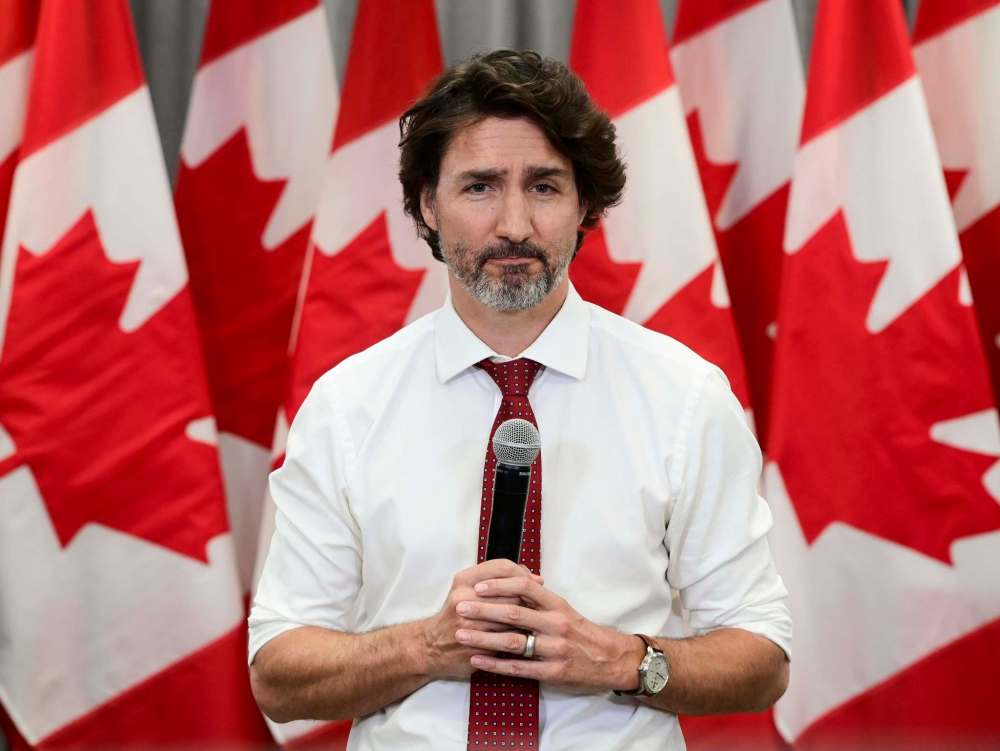
But when pressed for details about precisely what Ottawa is prepared to offer by way of support toward further efforts to find, identify and memorialize thousands of children who died at residential schools, Trudeau remained vague.
“There is obviously more to do and I think there will be more that we will do,” he said.
“We have committed as a government to be there for reconciliation, but also to be there for truth, and that is an important step. So yes, we will be there to work with communities on the things they need and on the things we all need to know.”
He pointed to funding committed in the 2019 federal budget of $33.8 million over three years to develop and maintain a national residential school student death register. This money was also for an online registry of residential school cemeteries.
A national student death register has since been created, which currently contains 4,118 children, and is being maintained by the National Centre for Truth and Reconciliation. The centre notes that research efforts are ongoing and the number of children listed is expected to increase over time. The centre says it began this work thanks to “a one-time funding contribution” from the federal Department of Crown-Indigenous Affairs.
In Manitoba, Assembly of Manitoba Chiefs Grand Chief Arlen Dumas told the Sun in a phone interview that he hopes the provincial and federal governments will be more proactive with reconciliation in the wake of the Kamloops discovery.
“I think that the discovery of those 215 children that were murdered is quite shocking,” he said. “It’s inflammatory, it’s creating a lot of discussions, it’s opening a lot of wounds for people.”
Dumas also noted that the issue of mass, unmarked graves was brought up during testimony received by the Truth and Reconciliation Commission, but it hasn’t been a topic of national discussion.
“I know that one of my own uncles believes that he’d actually stumbled upon an unmarked mass gravesite when he went to residential school here in Manitoba,” Dumas said. “People have to keep in mind that these were undocumented. These were completely, deliberately orchestrated that this mass grave was to be hidden and disappeared from memory.”
The grand chief is certain that there are other mass graves like these on the grounds of former residential schools across Canada. He’d like to see more searches like the one conducted for the Tk’emlúps te Secwépemc First Nation be conducted on those sites.
“In this era of reconciliation, in an era where no relationship is more important than between the federal government and with First Nations, we should actually do our utmost and our best to find the facts and address these issues so we can actually deal with them in a meaningful way. There’s a lot of healing and a lot of grieving that needs to be completed so we can move forward in a healthy way.”
He added that too many people think of residential schools as ancient history when their legacy lives on today. The last residential school closed in 1996.
Asked about Trudeau’s announcement, Dumas said that he has seen miracles happen while organizing the response to the COVID-19 pandemic because there was a desire to address the situation in a meaningful way.
“If the prime minister really wants to provide that resourcing to assist in bringing forward the evidence and ability for communities to do these searches, then I know it can be done quite quickly,” he said.
Also reached by phone on Monday, Brandon-Souris Conservative MP Larry Maguire offered his condolences to First Nations across Canada and locally dealing with the discovery in Kamloops.
“I really think we’ve got to maintain an online registry of these schools and find out as much as possible the names and where the plots were and the location of the deceased residential school children,” Maguire said.
“We have our own situation along the Assiniboine River here in Brandon as well … we need to do whatever needs to be done to make sure there’s as much information provided to the families and Indigenous peoples of the whereabouts of as many the children that we can possibly find records of, where they exist. I’m assuming most of them have records, even the churches that were involved in those days as well and the community Aboriginal leaders.”
Maguire also would like to see “appropriate” commemorations of the tragedy and reburials of children in their home communities when possible. Asked if the federal government should lead an effort into conducting more searches like the one done in Kamloops, he said he believes some kind of mechanism for those searches should be put in place.
He also said he and his party agree with NDP Leader Jagmeet Singh’s call for a debate on the situation in the House of Commons.
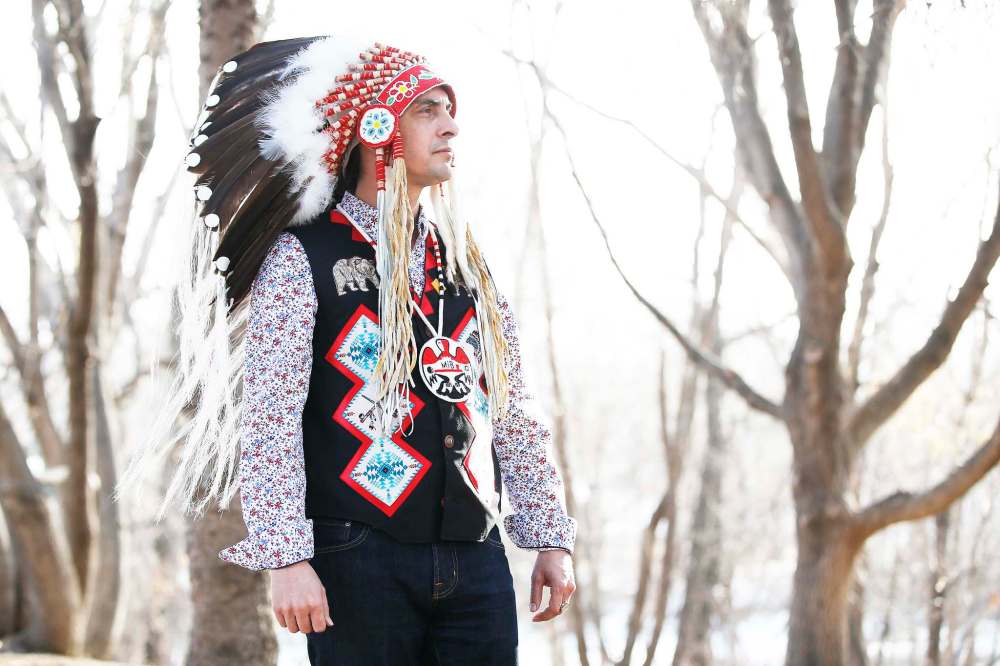
Several of the Truth and Reconciliation Commission’s calls to action focus directly on the horrors inflicted on children in residential schools. Following six years of extensive study, the commission made recommendations on efforts governments, justice systems and church officials should take to try to locate, name and commemorate the children who died.
Six of these recommendations specifically list the actions the commission determined should be done to address missing children and burial information, including funding and co-ordination support to locate and protect school burial sites, both known and unknown.
A website dedicated to updating Canadians on actions taken thus far by Ottawa to implement these six calls to action mainly point to the $33.8-million investment cited by Trudeau and what appears to be preliminary work done by Crown-Indigenous Relations and Northern Affairs Canada, including that these departments have “begun discussions with various partners” on ways to implement the recommendations.
The TRC’s final report further included a 273-page volume documenting the searing stories of families whose children were forcibly taken and never returned. It also includes testimony from survivors of the schools who remember watching their classmates fall ill and die at alarming rates.
“These examples point to a larger picture: many students who went to residential school never returned. They were lost to their families. They died at rates that were far higher than those experienced by the general school-aged population. Their parents were often uninformed of their sickness and death. They were buried away from their families in long-neglected graves. No one took care to count how many died or to record where they were buried,” the report says.
“The most basic of questions about missing children — Who died? Why did they die? Where are they buried? — have never been addressed or comprehensively documented by the Canadian government.”
Trudeau told Canadians Monday morning he planned to speak with his three cabinet ministers who oversee Indigenous policy and funding on steps that must be taken to support survivors, families and Indigenous Peoples. Later in the day, Crown-Indigenous Relations Minister Carolyn Bennett’s office clarified that Trudeau was referring to a regular cabinet meeting that evening.
Singh said the government has not done enough to implement the 94 calls to action from the Truth and Reconciliation Commission, which spent years studying the government-sponsored, church-run institutions that operated in Canada for more than 120 years.
It is not good enough for the Liberal government to offer platitudes and make symbolic gestures, such as lowering flags on Parliament Hill to half-mast, Singh said.
“What we have to commit to and face in light of this genocide, Canada has to make some tough decisions about our commitment to remedying this injustice,” he told reporters.
On Monday, the Commons unanimously supported a special “take-note” debate on this issue to take place today, when MPs will be able to make their views known.
When asked about his message to families mourning the loss of their children, Singh paused for a long time at his podium, tears in his eyes.
“I’m sorry,” he said finally. “We’re going to fight for justice for you.”
» The Canadian Press and cslark@brandonsun.com
» Twitter: @ColinSlark