
Irish Society leaves behind legacy of get-togethers and community support
Advertisement
Read this article for free:
or
Already have an account? Log in here »
We need your support!
Local journalism needs your support!
As we navigate through unprecedented times, our journalists are working harder than ever to bring you the latest local updates to keep you safe and informed.
Now, more than ever, we need your support.
Starting at $15.99 plus taxes every four weeks you can access your Brandon Sun online and full access to all content as it appears on our website.
Subscribe Nowor call circulation directly at (204) 727-0527.
Your pledge helps to ensure we provide the news that matters most to your community!
To continue reading, please subscribe:
Add Brandon Sun access to your Free Press subscription for only an additional
$1 for the first 4 weeks*
*Your next subscription payment will increase by $1.00 and you will be charged $20.00 plus GST for four weeks. After four weeks, your payment will increase to $24.00 plus GST every four weeks.
Read unlimited articles for free today:
or
Already have an account? Log in here »
Hey there, time traveller!
This article was published 21/01/2022 (1520 days ago), so information in it may no longer be current.
After more than 30 years of helping Irish immigrants and their descendants celebrate and share their culture, as well as supporting the wider community through charitable donations, the Irish Society of Western Manitoba is saying farewell.
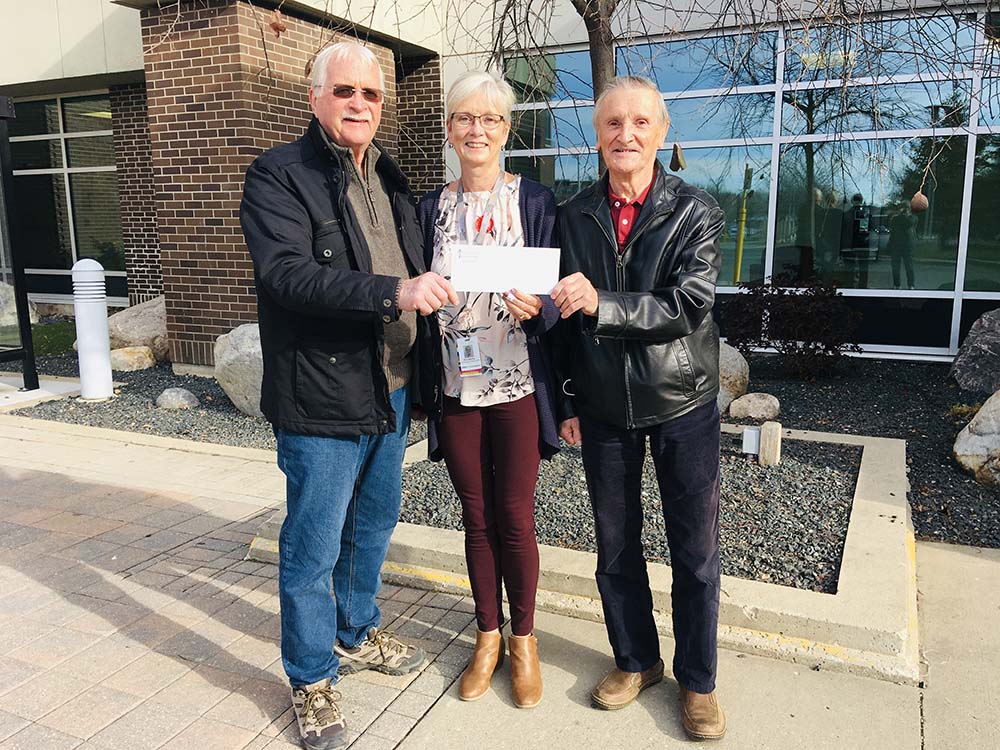
Its final act was to clear out its bank account for final donations to the Brandon Regional Health Centre and Diabetes Canada — $5,324 was handed over last October, the group’s president Drew Mills and vice-president Richard McIntyre told the Sun in December.
Mills quipped he wanted to make sure locals know the organization wrapped up its operations by donating the rest of its money and “didn’t take a trip back to Ireland.”
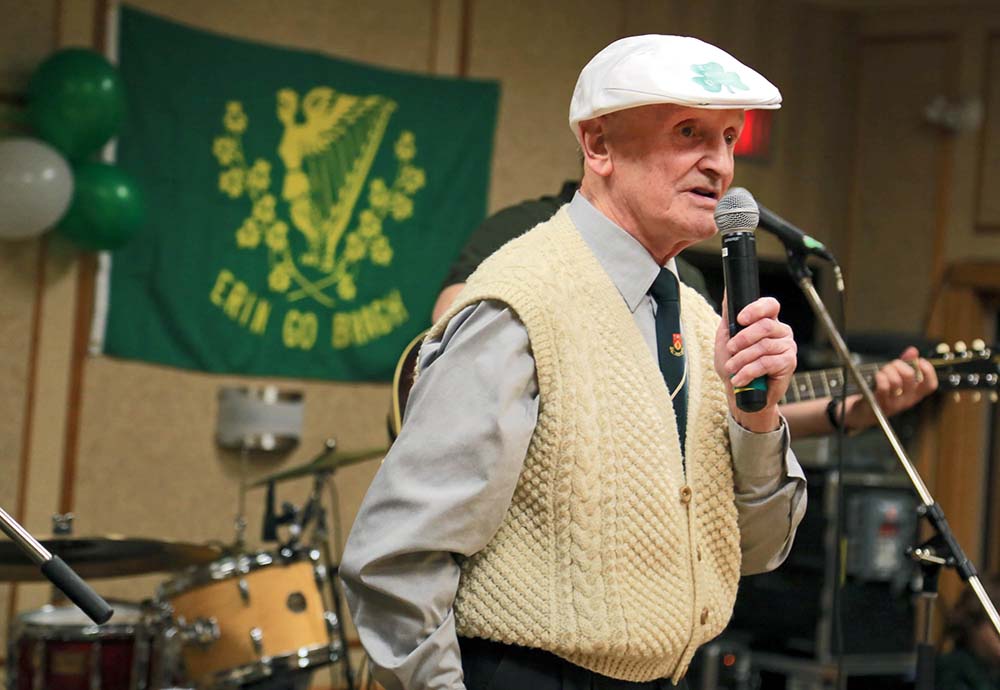
“We’re disappointed that it’s all folded up and there’s nobody to come along and take the reins and be responsible,” he said.
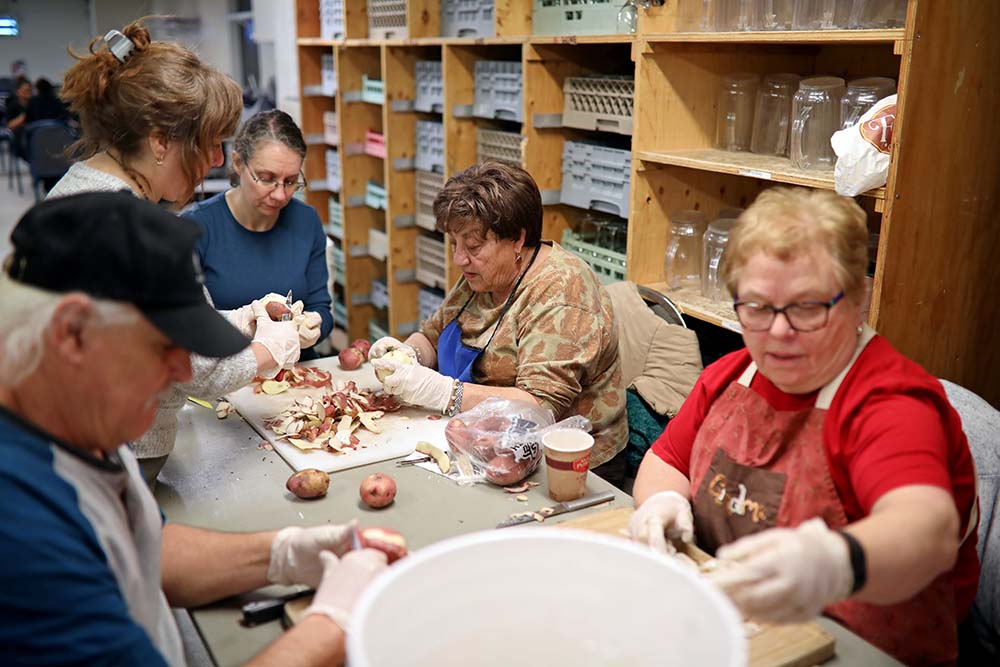
Since the early 1990s, the society typically held annual St. Patrick’s Day dinners to celebrate Irish culture and eventually added an Irish pavilion to the Westman Multicultural Festival with Irish music, dancing and a famous stew comprised of 500 pounds of potatoes and 300 pounds of carrots and onions.
As McIntyre recalls, the genesis of the society came when he and the late Bill Moore set up their first St. Patrick’s Day dinner at Rob Roy’s, the restaurant that used to be at the Wheat City Golf Club, in 1990.
At the time, he said, there was a large influx of immigrants from England, Scotland and Ireland to this area, and they had the idea to see if their fellow countrymen wanted to celebrate St. Patrick’s Day.
“They’re all first-generation Irish that we started with and then they had friends, and they had friends, and it spread,” McIntyre said. “Anybody who had Irish ancestry got on board.”
That includes McIntyre and Mills, who said they grew up in communities about 40 kilometres apart back in Ireland, though they didn’t meet until they were both living in Brandon.
When the society was created, Ireland was still enduring the civil conflict known as The Troubles, which ended with the Good Friday Agreement in 1998. Despite the challenges back home, the organizers said they tried to make their events welcoming to anyone of Irish descent or origin, whether they were from the Republic of Ireland or Northern Ireland, Protestant or Catholic.
“We all had fun together and made fun of each other,” Mills said.
In short order, the attendance at the dinner became so large that they had to find a bigger venue. That home was the Royal Oak Inn & Suites (now the Clarion Hotel & Suites).
Though the society created and ran the St. Patrick’s Day banquet, the former organizers said donations of materials and assistance from this community and others in the area helped make it possible.
In return, McIntyre said the society took Irish memorabilia to festivals in other communities and schools in Westman so they would live up to the “Western Manitoba” label in their name. The display cabinet that housed these items has now been donated to the Commonwealth Air Training Plan Museum.
At those dinners, auctions were held to raise funds for the charitable branch of the organization in addition to money collected through food and drinks sales at the Irish pavilion.
The Irish Society donated approximately $150,000 to initiatives throughout its history, McIntyre estimated. The bulk of the proceeds supported health-related charities.
The donation to Diabetes Canada, he said, was inspired by the recent deaths of former city councillor Corey Roberts and a woman from Dauphin who used to bring her daughter to Brandon so she could participate in Irish dances. Both died of complications related to the disease.
The recipients of those donations were decided by the society’s board, whose members proposed worthy candidates and then voted on them.
“My favourite thing was making money and giving it away,” Mills said. “Every penny.”
Reminiscing about their accomplishments, Mills and McIntyre talked of long lines and special guests at their pavilions over the years, including a visit from now-Alberta Premier Jason Kenney, who was then the federal minister for citizenship, immigration and multiculturalism in Stephen Harper’s Conservative government.
“Five groups got together and we decided to have our festival,” McIntyre said about the conception of the multicultural festival, which was originally known as the Lieutenant-Governor’s Winter Festival.
The original location for the Irish pavilion was the Park Community Centre, which posed some logistical challenges. As Mills recalled, the stew and bacon being served to guests had to be prepared at the organizers’ homes because of limited kitchen space and equipment.
One year, when the stew was being prepared in the kitchens at the Legion, Mills said a health inspector determined the food hadn’t been cooled quickly enough and ordered that litres of the stuff get dumped out.
“We had to start all over again,” he said.
Getting ready for the dinner involved four hours of preparation before the pavilion opened on Saturday, setting up chairs and place settings, picking up ingredients for the stew and gathering drinks. Some volunteers would also donate their kitchens to make soda bread and shortbread.
With more people who wanted to come in than there was room for at any one time, people “were lined up to Kemnay,” according to McIntyre. In 2006, the Sun reported that the festival’s organizers were making a concerted effort to reduce the number of people waiting in the cold to enter some of the more popular pavilions, including the Irish set.
Over the three days the pavilion and the festival typically ran every year, Mills estimated there were thousands of visitors. Both men also made time to slip out and visit the other pavilions in the festival.
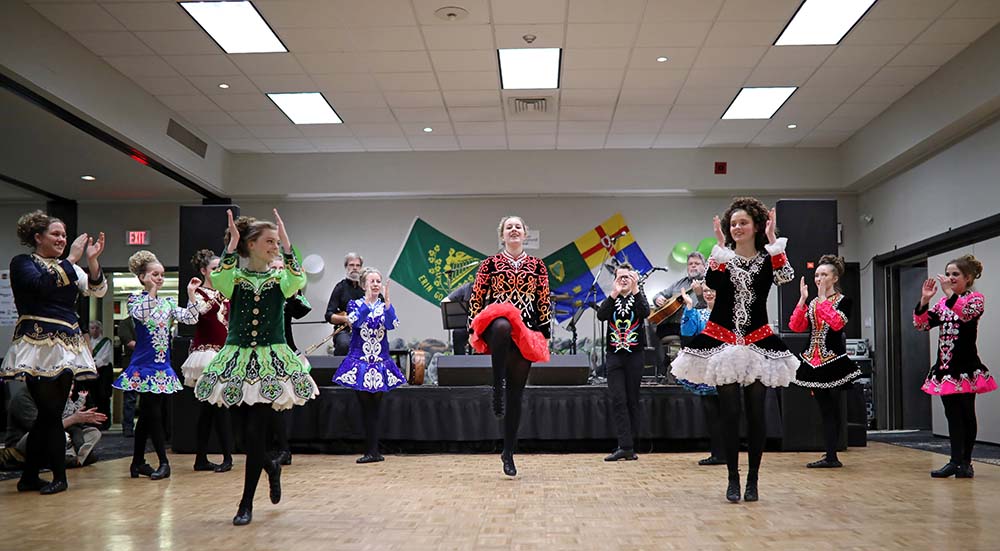
“They were the show,” Mills said about the McConnell Irish Dancers, who came from Winnipeg to perform at the society’s events over the years.
“The people came in and asked ‘what time are the Irish dancers on?’” McIntyre recalled. He added with pride that of the dancers that performed over the years, one of them got steady work as a cruise ship entertainer and another joined a touring group.
In addition to the dancing, there were also performances of Irish plays as dinner theatre.
Any chance at a comeback for the St. Patrick’s Day event or the society itself was derailed by the COVID-19 pandemic. The organizers explained their involvement with the Irish pavilion had petered out in 2017 or 2018, when another steering committee had taken things over.
The tipping point came when in 2020, the society had to cancel its St. Patrick’s Day dinner on short notice after the first cases of the virus were discovered in Manitoba.
“We were geared up to put one [on] two years ago, then the COVID hit and we didn’t want it on our heads that somebody gets COVID and spreads it around to 300 people or whatever,” Mills said.
Though Mills and McIntyre are hanging up their boots, they say they’re open to providing advice should a new group of Westman residents decide to form a society dedicated to Irish heritage.
“They’re going to have to start from scratch the way we did, with absolutely no funds,” Mills said.
As they say goodbye to this chapter in their lives, they thanked all the volunteers, visitors and donors who made the events possible over the decades.
“I met so many people,” McIntyre said. “The social aspect, the culture was great. The atmosphere was electric. To me, making all those people happy did that for me.”
» cslark@brandonsun.com
» Twitter: @ColinSlark