
Back in the saddle
Advertisement
Read this article for free:
or
Already have an account? Log in here »
We need your support!
Local journalism needs your support!
As we navigate through unprecedented times, our journalists are working harder than ever to bring you the latest local updates to keep you safe and informed.
Now, more than ever, we need your support.
Starting at $15.99 plus taxes every four weeks you can access your Brandon Sun online and full access to all content as it appears on our website.
Subscribe Nowor call circulation directly at (204) 727-0527.
Your pledge helps to ensure we provide the news that matters most to your community!
To continue reading, please subscribe:
Add Brandon Sun access to your Free Press subscription for only an additional
$1 for the first 4 weeks*
- Enjoy unlimited reading on brandonsun.com
- Read the Brandon Sun E-Edition, our digital replica newspaper
*Your next Free Press subscription payment will increase by $1.00 and you will be charged $20.95 plus GST for four weeks. After four weeks, your payment will increase to $24.95 plus GST every four weeks.
Read unlimited articles for free today:
or
Already have an account? Log in here »
Hey there, time traveller!
This article was published 28/01/2022 (1706 days ago), so information in it may no longer be current.
After nearly two years of the COVID-19 pandemic and restrictions, equestrian sports have struggled, but there is plenty of hope and excitement for a brighter, more competitive future.
Driving through the countryside surrounding Brandon, you will be hard-pressed to not see horses in the fields. One would think the sports involving horses would be safe and secure, but that hasn’t been the case as riders, sponsors and coaches have been dealing with the chaos of shutdowns, restrictions, cancellations and less money to support the industry.
This isn’t just about inconvenience. It has been upsetting to many livelihoods for trainers and coaches. Tanis Jones, owner, coach and trainer at Clay Creek Equestrian and second vice-president of the Brandon Light Horse and Pony Society, said 75 per cent of her income comes from training and exercising client horses, coaching and teaching, most of which she could not do during shutdowns. Many of the restrictions meant coaches could not teach in their own barns, or travel to another one.
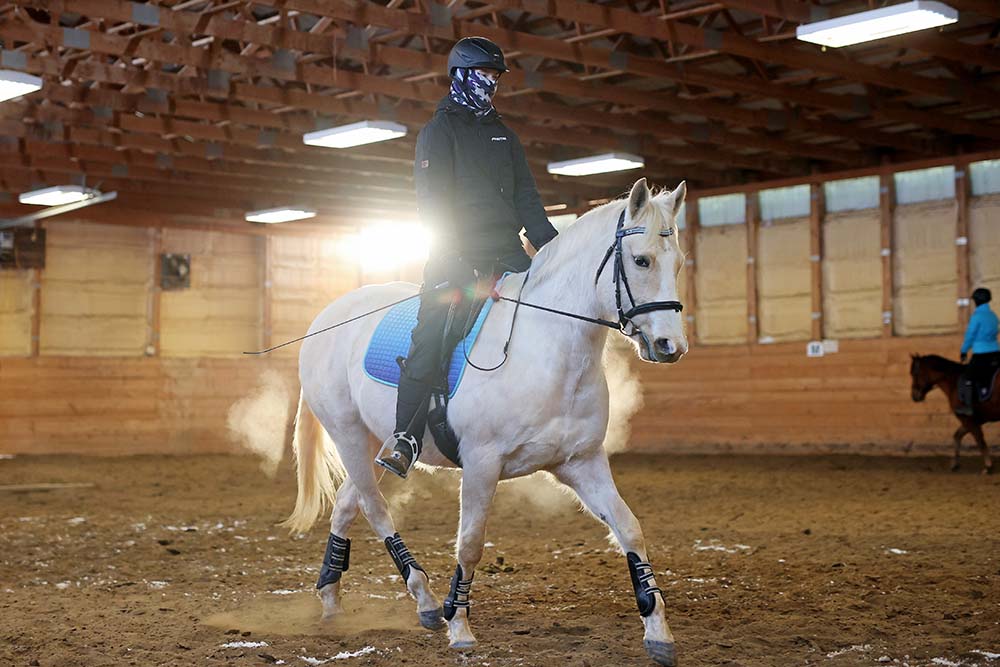
“When we got shut down completely, we weren’t teaching [or showing] and we could only exercise horses,” she said. “That is when the business side really hurt. A lot of people think this is just an activity. For us, it’s our lives.”
The fallout from the pandemic trickled down to other aspects of equine sports. Shows are large revenue generators for equine sports. Competitive riders would travel a circuit and compete for points, cash and prizes. Those shows needed people to register and pay fees that help garner funds for clubs. Sponsors also help by putting up funds to help pay for expenses at shows and advertise with the clubs and riding facilities.
People are also selling horses. For many of them, they need to go to shows to get pictures and videos, perform in front of people, earn points and standings for their records to present to potential buyers.
Some financial help, like unemployment insurance, the Canada Emergency Response Benefit and government grants kept businesses going, but that meant they had to lay off staff because there are no shows to prepare for.
The time off due to the pandemic has produced some silver linings, though. It has allowed riders to have more time to hone their skills and bond with their animals.
“It’s what we refer to [as] homework at home, and we’ve been able to do a lot of fine-tuning at home and get green horses prepared for when shows and sales happen,” Jones said.
With nearly two years to prepare, she said she is feeling very confident they’re going to see a lot of improvement once shows return. From what she has been hearing from riders, people are planning to compete this year because they have spent so much time with their horses and want to show off their hard work.
A related bonus has been an uptick in horse sales during the pandemic. Jones attributed this to people having more time to seek out a horse and train it to compete.
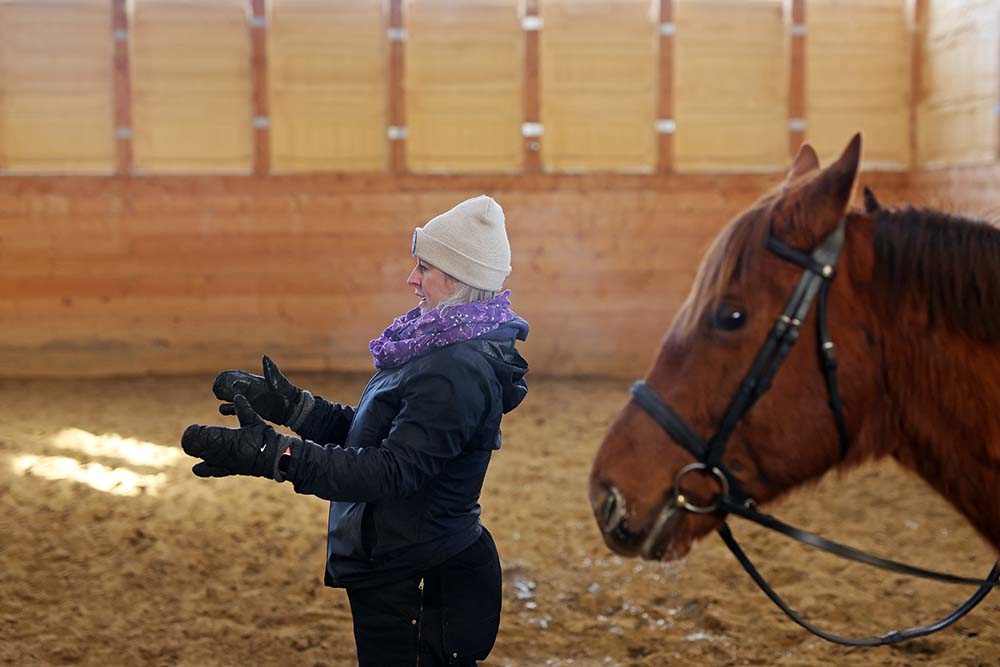
“Through the pandemic, I’ve sold a few horses and they didn’t have a show record, but people were looking for something to do or get their kids into something, because people were so limited in their activity.”
Chelsea Haggerty, 26, returned to riding after she bought Bomber, an American quarter horse, as the pandemic was setting in.
“There was really nothing to do for two years. Coming back in when there weren’t any shows and we couldn’t go anywhere was tough,” said Haggerty, who started riding when she was 13 years old.
While she does some jumping, she said she loves dressage because it is more about accuracy and focusing on performing manoeuvres correctly.
She made do, like many other riders. Her passion was too strong to give up on competing. Riding close to home took some of the nervousness out of her own riding game and helped her refine her skills. They had lessons and rode when they could. Westman Dressage held virtual shows in 2021, but it wasn’t the same as a live show, with other riders, an audience and the social aspects of camaraderie and travelling to visit other places, she said.
Her future competition plans are to take it day by day. She is planning to compete in a few shows locally, as well as shows in Winnipeg and maybe Saskatchewan this year, barring any cancellations.
“I’m feeling good about the upcoming year,” she said. “Bomber is about seven now and still a bit of a baby in the ring [fidgeting and real high energy], but we are working on it.”
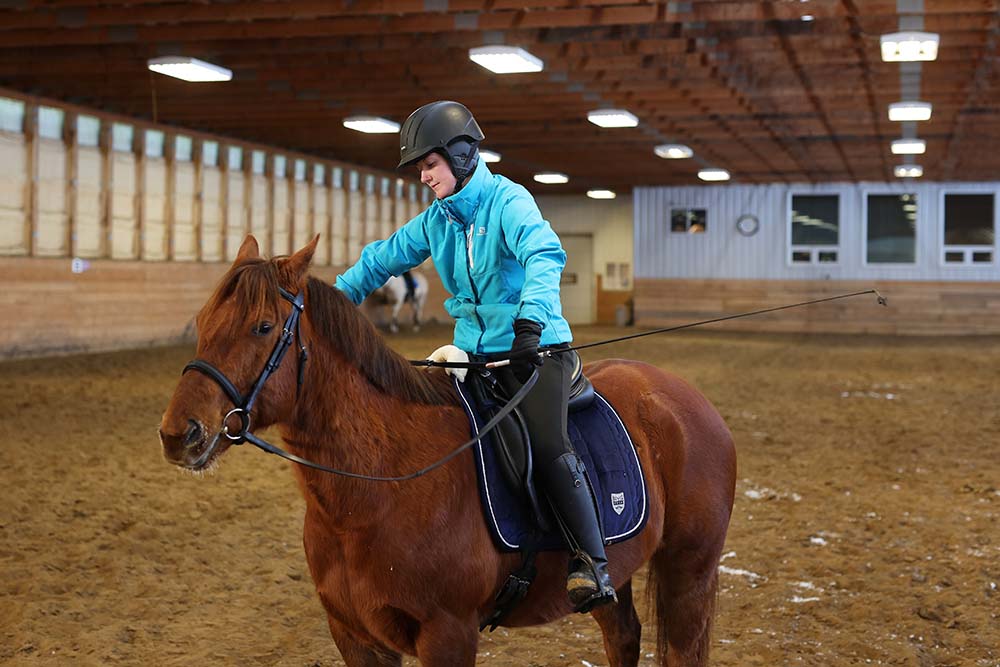
Getting back to a relatively normal riding and show routine is especially important for newer riders and younger horses. Having a yearling horse and a young son take up riding suddenly thrust Marla Galatuik into what equestrians call a “horse mom” role.
She grew up around horses in the country, but her real experience started when she signed up her son — who asked not to be named — for a riding camp when she couldn’t find a babysitter. Since then, he has become a competitive dressage rider. She was surprised when he decided to continue in the sport and participate in lessons. The family eventually purchased a yearling mare, Goldie, with the intention to train to compete in dressage.
Then the pandemic hit, throwing their routine into disarray. They sent Goldie away to a trainer and would visit her to socialize. At the time, Galatuik’s son was riding a school horse. Lessons were cancelled, then restarted, and his school horse was later sold. Finally, he restarted training on his own horse.
“Goldie is young, but she is a hard worker, and she taught my son a lot; they really trained each other,” she said. “The last couple of years have been chaos for him and us in many ways, but Goldie has been his constant routine. There were a lot of times they had bad days and we worried about if we were teaching Goldie a bad habit, but they have progressed.”
Having a horse to train and work with forced her son to maintain a routine, as well as the social and exercise aspects. Her son is already a competitive athlete, she said, and with his other sports — hockey and basketball — being cancelled, he had more time to work on riding.
With many lessons cancelled, he was on his own to train Goldie. Both of them relied on his experience while working with a lesson horse and help from other riders to work out how to care for and train Goldie.
“In many ways, he taught me as well. I had no idea how to handle a horse, but I had to help him and he taught me what to do,” she said. “Now I know how to handle a hoof pick, brush her, tie her to the stall and check her equipment.”
They also had to work together to prepare her for the rigours of a show routine, including bathing, loading her on and off trailers and handling her in and around other horses.
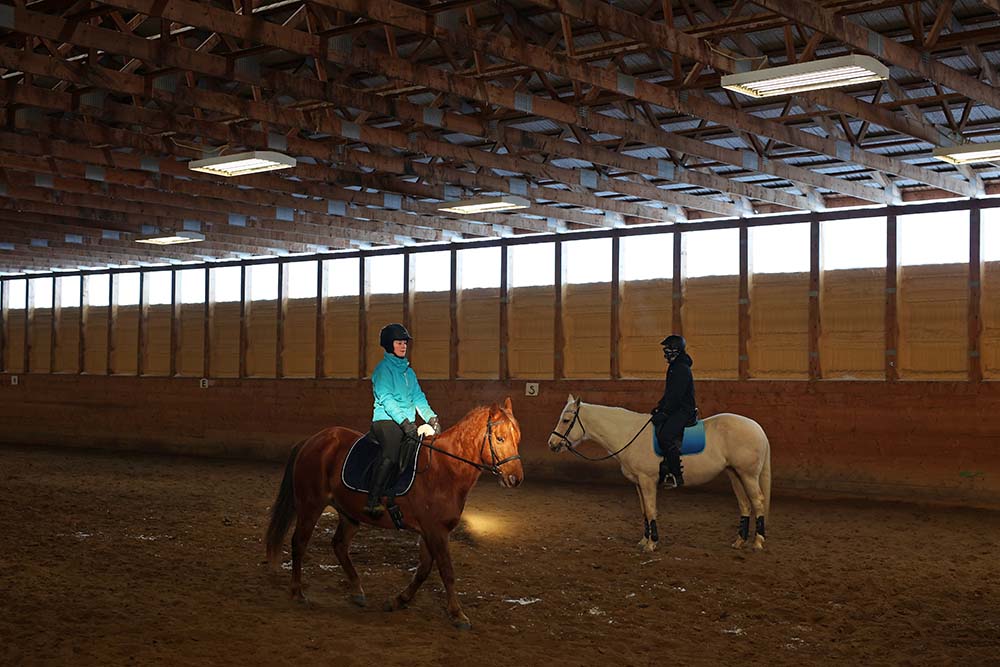
The real test came at their first show at the Keystone Centre last September. They were worried Goldie wouldn’t handle the stress of a show experience well, but both of them excelled. Goldie is young and inexperienced, but very calm and attentive, ready to work with Galatuik’s son and follow his commands, the mom said.
Heading into the upcoming season, whatever it looks like, she said they are both feeling confident about the immediate and long-term future in riding. Galatuik is very proud of her son’s progress not only as a rider but as a person. Learning to ride during the pandemic made him dig deep and find the confidence to take responsibility for his own success.
» kmckinley@brandonsun.com
» Twitter: @karenleighmcki1