
Study to probe Indigenous approaches to autism
Advertisement
Read this article for free:
or
Already have an account? Log in here »
We need your support!
Local journalism needs your support!
As we navigate through unprecedented times, our journalists are working harder than ever to bring you the latest local updates to keep you safe and informed.
Now, more than ever, we need your support.
Starting at $15.99 plus taxes every four weeks you can access your Brandon Sun online and full access to all content as it appears on our website.
Subscribe Nowor call circulation directly at (204) 727-0527.
Your pledge helps to ensure we provide the news that matters most to your community!
To continue reading, please subscribe:
Add Brandon Sun access to your Free Press subscription for only an additional
$1 for the first 4 weeks*
*Your next subscription payment will increase by $1.00 and you will be charged $20.00 plus GST for four weeks. After four weeks, your payment will increase to $24.00 plus GST every four weeks.
Read unlimited articles for free today:
or
Already have an account? Log in here »
Hey there, time traveller!
This article was published 28/02/2022 (1493 days ago), so information in it may no longer be current.
A new research study at Brandon University will explore Indigenous approaches to autism in education.
The research will bring Indigenous autistic people and those who love and care about them together as part of an upcoming video-based collaboration.
Patty Douglas, an associate professor in BU’s Faculty of Education and project academic lead, said there is a need to better understand Indigenous approaches to autism and how these approaches can improve school outcomes, well-being and belonging for Indigenous students, families and communities.
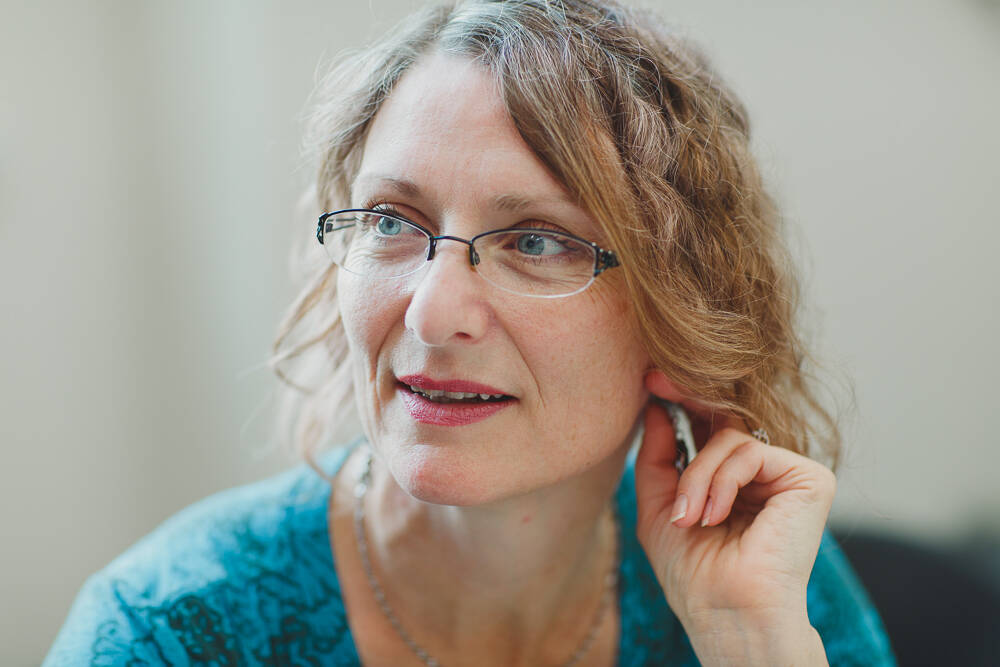
Overall, the project will be guided by the teachings and presence of Elders, knowledge-keepers and Indigenous storytellers and artists, and the team from Douglas’ Re•Storying Autism in Education project.
Interviews with Indigenous people with autism and family and other kin, teachers, community leaders and supporters are currently being held ahead of an online digital storytelling workshop that will begin March 12.
The workshop will bring together these groups to support participants to create their own videos telling their stories — with the school system, life experiences, strengths and struggles.
“Interviews and videos from the project will serve as important sites of knowledge and a road map for change honouring Indigenous worldviews of difference,” she said.
Douglas added that Indigenous perspectives that understand children, including autistic children, as unique and as gifts, are largely absent from mainstream understandings of autism.
She is working in partnership with Leah LaPlante, vice-president of the Manitoba Métis Federation Southwest, and with Gail Cullen, executive director of the Brandon Friendship Centre.
Following Douglas’ earlier research and digital storytelling work on autism, LaPlante suggested a need for a similar initiative in southern Manitoba because supports for Métis families with autistic members are limited.
“Opening up about lived experiences that have been hard to deal with and telling your story with the help of elders is an important part of this study. We are hoping this study will give us the documentation we need to improve autism supports and add a cultural perspective. It is crucial that the well-being of Indigenous people is woven into education and health care systems going forward,” LaPlante said.
This video project is part of a larger focus on decolonizing autism for the Re•Storying Autism project. Last May, Māori family members in New Zealand whose youth are takiwātanga (a word that translates to “living in their/our own space and time” and is used to describe people who have autism), along with other international participants, created digital videos reflecting their own experiences.
“We are looking to see if we will find similar results in southern Manitoba, and to expand educational practice to include cultural understandings of difference going forward,” Douglas said.
» kmckinley@brandonsun.com
» Twitter: @karenleighmck1