
A niche product no more
Bison meat no longer a mere novelty in Manitoba kitchens
Advertisement
Read this article for free:
or
Already have an account? Log in here »
We need your support!
Local journalism needs your support!
As we navigate through unprecedented times, our journalists are working harder than ever to bring you the latest local updates to keep you safe and informed.
Now, more than ever, we need your support.
Starting at $15.99 plus taxes every four weeks you can access your Brandon Sun online and full access to all content as it appears on our website.
Subscribe Nowor call circulation directly at (204) 727-0527.
Your pledge helps to ensure we provide the news that matters most to your community!
To continue reading, please subscribe:
Add Brandon Sun access to your Free Press subscription for only an additional
$1 for the first 4 weeks*
- Enjoy unlimited reading on brandonsun.com
- Read the Brandon Sun E-Edition, our digital replica newspaper
*Your next Free Press subscription payment will increase by $1.00 and you will be charged $20.95 plus GST for four weeks. After four weeks, your payment will increase to $24.95 plus GST every four weeks.
Read unlimited articles for free today:
or
Already have an account? Log in here »
Hey there, time traveller!
This article was published 17/06/2022 (1548 days ago), so information in it may no longer be current.
It’s the iconic animal on the provincial flag, but now restaurant-goers are seeing bison pop up on more and more menus across Manitoba.
The once niche meat is now more available than ever. It’s starting to appear in grocery stores, butcher shops and is becoming a permanent fixture of some restaurants’ menus.
That’s partly due to the COVID-19 pandemic and a combination of ingredients, said Manitoba Bison Association president Robert Johnson. It’s a boost for a section of the ag industry hit hard by last year’s drought.
“Right now is really a unique time for bison producers. We had our own challenges over the last two years … at the same time there’s more fresh bison available either in your restaurants or in your groceries coast to coast now than there ever has been,” Johnson said, who owns RJ Game Farm.
“Before, it was really a niche or a novelty … you’d see bison burgers in the summertime, you’d see it here or there — you really had to look for it.
“And now it’s at restaurants, grocery stores — and it’s not just burgers, it’s all cuts of meat, from tenderloins and ribeyes to ribs and burgers now.”
Johnson farms in Fairlight, Sask., just across the border with Manitoba, and has approximately 1,800 head of bison. He said it’s a closer drive to Brandon for events, rather than all the way to North Battleford, Sask.
He calls the rise in popularity of bison the “Traeger effect” and people wanting to try something new at home during the last two years of the pandemic.
“As restaurants have been closed, instead of going to The Keg or Montana’s for a nice dinner, you see bison in the grocery store and think ‘Oh, I can try that,’” he said.
“We’ve all become master chefs in our own kitchen, our own backyards … people have done their ribs and their briskets and their pork butts and chickens, and bison is the natural meat to be cooked low and slow like that.”
People can go on a producer’s website for cooking instructions and tips, he said. The meat is also tasty and something different from beef.
Kenton-area producer John Finnie concurred, saying demand for bison is growing as access increases for consumers.
“The people that wanted bison really wanted it, they liked it, they found that it agreed with them more than beef. Bison is similar to beef, but leaner,” said Finnie, who owns Crocusview Farm, which also grows grains and forages.
He said his son is in the process of taking over the operation of the approximately 100-head bison farm.
According to Statistics Canada, there were 11,725 bison in Manitoba last year, a drop from 14,025 five years before, in 2016.
Overall in Canada, the bison population grew significant to 149,539 in 2021, a 25 per cent increase from the number of animals in Canada in 2016.
Currently, there are more than 85 bison ranchers in Manitoba, including 10 scattered around Westman.
The rise in mainstream popularity is also about people wanting to add a local element to their diet and being more aware of the food around them, Johnson said. In Western Canada, it’s likely bison meat is from a farm nearby where it ends up on a grocery store shelf or a restaurant plate.
Brandon restaurants are also starting to put the Manitoba meat on their menus. Both The Dock on Princess and Eagles Nest Bar and Grill offer bison burgers.
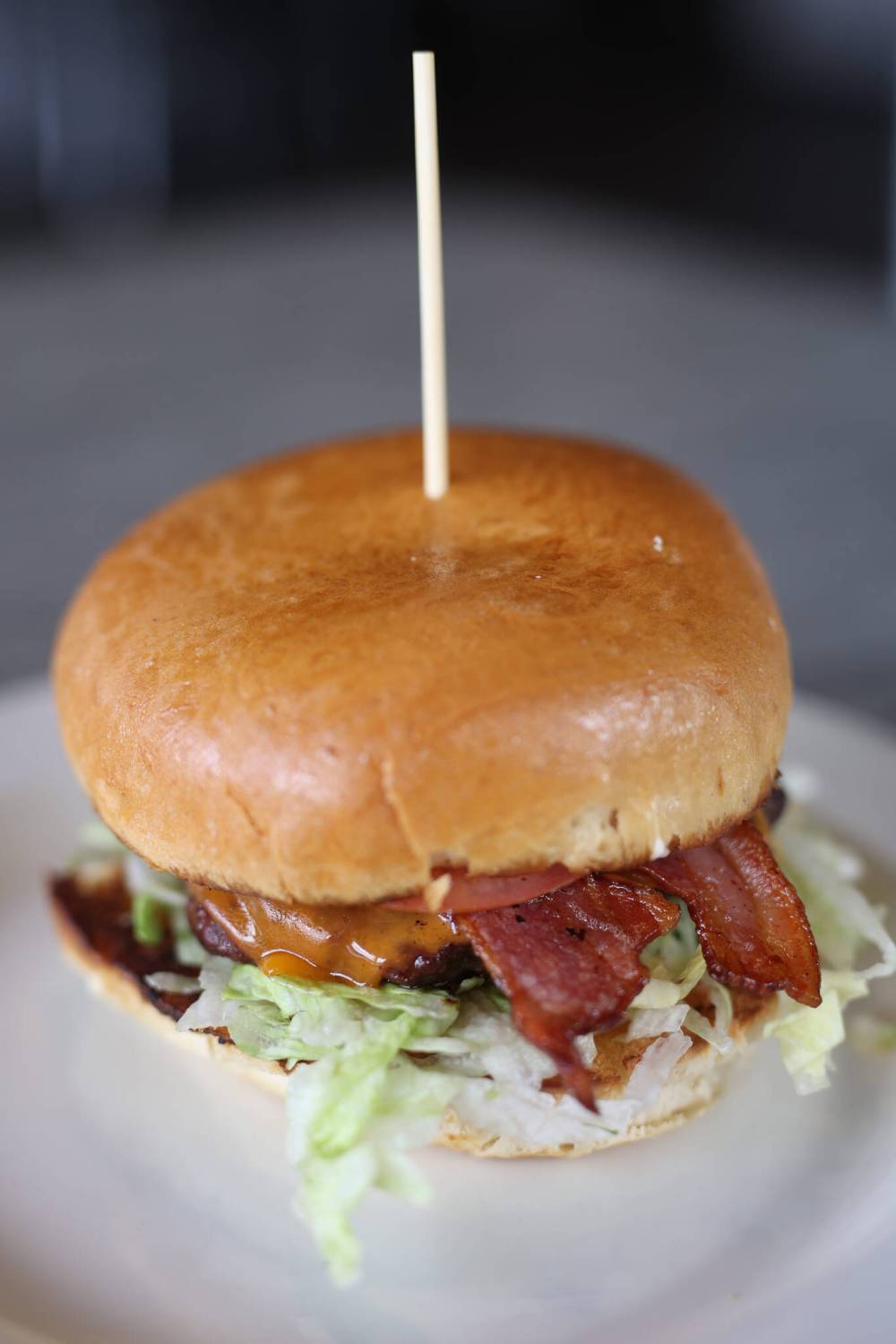
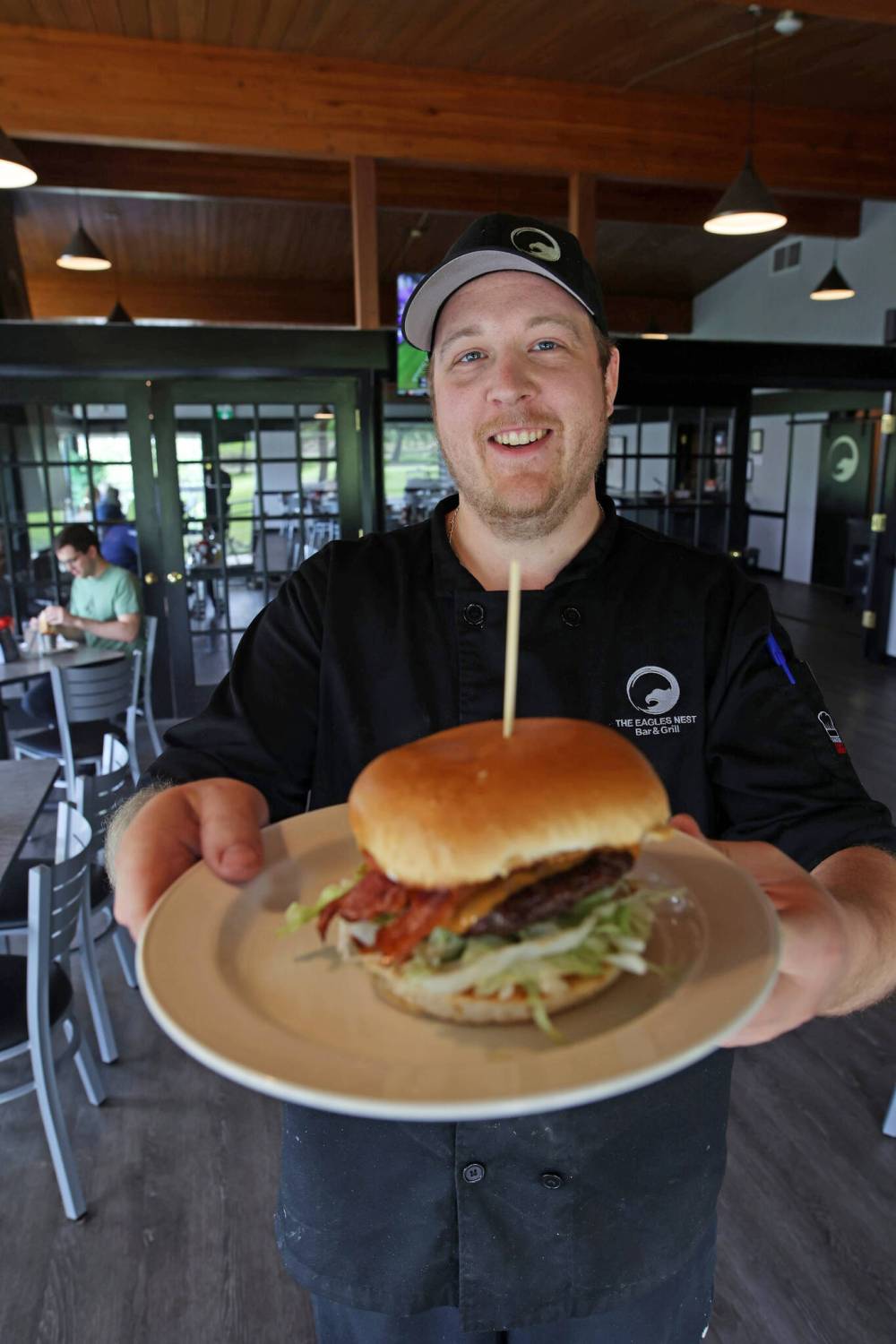
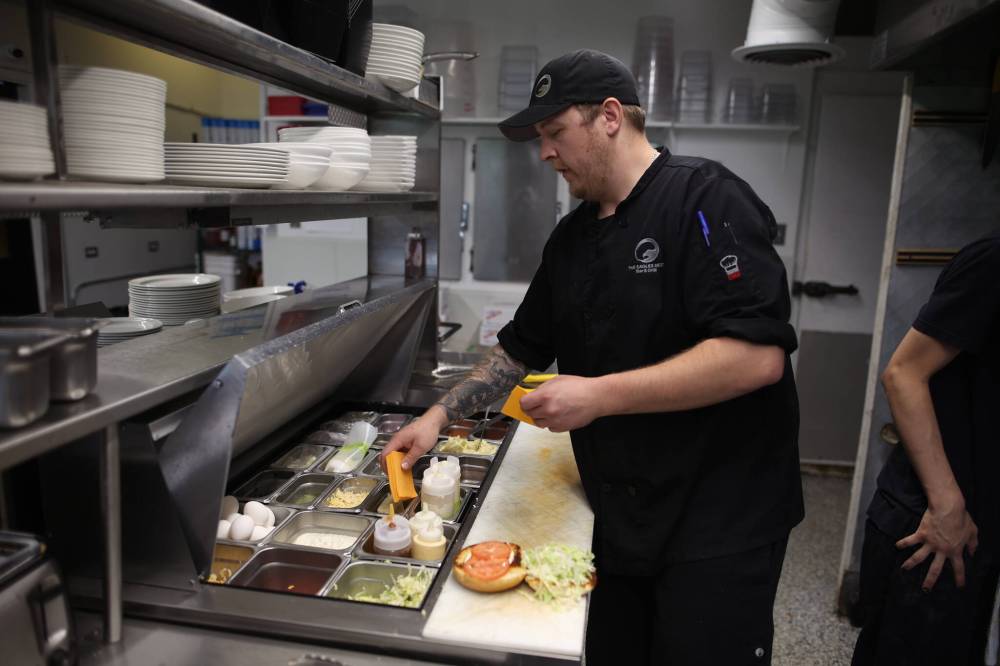
At the Eagles Nest, head chef Justin Black said the restaurant sells “a ton” of the Barnyard Trio menu item, which includes a beef, bison and pulled pork slider that lets people get a taste of bison.
Black said he previously worked at a different restaurant that had a bison burger on the menu and he wanted it on the Eagle’s Nest menu when the eatery opened last year.
“It seems like people want to try it in different ways,” he said.
“I think it’s more tender [than beef] and a little more lean when you’re eating it and a little more juicy … a little different taste to it as well.”
The Dock on Princess made the bison burger a permanent addition to its menu in December, said manager Erin Wells. The Princess Avenue restaurant previously had a bison burger on its menu as a temporary feature in 2018.
“Whenever we have a bison burger, it usually does pretty well, it’s usually something people are interested in and want to try,” she said, adding the bison meat comes from Borderland Agriculture in Pierson. The burger comes with fried red onion, fried jalapeño and melted cheese.
The Brandon Friendship Centre’s Indigenous Eats food truck also featured a bison burger on its menu of the tastes of Indigenous culture.
Oak Lake-area bison rancher Trevor Gompf said the market for bison meat is growing in smaller urban centres around Westman, such as Brandon and Virden, where people are closer to agriculture. Demand is also growing in larger cities.
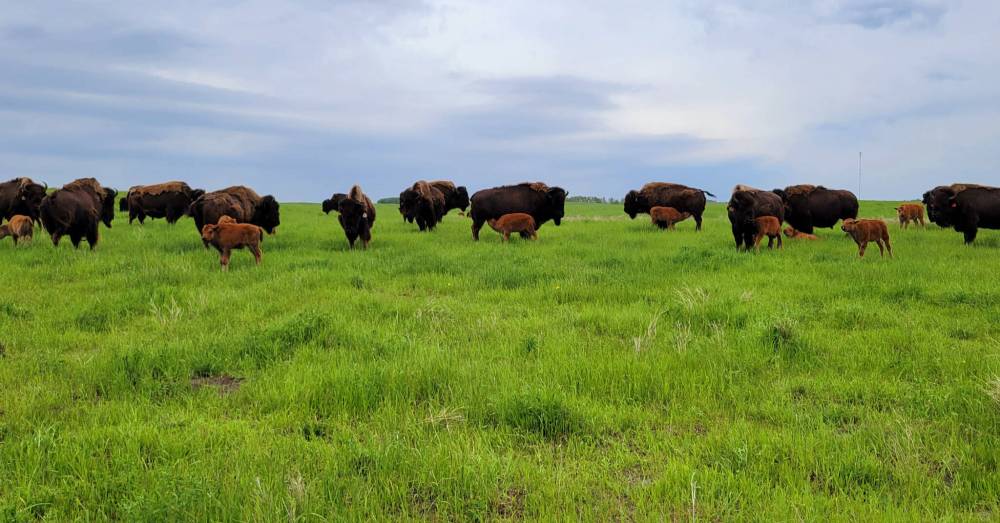
Gompf said he has approximately 475 head of bison at his 1200-acre ranch, Bison Spirit Ranch. The ranch started in 1997
Part of the reason for the growth is that people have caught onto the meat and the price is closer to beef than it was five to 10 years ago, he said. There are also health benefits as it’s leaner than beef but still contains a high amount of iron.
The way people hungry for a taste of bison can buy it has changed too, he said. Now, many producers sell it privately at the farm gate or at local farmers’ markets.
“The biggest change is now that these family farms that are marketing meat off the farm, the availability is there if you want to find it.
“Nowadays with technology, there’s no excuse for not being able to find bison meat,” he said.
Gompf said he both sells bison to larger distributors and sells meat directly to consumers.
Depending on the time of year, the two methods of selling meat even out in terms of how much money they bring in.
Despite the availability to consumers, bison farmers are feeling the squeeze of inflation and high cost of inputs, Gompf said.

Especially in the Prairies, which was hit by a drought last year, the cost of feeding the animals has skyrocketed, he said. Hay has become much more expensive. Previously, a load of grain pellets cost $3,500 but is now more than $10,000.
It’s especially difficult for bison, who are naturally adapted to Manitoba prairie grasslands and eating grass. When there is little rain, grass doesn’t grow.
Fuel has also gone up too, making it more expensive to transport the animals and for producers to sell at local markets
“The cost of running a farm was expensive before and now pretty much everything has doubled in price… We’re running on the same income as we were getting before when things were half of what they cost,” he said.
There are also some issues with processing plant capacity. Bison are larger than cattle, so abattoirs need specialized equipment and they are more expensive to slaughter.
John Finnie said he hopes some of the rules around processing bison are relaxed, which could help with a lack of slaughtering capacity. Currently, there are only two bison processing facilities in Finnie’s immediate area.
“I think that we could be a lot more successful in the bison if we had more opportunities for processing… it would be better if we were allowed to have on-farm processing capabilities,” he said, adding it would help keep costs down. Currently, it costs approximately $1,000 to process a full-grown bull.
There are also some regulations around taking home the by-products of slaughtering, such as bones, Finnie said. The restrictions were put in place to help prevent the spread of BSE.
Going forward, Johnson said he believes consumers will see bison as a more mainstream meat as more and more people try it on their dinner tables.
“I think more people are catching on for the taste, the nutritional aspect, the clean-eating part, the environmental aspect of it,” he said.
Sioux Valley Dakota Nation, 40 kilometres west of Brandon, also maintains a herd of approximately 100 head of bison. The herd recently had an eighth white bison calf born in April.
» dmay@brandonsun.com