
Woman fights for sobering centre after son dies
Advertisement
Read this article for free:
or
Already have an account? Log in here »
We need your support!
Local journalism needs your support!
As we navigate through unprecedented times, our journalists are working harder than ever to bring you the latest local updates to keep you safe and informed.
Now, more than ever, we need your support.
Starting at $15.99 plus taxes every four weeks you can access your Brandon Sun online and full access to all content as it appears on our website.
Subscribe Nowor call circulation directly at (204) 727-0527.
Your pledge helps to ensure we provide the news that matters most to your community!
To continue reading, please subscribe:
Add Brandon Sun access to your Free Press subscription for only an additional
$1 for the first 4 weeks*
- Enjoy unlimited reading on brandonsun.com
- Read the Brandon Sun E-Edition, our digital replica newspaper
*Your next Free Press subscription payment will increase by $1.00 and you will be charged $20.95 plus GST for four weeks. After four weeks, your payment will increase to $24.95 plus GST every four weeks.
Read unlimited articles for free today:
or
Already have an account? Log in here »
Hey there, time traveller!
This article was published 14/07/2022 (1526 days ago), so information in it may no longer be current.
The death of Ryan Eamer after he tried to seek treatment at Brandon Regional Health Centre was a massive failure of the medical system and a tragic example of why a sobering centre is needed in southwestern Manitoba, says his mother, Brenda Eamer.
Ever since she went with Ryan, 46, to the hospital on Feb. 18, 2021, for detox services and he died more than 24 hours later from head trauma sustained in a fall, she said it has been a long and frustrating journey to get answers, and she wonders why there aren’t more harm reduction options for people like her son.
She said the hardest part of it all, is that Ryan wanted help but couldn’t find any.
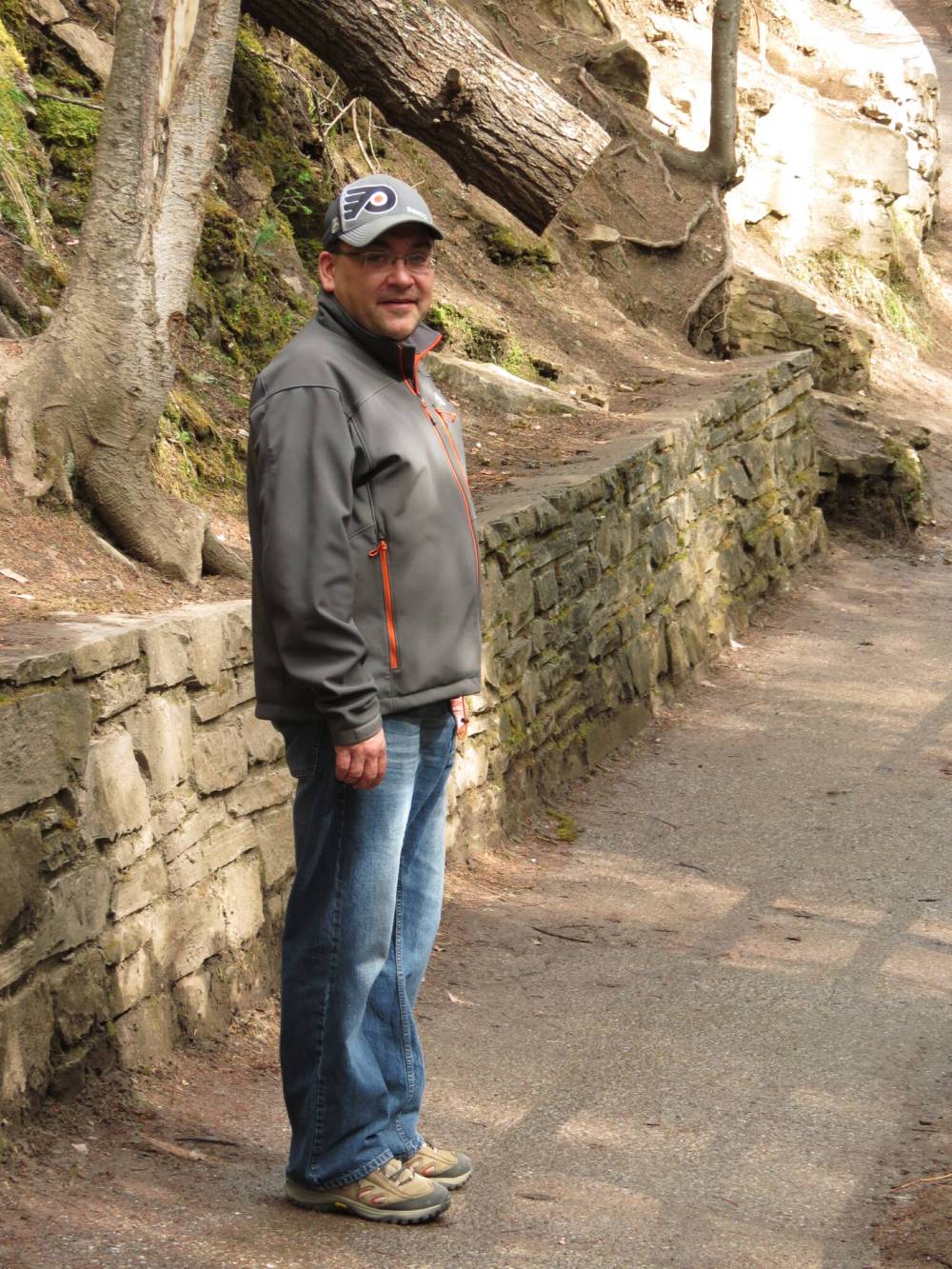
“During that entire time, no one [at the hospital] stopped to ask if he was OK, took five minutes to just check on him on a one-to-one basis,” she said. “If someone had just taken a couple minutes to talk to him, he would likely be here now.”
Ryan had been struggling with alcohol dependency for years, Eamer said. He had been doing well, but he relapsed during the pandemic because he lost his support system of friends and co-workers, driving him into depression and having few options.
On that day, she recalled, they went to the emergency room to have him admitted for his alcohol dependency. A nurse told them Ryan was too intoxicated to be admitted to a detox bed. As his mother and emergency contact, Eamer insisted he stay because he suffered from withdrawal seizures. He was admitted, and she left due to COVID-19 restrictions in place at the time. She found out later that Ryan twisted his ankle and fell, hitting his head, in the hospital. A review into his death by Prairie Mountain Health confirmed this.
A nurse called police under Manitoba’s Intoxicated Persons Detention Act, which is used when a person is deemed a threat to others or themselves. Eamer insists he wasn’t a threat to others, pointing to internal records that also confirm this. Even so, Brandon Police Service officers took Ryan to the station to sober up.
Eamer said she was not informed her son was removed from the hospital, despite being the emergency contact on record. She was only told by officers four hours later to pick him up at the station.
Ryan, who had a visible bruise on his forehead, asked to return to the hospital, his mother said. Yet, he was still not triaged or examined by a doctor. The health authority’s review also confirms this.
“He was trying to do everything right. We put our trust in the hospital and [he was] still denied help,” she said. “I can’t help but feel after all of this, the nurses used the act because they didn’t want to deal with him.”
Fed up and humiliated by his ordeal, Ryan asked to just go back to his apartment to get some sleep.
Eamer found him dead in his apartment the next afternoon.
The ordeal didn’t end for her there. It took 15 months to obtain the official autopsy report, in which the cause of death was listed as blunt-force trauma to the head. That stalled her investigations, she said, because she needed that information to move ahead. A critical incident review took 13 months. The College of Registered Nurses of Manitoba documented the ordeal but did not discipline the two nurses involved in Ryan’s care, according to a report by the CBC.
“It really does wear you down,” she said.
But, she refused to give up.
Prairie Mountain Health did eventually issue an apology, Eamer said, and the review made several recommendations. Those included having a permanent mental health liaison in the emergency room, more training for staff on how to triage patients, updating policies relating to patients who use substances, and provide clear guidance on how to treat those who are intoxicated and seeking detox services. The form that was used to clear Ryan for detention was also suspended.
When reached by the Sun, a spokesperson from PMH said they do not discuss the details of a case with the media and referred back to the family. However, they did say they are working with the province and stakeholders to establish a sobering centre in Brandon.
Eamer said this gave her more time to do some research and track medical records. That left her with more questions about people like herself and Ryan, who have been cycled into and out of the medical and justice systems without any supports.
She said her grief is compounded by knowing Ryan wanted help but had few options beyond the hospital and jail. This is why she still wants a formal inquest into Ryan’s death, as she believes it will show where the failures happened and prove the need for a sobering centre.
She has been working with advocates for people with substance-use disorders to institute a local sobering centre. Last year, the province announced a $2-million investment from the department of justice for Brandon to establish its own facility.
Since then, however, she and others have heard little about any progress.
“We are not asking for much — a centre where people who want help can get it,” Eamer said. “This city should be looking at what works around the country. We’ve had a year, there should be a plan in place.”
Since that announcement, she said there hasn’t been even a meeting with stakeholders or the city on how to proceed. That meeting should include people like herself, as they can speak from lived experience and show the damage being done by lack of services, she said.
One such advocate is Kim Longstreet, who herself knows the pain of having a child who struggles with substance use.
She made it her life’s mission to talk openly about the addictions crisis in Westman and has been pushing for a community wellness centre that will offer both short- and long-term services, depending on a person’s needs.
“After doing this for so many years, Brandon definitely needs a centre where all services for people who are struggling could be met,” said Longstreet, whose son overdosed in 2012.
She said a comprehensive plan for the centre was drawn up and would address gaps in services, including a standardized assessment and screening tool, detox, long-term treatment, structured sober living, rapid access to addictions medicine and a medical van to dispatch to calls.
At this centre, no one will be turned away, Longstreet said. This would give people who need it fast and centralized services, she said, adding it would also take the pressure off the medical system and the local hospital.
Right now, most of the help for substance disorders and alcohol dependency is not available 24-7, or is faith-based, which doesn’t apply to everyone, Longstreet said.
However, she did give credit to the government for acknowledging mental health and addictions is a real issue by creating the provincial department of mental health and community wellness.
While she welcomes the progress being made, she said there is a long way to go before anyone sees tangible results.
“I am glad this government is taking this crisis seriously … the couple of inches government has moved since Ryan died is good to see but in that time, so many have died and more will die before we have real progress,” she said.
City manager Ron Bowles confirmed the city is collaborating with the province to develop a plan for a sobering centre. They have also engaged with the Canadian Mental Health Association to perform an assessment with stakeholders and come back to the city and province with their recommendations for a made-in-Brandon approach to a sobering centre.
The association has been asked to do five things: engage with the community, social services and the Community Wellness Collaborative and Brandon Police Service; develop a scope of services that will be offered; determine the cost of building a sobering centre, preferably using existing space that the city can purchase or lease; put together a plan on how this centre should be governed and operated; and determine what the operating budget may look like.
The association has started the process, Bowles said, and is scheduled to have a report ready to present by the fall or early winter of this year. It will be reaching out to community stakeholders in the near future.
Bowles added that he is pleased the province identified addictions as an issue in Brandon, but it has taken a long time to act because careful planning is needed to avoid mistakes.
“There is no template for something like this, and we have to get it right the first time,” Bowles said. “About 50 cities in Canada have [a sobering centre], so there are not too many of them. We want to develop services that are not overlapping, and we don’t want to miss a chance to close a gap we missed in services.”
» kmckinley@brandonsun.com
» Twitter: @karenleighmcki1