
1982 BRIER — Part 1: Brandon lands the Brier
1982 Labatt Brier Retrospective
Advertisement
Read this article for free:
or
Already have an account? Log in here »
We need your support!
Local journalism needs your support!
As we navigate through unprecedented times, our journalists are working harder than ever to bring you the latest local updates to keep you safe and informed.
Now, more than ever, we need your support.
Starting at $15.99 plus taxes every four weeks you can access your Brandon Sun online and full access to all content as it appears on our website.
Subscribe Nowor call circulation directly at (204) 727-0527.
Your pledge helps to ensure we provide the news that matters most to your community!
To continue reading, please subscribe:
Add Brandon Sun access to your Free Press subscription for only an additional
$1 for the first 4 weeks*
*Your next subscription payment will increase by $1.00 and you will be charged $20.00 plus GST for four weeks. After four weeks, your payment will increase to $24.00 plus GST every four weeks.
Read unlimited articles for free today:
or
Already have an account? Log in here »
Hey there, time traveller!
This article was published 09/08/2022 (1293 days ago), so information in it may no longer be current.
The 1980 edition of Canada’s men’s curling championship was a pivotal one in its history.
For starters, it marked the debut of a new title sponsor in the Labatt Brewing Company as Macdonald Tobacco — from which one of their products is how the Brier got its name — ended their 52-year run in 1979.
There was also a new format for the tournament. Gone was the straight round-robin and in came a three-team playoff designed for television.
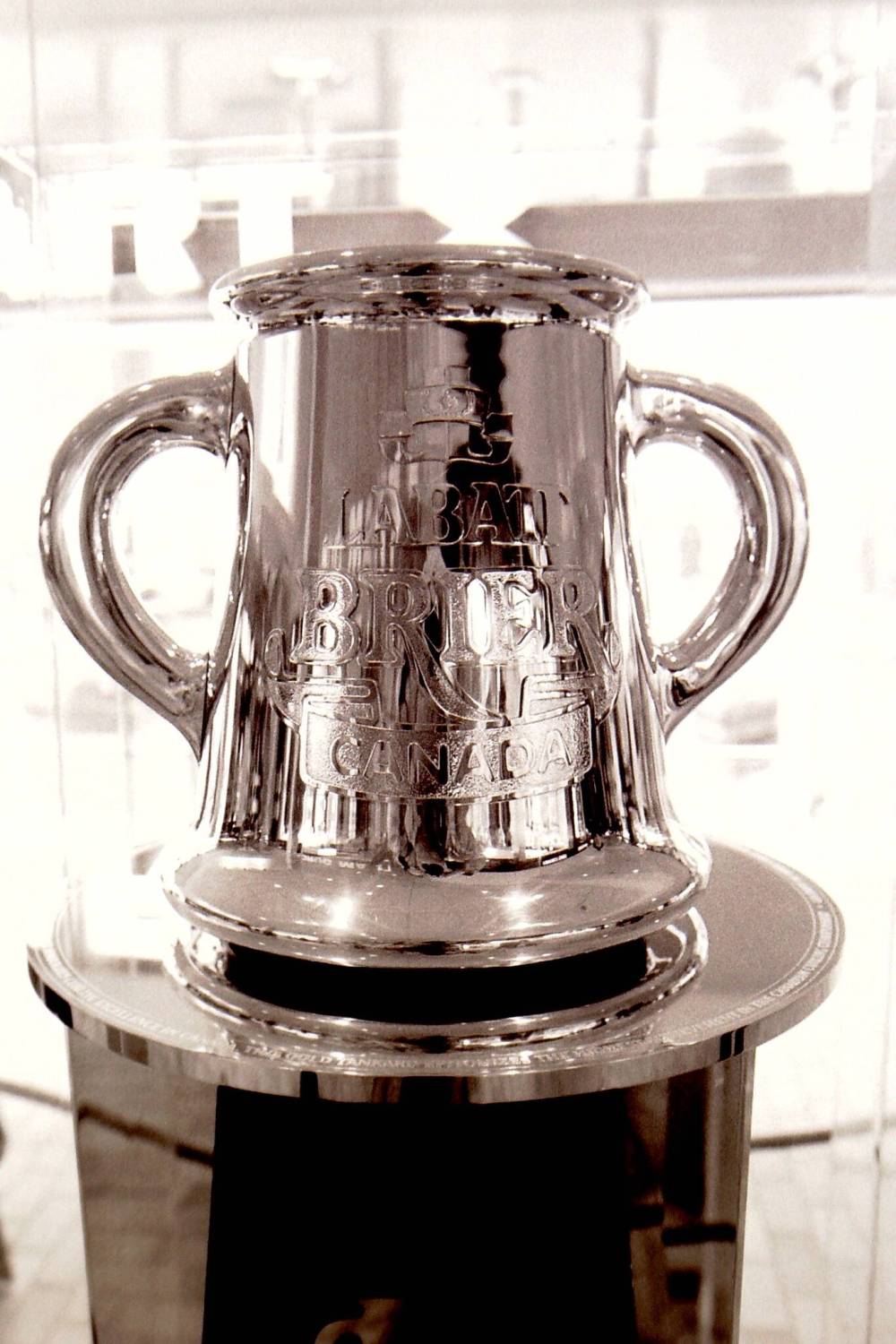
The trophy was also changed, but the old Brier tankard would eventually make its return in 2001 when Labatt’s tenure as the title sponsor ended.
If you ask people what stood out from the week, the answers would vary from Rick Folk earning Saskatchewan’s last title to date to the lone appearance by the infamous Paul Gowsell at the national event.
However, for those in Westman, the highlight came the night before the tournament started on Feb. 29, 1980.
That’s when Brandon beat out Saskatoon to earn the right to host the 1982 Labatt Brier.
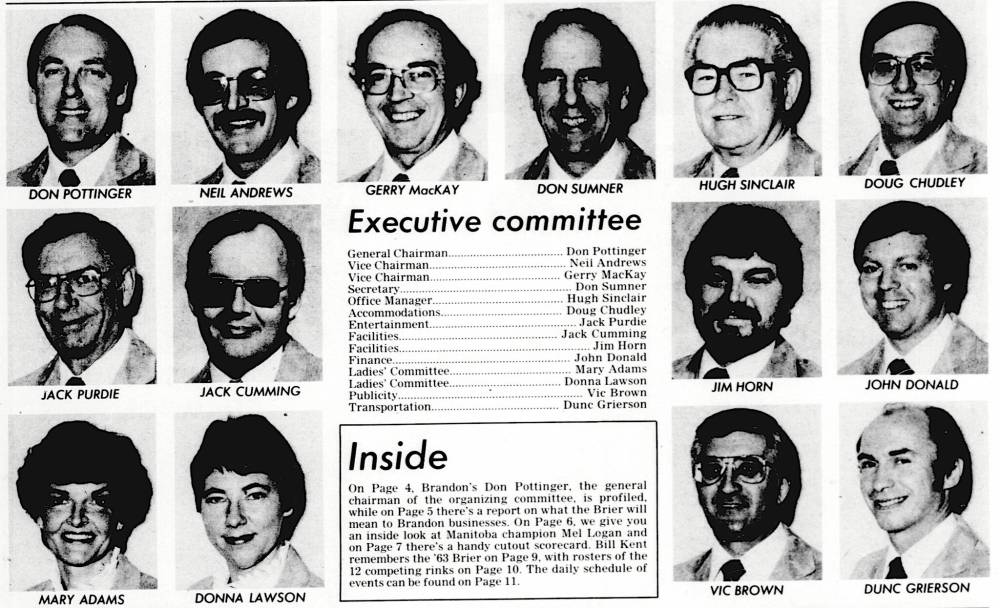
“We were confident that we had put together a pretty good bid, but you are always a bit nervous as it’s an all-or-nothing moment,” said Don Pottinger, who served as the chairman of the host committee for the event. “You either get the Brier or you don’t.
“When it became a reality that we were the winning bid, all of the fear that we had about not getting the Brier went away. It was a big deal for everyone that was (in Calgary for the announcement) as we had worked so hard and long to get it, but then the work really began. We all rolled up our sleeves and immediately got to work.”
Bidding for the Brier
The process to host the Brier began in earnest in the spring of 1979, when the Brandon Bonspiel Committee submitted an official application to the Manitoba Curling Association, which is now known as CurlManitoba.
Once they got full support from the MCA, the Brandon Chamber of Commerce and the city of Brandon, a formal bid was made to the Canadian Curling Association (now known as Curling Canada).
“For several years, we had believed that Brandon was the ideal spot for a Brier to take place,” Pottinger said.
“It had been there in 1963 (at the old Wheat City Arena) so it had been almost two decades since it had been in the city. There was such a strong belief among the curlers, those that supported the game and those in the community that we could host the event, so it made sense to go after it.”
As the summer of 1979 wound down, three other cities entered the fray for wanting to host the Brier, with Saskatoon, Kitchener, Ont., and Charlottetown submitting bids.
Saskatoon, which like Brandon was celebrating its centennial in 1982, was considered the main contender.
In the end though, many in the Saskatchewan city felt that the old Saskatoon Arena — which opened in 1937 — was no match for what Brandon had to offer in the still fairly new Keystone Centre.
“Oh sure, I think the arena was a major drawback for us,” Saskatoon’s mayor Cliff Wright said in an interview with the Saskatoon StarPhoenix.
“Maybe this will open people’s eyes up once and for all that we need a new rink,” an unidentified person from the bid delegation added in an article by Jens Nielsen in the same publication.
That new rink wouldn’t come to pass until 1988, when Saskatchewan Place (now known as SaskTel Centre) opened its doors and hosted the Brier a little over a year later.
While Pottinger admits that having a newer arena may have helped in the bid process, he doesn’t think that’s the main reason why Brandon ended up getting the 1982 edition of Canada’s men’s curling championship.
“We had a very exuberant and capable group of volunteers that were part of the committee,” Pottinger said. “We were ready to hit the ground running the minute that we got the Brier.
“Nothing was left unturned. We had an answer for every question that (the site selection committee) had for us. I think they knew that it (the Brier) was going to be in very good hands.”
Jack Gibson — who was the Brandon Sun’s sports editor at the time — felt that Brandon would end up being the host for the event as the announcement drew near.
“Back at that time, a lot of major events would go to cities that were having something special going on, such as their centennial year,” Gibson said. “Not only did the Brier come to Brandon in 1982, but the city also ended up hosting the Canadian figure skating championship that winter.
“Everyone wanted to help out with the Brier host committee and it was extremely well organized. There was tremendous excitement around southwestern Manitoba and that event ended up being a real launching point for Brandon to host other events down the line.”
The hottest ticket in town
The buzz around the Brier became immediately known with the demand for tickets for the entire week, which cost $55 ($152 in 2022) for regular seats and $80 ($222 in 2022) for end seats.
As it turned out, they were already hard to come by before they even went on sale in February 1981.
“By the time the CCA decided how many tickets they wanted and by the time the MCA decided how many tickets they wanted, we were already in a bind,” Pottinger said. “I’m not sure the exact date we put (tickets) on sale … but we were pretty much sold out shortly thereafter. We ended up putting together a unique sort of system where people that weren’t able to use the tickets that they purchased would put them back in the pot and we would distribute them to kids and people who were unable to access them otherwise.
“We did feel though that the tickets would sell quickly. When you look back at 1982, curling was the spectator sport of choice among rural communities in the Western provinces. People flocked to the rink to see games and I knew we had no worries about filling the Keystone Centre once we landed the Brier.
“That wasn’t the case everywhere. In 1981 the men’s worlds were in London (Ont.,) and they had a heck of a time trying to sell tickets. It’s just different out here. This is curling country.”
Behind the scenes, the host committee was gaining as much knowledge as they could on how to host the event, as they would end up travelling to the 1981 Brier in Halifax.
“When you get the winning bid two years out, you might think that’s a long time, but it really isn’t. There’s so much to do,” Pottinger said. “You can go ‘Ho hum, we’ll just do what we did the last time,’ because that was almost 20 years ago by that point.
“When we went to Halifax, the games were almost secondary as far as we were concerned. We wanted to learn everything that was going on in the back offices. What we learned out there was tremendously helpful and we took that and combined it with the strong group of people that had come on board at that point. The people here in Westman don’t take a backseat to anybody when it comes to volunteering.”
The Patch
With tickets proving to be more and more elusive as the event drew near — even with the addition of $5 spots in the standing room section — the host committee came up with a solution.
In taking advantage of their surroundings at the Keystone Centre, they turned the Manitoba Room into the first-ever Brier Patch.
“We wanted to find a way to accommodate the people who wanted to be around the action,” Pottinger said. “Closed circuit TV was just getting started at that point … it wasn’t like you could press a button and the game would pop up, so we brought in people to operate the boards that were skilled in that area.
“It ended up being so popular. In fact, there were empty seats in the stands because the people who owned those seats would end up going to the patch.”
The bar/restaurant — which saw patrons consume more than 2,000 beers per hour during the week according to an article by Laura Rance in the March 13, 1982 edition of the Brandon Sun — also proved to be popular among the competitors.
“When I walked into the Patch for the first time I remember saying ‘Oh, I’m gonna like this place,’” said Northern Ontario skip Al Hackner.
“There were big crowds in there right from the start and it’s really just grown ever since. It’s such a huge part of the tradition of the Brier.”
Westman Super League
On the ice, the local curling scene at the time was highlighted by the 12-rink Westman Super League, which had seen two of their competitors — Brian Moffatt and Murray Nye — square off in the 1981 Labatt Tankard semifinal at the Keystone Centre.
The Nye rink, which included third Keith Kyle, second Dave Wallace and lead Resby Coutts, would compete for the provincial title but ended up losing to Kerry Burtnyk’s eventual Brier-winning squad from the Assiniboine Memorial in Winnipeg.
Les Lazaruk, who is now the voice of the Western Hockey League’s Saskatoon Blades, was the sports director at CKLQ and remembers the excitement amongst the competitors.
“Everyone in the league and those involved in the city’s curling clubs (Brandon, Riverview and Wheat City) were looking to be involved as volunteers or in whatever role that they could be,” Lazaruk said.
“It was such a big deal for everyone that something with such a massive national profile was coming to our wee little bourg, especially when you compared it to the other cities across the country that got the chance to host the Brier. Everyone was so anxious to show that we can do a better job than those major centres could.”
As it turned out, Westman’s interest in the Brier would get even bigger due to what happened with four curlers from the area at the 1982 Labatt Tankard in Winnipeg.
» See Part 2 of the five-part series in Wednesday’s edition of the Brandon Sun.
» lpunkari@brandonsun.com
» Twitter: @lpunkari