
Professor’s work on ancient religion featured in new book
Advertisement
Read this article for free:
or
Already have an account? Log in here »
We need your support!
Local journalism needs your support!
As we navigate through unprecedented times, our journalists are working harder than ever to bring you the latest local updates to keep you safe and informed.
Now, more than ever, we need your support.
Starting at $15.99 plus taxes every four weeks you can access your Brandon Sun online and full access to all content as it appears on our website.
Subscribe Nowor call circulation directly at (204) 727-0527.
Your pledge helps to ensure we provide the news that matters most to your community!
To continue reading, please subscribe:
Add Brandon Sun access to your Free Press subscription for only an additional
$1 for the first 4 weeks*
*Your next subscription payment will increase by $1.00 and you will be charged $20.00 plus GST for four weeks. After four weeks, your payment will increase to $24.00 plus GST every four weeks.
Read unlimited articles for free today:
or
Already have an account? Log in here »
Hey there, time traveller!
This article was published 14/09/2022 (1259 days ago), so information in it may no longer be current.
A Brandon University professor whose work was published in a new book last May says the echoes of ancient religions, and their political connections, can still be heard in the political landscape of the modern world.
The research by Kurt Noll, a religion professor who has been teaching at Brandon University for 17 years, appears in “Patronage in Ancient Palestine and in the Hebrew Bible,” edited by Emanuel Pfoh and published by Sheffield Phoenix Press in Sheffield, England.
The book explores aspects of patron-client relationships in the Middle East in the second millennium BCE, in ancient Palestine during the first millennium BCE and in the texts of the Hebrew Bible.
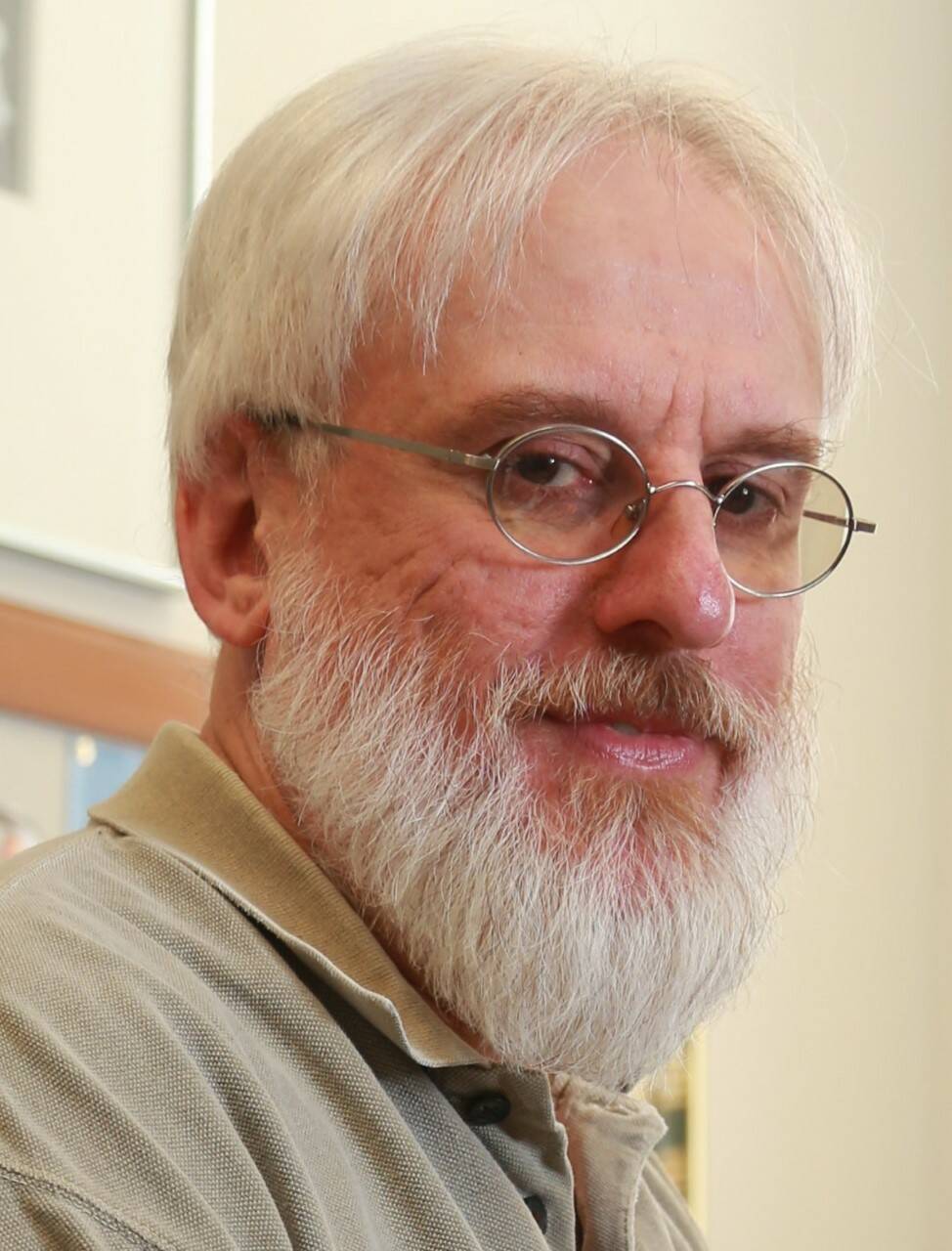
Brandon University Prof. Kurt Noll. (Submitted)
Noll’s chapter, titled “The Patron God in the Ancient Near East,” delves into ancient religion using the patron-client relationship, in which the patron was the king who promised to lead and protect his clients, the people who paid the taxes that supported the nobility and the professional warrior class.
Patron religions, Noll told the Sun, are religions of the king and of government. They operated through a patron-client relationship made up of a three-tier hierarchy where the top tier, occupied by the patron god, chose the human patron for the middle tier so that he could rule over his subjects in the bottom tier.
While Noll, who holds a PhD and a master’s degree in theology from Union Theological Seminary in Virginia, cites examples from ancient Babylon, Assyria, Israel and other societies to illustrate the concepts, he said there are also many modern-day examples of similar religious thinking.
Though quick to point out that the majority of the Islamic world doesn’t hold to the same beliefs, he said, the government of Iran is a current example of what happens when a patron-god system spills into the political sphere.
“The Iranian government calls itself a democracy and has a parliament, but veto power lies with Muslim clerics, and so it is essentially a theocracy — a state-sponsored religions government.”
And while the Christendom of Medieval Europe also operated as a theocracy, Noll said there is an active group of Christians in the United States who have rallied around former president Donald Trump in hopes of bringing such a form of government back.
In his chapter, Noll writes that some evangelical Christians have embraced Trump because he delivered on his promise to stack the Supreme Court with Christians who will impose their version of Christianity on U.S. citizens.
“What Christians in the U.S. who back Donald Trump are trying to do is make Christianity control the public space, and they want to do that by the injection of what they call Christian values, which not all Christians would agree with, into U.S. law.”
Nearly 50 years ago, the Roe v. Wade ruling was the basis for establishing a constitutional right to abortion for women in the United States. Noll cites this as an example of far-right Christians trying to hearken back to a society that does not have firm boundaries between church and state. What’s interesting, Noll adds, is that Christianity didn’t even start out as a patron-god religion, even though it evolved into one over the centuries.
“The Roman emperors decided to become Christian, and they made the bishops of the Christian church as their bureaucrats, and suddenly Jesus Christ was considered a patron god.”
The Enlightenment period, which surfaced in Europe in the 17th and 18th centuries, saw governments begin to seek popular legitimacy for their rule as opposed to divine right. This led to many people in the Western world taking religious freedom for granted and believing that religion is typically harmless, which is not necessarily true, Noll said.
Noll said some people even claim that if religious people commit acts of violence in the name of their faith, those people have “perverted” the religion, which he calls a “naïve” byproduct of living in a country where religious freedom is the norm.
“Meanwhile in Iran, women are in prison right now because they failed to adhere to the religious government’s laws about mandatory wearing of the hijab. Women in Afghanistan are being persecuted because the Taliban believe that their version of Islam must dictate the beliefs, the behaviours, even the educational level of women.”
Balfour Spence, acting dean of arts at BU, said Noll’s work is one of many examples of the university’s faculty who are doing “important and interesting” research on a variety of topics that challenge issues both at home and abroad.
“The care that Dr. Noll takes to connect his research on ancient kings in the Near East to the current political context shows the type of learning that all BU students benefit from every day in the classroom,” Spence said.
Noll’s published works include The Faces of David; Canaan and Israel in Antiquity: An Introduction; and Canaan and Israel in Antiquity: A Textbook on History and Religion. He is also the author of a chapter in Is This Not the Carpenter? The Question of the Historicity of the Figure of Jesus titled Investigating Earliest Christianity Without Jesus, in which he explains how it is possible that a literal Jesus was invented by the early church to persuade people to convert to Christianity.
» mleybourne@brandonsun.com
» Twitter: @miraleybourne
Funding for The Brandon Sun’s Indigenous and rural beat reporter comes from the Government of Canada through the Local Journalism Initiative.