
Manitoba’s approach to dealing with cases of teacher misconduct unacceptable: Experts
Advertisement
Read this article for free:
or
Already have an account? Log in here »
We need your support!
Local journalism needs your support!
As we navigate through unprecedented times, our journalists are working harder than ever to bring you the latest local updates to keep you safe and informed.
Now, more than ever, we need your support.
Starting at $15.99 plus taxes every four weeks you can access your Brandon Sun online and full access to all content as it appears on our website.
Subscribe Nowor call circulation directly at (204) 727-0527.
Your pledge helps to ensure we provide the news that matters most to your community!
To continue reading, please subscribe:
Add Brandon Sun access to your Free Press subscription for only an additional
$1 for the first 4 weeks*
- Enjoy unlimited reading on brandonsun.com
- Read the Brandon Sun E-Edition, our digital replica newspaper
*Your next Free Press subscription payment will increase by $1.00 and you will be charged $20.95 plus GST for four weeks. After four weeks, your payment will increase to $24.95 plus GST every four weeks.
Read unlimited articles for free today:
or
Already have an account? Log in here »
Hey there, time traveller!
This article was published 24/09/2022 (1335 days ago), so information in it may no longer be current.
WINNIPEG — Cases of teacher misconduct in Manitoba are shrouded in secrecy and not centrally tracked, creating an incomplete picture of how often educators abuse students or act inappropriately, the Free Press has learned.
Child-protection and education experts say the lack of data and the haphazard approach to investigations leave students vulnerable to harm and impede schools from identifying and tackling potential systemic issues that allow bad behaviour to persist.
The current system is “unacceptable,” said Noni Classen, director of education with the Canadian Centre for Child Protection in Winnipeg.
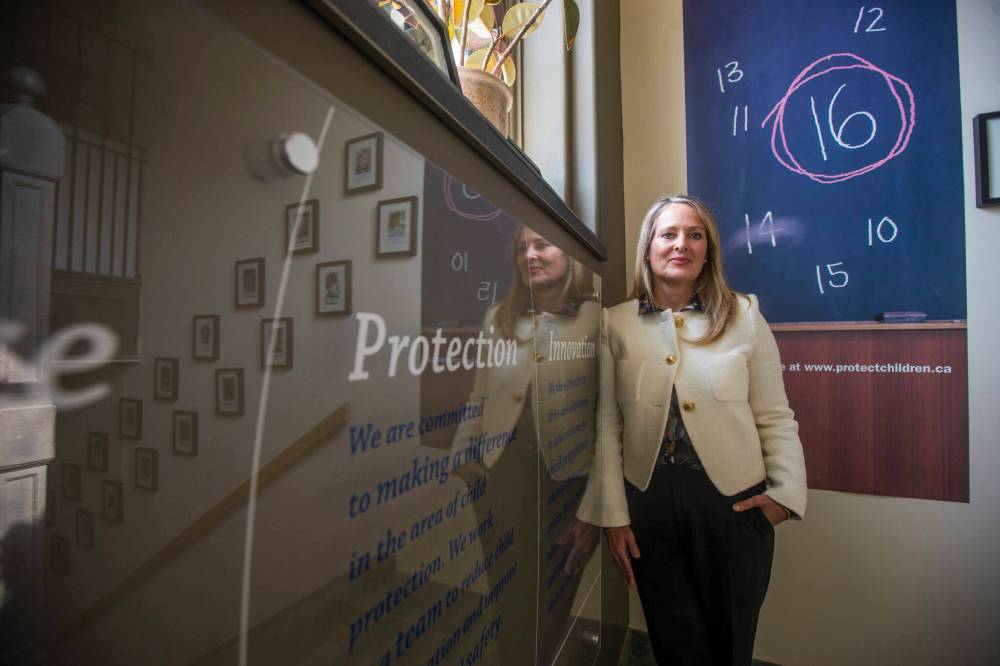
Noni Classen, director of education with the Canadian Centre for Child Protection in Winnipeg. (Winnipeg Free Press)
“We do not have the transparency, the accountability and oversight that absolutely should just be an expectation when we are dealing with children in the space of schools,” Classen said. “This is very concerning.”
At least five Manitoba teachers have been charged with sex-related offences involving students since late 2021, including Kelsey McKay, a Winnipeg phys-ed teacher and high school football coach who is now facing 24 charges involving nine former football players.
But beyond police press releases and what may come out in court, little is ever shared publicly about teacher misconduct in Manitoba.
The Free Press filed nearly 70 requests under the Freedom of Information and Protection of Privacy Act with the province’s 37 school divisions and Ministry of Education to gain insight into teacher impropriety and discipline in Manitoba.
The vast majority of the FIPPA requests were rejected at the school division level, however the Education Department revealed 31 teachers — out of roughly 16,000 active educators in Manitoba — have been disciplined at the provincial level over the last 5 1/2 years. There were four cases in both 2016 and 2017, six in 2018, five in 2019, two in 2020, nine in 2021 and one this year; the data was current as of May 1.
Of those 31 cases, 20 teachers had their teaching licence cancelled by the province, two had licences suspended, one was suspended indefinitely and eight “voluntarily surrendered” licences pending a hearing by the province’s certificate review committee. About half of all cases were related to criminal matters, including charges of sexual assault, luring, exploitation and possession of child pornography. The other half were classified as “professional misconduct.” None of the teachers were named.
It’s not clear what the cases of “professional misconduct” involve. Only serious cases are forwarded to the province’s attention but Education Minister Wayne Ewasko confirmed in a statement there is no defined “threshold of severity” for cases sent to his department’s attention. Instead, schools and divisions are “encouraged” to report cases “they deem to be serious.”
He added all cases involving a teacher “charged or convicted of a criminal offence relating to the physical or sexual abuse of children” must be forwarded to his office.
A review committee then adjudicates the matters in secret and determines if licences should be revoked. Teachers’ names are never made public.
Classen is calling for greater transparency surrounding investigations and discipline.
“We should be making publicly available decisions that relate to… teachers sanctioned in any capacity for professional misconduct,” she said, adding that the teachers should also be named. “Quite frankly, if the media wasn’t reporting out on those cases, how would anybody know?”
While the nine cases from 2021 are a concern, Classen said it’s hard to draw conclusions about possible trends due to the limited context provided. But based on her experience dealing with child-abuse cases that may not reach a criminal threshold, it’s clear 31 cases is just “the tip of the iceberg” of misconduct, she said.
Cases deemed not serious enough to make it to the education minister’s desk are dealt with by the teachers’ union — the Manitoba Teachers’ Society — the school divisions or the schools themselves.
MTS spokesperson Raman Job said the union deals with complaints about members accused of violating its code of professional practice which, according to MTS bylaws, includes “conduct unbecoming a teacher” and conduct “detrimental to the best interests of students.” MTS also learns of misconduct cases when a teacher requests union representation following an accusation made against them, Job said. The union has received between two and nine complaints every year for the past five years.
Of the province’s 37 school divisions, just two responded to the Free Press FIPPA request for records about teacher misconduct. Whiteshell School Division and Border Land School Division confirmed they had no cases over the last five years.
All others refused to provide the requested information: the number of investigations into teachers accused of misconduct per year; the nature of the allegations; the outcome of the investigation; and the number of teachers employed in the division. The reasons for refusal included concerns about “unreasonable invasion of a third party’s privacy,” concerns about revealing “advice to a public body” and concerns about workplace investigations being made public. Nearly all of the refusal letters were worded identically.
The Free Press followed up with a handful of divisions to ask if they track teacher misconduct and to provide policies and practices they have in place.
Some said they had no comment. Others didn’t respond.
“It seems like things are just shrouded in mystery,” said Cameron Hauseman, an assistant professor with the University of Manitoba’s faculty of education.
Hauseman said the secrecy raises questions about how complaints are investigated and how discipline is administered.
“We have no idea what that process looks like,” he said. “So it’s hard to know if it is really robust or not.”
Classen said greater transparency promotes public trust and better protects students.
Making discipline cases public not only helps reassure parents misconduct is taken seriously, but it may also deter teachers from committing wrongdoing, prevent division from quietly shuffling problem teachers to different schools and help better protect children by identifying patterns of improper behaviour, Classen said.
She also highlighted the need for better tracking, noting the “decentralized” nature of Manitoba’s current overlapping systems provides an incomplete picture. Tracking cases allows school communities to flag potential systemic issues that allow misconduct to go unchecked, she said.
Manitoba is “lagging far behind” Ontario, British Columbia, Saskatchewan and Alberta, where disciplinary steps and teachers’ names are publicized, she said.
Ideally, Classen would like to see an independent body in Manitoba that deals with misconduct complaints, or a system similar to the Ontario College of Teachers, which makes hearings open to the public and posts discipline decisions on its website and at the Canadian Legal Information Institute, a free online database of decisions from courts and administrative tribunals.
Hauseman, who echoed Classen’s call for a better oversight system, said if nothing changes, its reasonable to expect parents will lose faith in school authorities’ ability to protect their kids.
“Situations of teacher misconduct place that public trust in jeopardy,” he said. “All of a sudden, parents start wondering… ‘these bad teachers that I’m hearing about in the news, could that be happening at my school?’”
The province has recently floated the possibility of creating such a regulatory college. A 2020 report from the K-12 review commission recommended creating a Manitoba College of Educators to certify teachers and associate members working in the school system. A year ago, the province confirmed it was undertaking a review of teacher regulatory models.
Ewasko was unavailable for an interview but provided an update in a statement.
“We recognize the importance of a stronger regulatory framework to guide teacher development, practice, evaluation and certification,” he said. “The department will engage a third party facilitator to conduct consultations based on review findings in the fall of 2022.”
MTS declined to comment on the calls for an independent regulatory body, but has previously said it opposes making teacher discipline public and that it already has a system for dealing with concerns.
“We have our own code of professional practice and it’s not just for members. Anyone could lay a complaint under that code and there’s a rigorous review process in place,” president James Bedford told to the Free Press last year. He noted “really egregious” cases are made public via the court system.
Paul Bennett, a Nova Scotia-based education consultant and an adjunct professor at Saint Mary’s University, would like to see legislative requirements in provinces across Canada requiring schools and unions to publicly report the number of misconduct incidents, along with the nature of the incidents and outcomes on an annual basis.
“I don’t understand why that’s not a requirement under the law,” Bennett said.
He also believes teachers themselves — the large majority of whom he knows care about their students’ safety and well-being — should be in favour of more transparency and a regulatory college. Such steps would help rid the system of bad actors and cement teaching as a “professional” profession, he said.
“We have nothing to fear from higher professional standards,” he said.
» Winnipeg Free Press