
‘Obsolete’ family law should be repealed, commission argues
Advertisement
Read this article for free:
or
Already have an account? Log in here »
We need your support!
Local journalism needs your support!
As we navigate through unprecedented times, our journalists are working harder than ever to bring you the latest local updates to keep you safe and informed.
Now, more than ever, we need your support.
Starting at $15.99 plus taxes every four weeks you can access your Brandon Sun online and full access to all content as it appears on our website.
Subscribe Nowor call circulation directly at (204) 727-0527.
Your pledge helps to ensure we provide the news that matters most to your community!
To continue reading, please subscribe:
Add Brandon Sun access to your Free Press subscription for only an additional
$1 for the first 4 weeks*
- Enjoy unlimited reading on brandonsun.com
- Read the Brandon Sun E-Edition, our digital replica newspaper
*Your next Free Press subscription payment will increase by $1.00 and you will be charged $20.95 plus GST for four weeks. After four weeks, your payment will increase to $24.95 plus GST every four weeks.
Read unlimited articles for free today:
or
Already have an account? Log in here »
Hey there, time traveller!
This article was published 25/03/2023 (1299 days ago), so information in it may no longer be current.
A 90-year-old Manitoba law that could require children of low-income older adults to pay support to their aging parent should be scrapped, says the Manitoba Law Reform Commission.
The commission released a report on Tuesday recommending that Manitoba’s little-known piece of legislation, The Parents’ Maintenance Act, should be repealed, calling it “irrelevant, obsolete, and unsuitable for modern use.”
The act obligates financially-able children to provide support to their parents if they are unable to support themselves financially due to age, disease, or infirmity and has changed very little since it was introduced in Manitoba in 1933. Very few claims have been brought under it since that time.
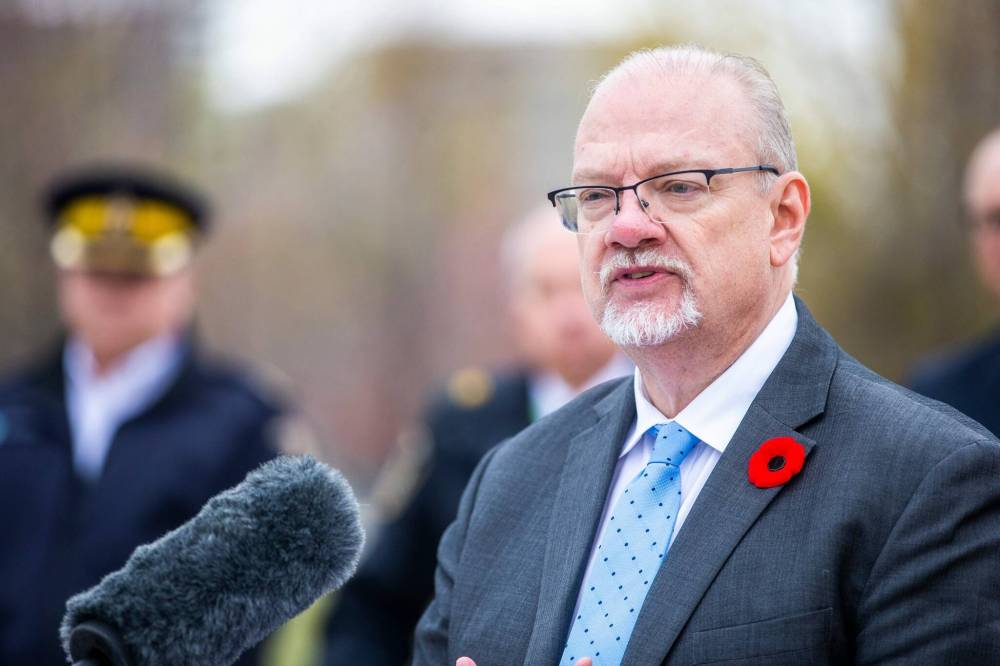
Justice Minister Kelvin Goertzen's office said there is no legislated timeline for ministerial review nor is a response required. (Winnipeg Free Press)
“We’re talking about a very old law, it’s still on the books, it still regulates and governs Manitobans, but it’s completely inconsistent with our contemporary world,” Kristal Bayes-McDonald, director and legal counsel for the Manitoba Law Reform Commission told the Sun in an interview.
The commission — which makes recommendations to improve, modernize and reform Manitoba laws — often reviews laws after a member of the public who is impacted by a piece of legislation brings it forward. In this case, Bayes-McDonald says the act was brought to the commission’s attention by a lawyer who happened to come across it while doing research for their client.
While people are aware of the responsibility of parents to provide for their children, this act makes it possible for parents to seek financial support by court order from their child. But the act is very outdated, capping payments to a parent at $20 a week, which is inconsistent with costs today, Bayes-McDonald says.
The act is based on legislation that was developed in 16th-century England, titled the Poor Laws of England. These laws were developed in response to high rates of poverty and required the “disabled poor” to first seek monetary relief from parents, children or grandparents before turning to the government for assistance.
Though the clause that permitted parents to receive money from their children was repealed from the English Poor Laws in 1948, similar laws based on this model, including Manitoba’s act, persisted in Canada.
While other provinces including Alberta, British Columbia, and Saskatchewan have repealed similar legislation, the piece of law still exists in Manitoba. Bayes-McDonald says the commission decided to recommend the law be repealed, instead of reformed, as fundamental flaws with the act prevent meaningful amendments to it.
Bayes-McDonald said other jurisdictions in Canada are doing away with their parental maintenance provisions, and there are numerous government programs to help older citizens with low incomes.
Not only is the act at odds with the modern era’s recognition of a collective responsibility to take care of vulnerable people in society, Bayes-McDonald said, any amendments made to modernize it could have negative effects.
Amending the legislation to provide an amount of money realistic to the modern era could possibly transfer low-income status on from parent to child. Additionally, it would likely disproportionately impact lower-income families more than wealthy families.
“We have certainly, as a society, moved away from the individual responsibility to the collective responsibility,” she said.
Given that there have only been a handful of cases brought under the act, and no reported decisions dealing with applications made under it, the act hasn’t had much impact on Manitobans the past century. However, Bayes-McDonald emphasizes that it is still a law that Manitobans are governed under, and it is still possible for someone to bring a claim should they choose.
“There is inherent value in ensuring that the laws that govern us all are comprehensible, and are contemporary, and sensical and have the desired impact,” she says.
The Commission makes formal recommendations to the Minister of Justice and attorney general, but it is ultimately up to a government to make a decision on whether to do away with the law.
Manitoba Minister of Justice, Kelvin Goertzen was not available for interview but the ministry provided a statement to the Sun, stating that there is no legislated timeline for ministerial review nor is a response required.
“The Manitoba government thanks the commission for the report and will study it in due course,” the statement read.
» gmortfield@brandonsun.com
» Twitter: @geena_mortfield