
RCMP retro pay strains municipalities
Advertisement
Read this article for free:
or
Already have an account? Log in here »
We need your support!
Local journalism needs your support!
As we navigate through unprecedented times, our journalists are working harder than ever to bring you the latest local updates to keep you safe and informed.
Now, more than ever, we need your support.
Starting at $15.99 plus taxes every four weeks you can access your Brandon Sun online and full access to all content as it appears on our website.
Subscribe Nowor call circulation directly at (204) 727-0527.
Your pledge helps to ensure we provide the news that matters most to your community!
To continue reading, please subscribe:
Add Brandon Sun access to your Free Press subscription for only an additional
$1 for the first 4 weeks*
- Enjoy unlimited reading on brandonsun.com
- Read the Brandon Sun E-Edition, our digital replica newspaper
*Your next Free Press subscription payment will increase by $1.00 and you will be charged $20.95 plus GST for four weeks. After four weeks, your payment will increase to $24.95 plus GST every four weeks.
Read unlimited articles for free today:
or
Already have an account? Log in here »
Hey there, time traveller!
This article was published 12/04/2023 (1257 days ago), so information in it may no longer be current.
The Municipality of Boissevain-Morton has been handed a $50,000 bill by the federal government to cover the cost of back pay for RCMP officers working in the community.
When Mounties signed their first-ever collective agreement in August 2021, it included retroactive pay increases stretching back to 2017.
Under Public Safety Canada’s contracts with municipalities to provide policing services through the RCMP, municipalities are required to cover 70 per cent of costs if they have fewer than 15,000 residents and 90 per cent if they have more.
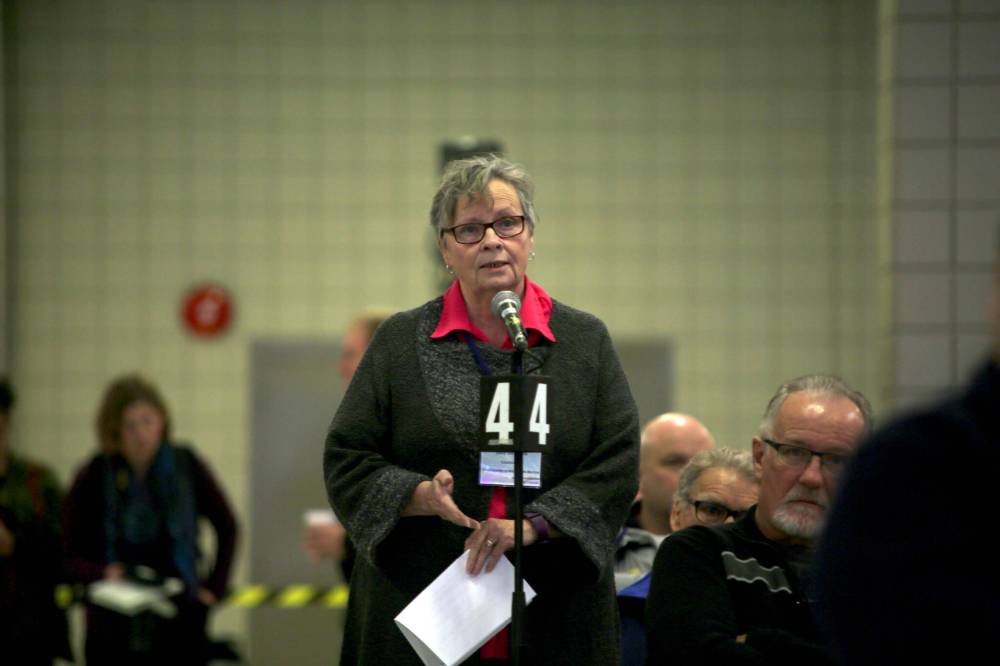
Head of Council Judy Swanson said removing the dilapidated rink is an important step that will create room for future housing. (File)
That means the 21 communities in this province under these contracts, according to the Association of Manitoba Municipalities, are on the hook for $5.1 million in new costs.
Other communities in the same situation include Dauphin, Killarney-Turtle Mountain, Minnedosa, Neepawa, Roblin, Russell-Binscarth, Souris-Glenwood and Virden.
Both the AMM and the Federation of Canadian Municipalities are part of a countrywide effort to get the federal government to absorb these costs.
Boissevain-Morton Head of Council Judy Swanson told the Sun on Tuesday her municipality has known about the retroactive costs for a while now, but had been hoping financial relief would be announced in last month’s federal budget.
Nothing of the sort was announced in the budget, and Swanson said a formal bill for the costs arrived in the mail the week after it was presented, with the municipality given two years to pay it off.
“We’re going to defer it,” Swanson said. “This is at a time when there’s also huge inflation for municipalities. Everything we do costs more and more money and yet we are obligated by law to balance our budget.”
In the Municipality of Souris-Glenwood, Mayor Duane Davison said the bill received was in the neighbourhood of $60,000.
“It’s a significant amount of money and we hadn’t budgeted for it,” Davison said. “If we have to pay for it this year, it becomes a problem. We’re not paying it in the near term.”
Making things more difficult is that Souris-Glenwood has already held its 2023 budget deliberations.
Though Davison heard municipalities are being offered a couple of years to pay the bill, he said as far as he was aware the invoice received called for payment within 45 days.
Meanwhile, the Town of Neepawa will need to come up with approximately $110,000 to cover retroactive costs, Mayor Brian Hedley said.
“We’re already tight with our budgets,” he said.
“It can be difficult to find extra money … The federal government’s decision at the end of the day affects municipalities. We’ve got to pay for a growing share of policing costs, but we’re not allowed to run deficits.”
Hedley acknowledged the problem would only be worse for larger communities under similar policing agreements. Last year, the FCM posted an article stating the projected financial impact on Moncton, N.B., for example, would be $5.7 million.
All three mayors told the Sun they had no issues with the RCMP itself or the services it provides to communities. What bothers them is being made responsible for covering costs stemming from contract negotiations they were not a part of.
“Municipalities were never at that table,” Swanson said. “We were never asked. We were never included in discussions and I do not understand how that could happen and then [get told] you’re going to pay that retroactive pay.
“It’s a way to force municipalities to continue to pay for things we shouldn’t be paying for.”
On top of the retroactive pay and the regular wage increases, AMM president Kam Blight told the Sun that RCMP officers will soon be mandated to wear body cameras with the expenses also downloaded to municipalities at a cost of $3,000 to $4,000 per officer, per year.
He said that when Ottawa and the National Police Federation were at the negotiating table, the government advised municipalities to prepare for a 2.5 per cent annual increase to their police budget to incorporate the retroactive pay.
“The negotiations dragged on, took quite some time and were finally finalized and lo and behold, the amounts the federal government told municipalities to set aside were nowhere near what they needed,” Blight said.
“Basically, the federal government made the announcement and said these dollars are now due, not taking into account that municipalities only have one way of increasing revenue and that’s through taxation. This is going to become a massive burden.”
That, Blight said, is why his organization and others across the country are sounding the alarm. He encouraged municipalities to contact their members of Parliament, especially those in government, to express their concern and push for change.
Both Swanson and Davison said their municipal councils passed motions this week supporting the FCM’s efforts to get the retroactive bills forgiven by the federal government.
Public Safety Canada did not immediately respond to a request for comment Tuesday.
» cslark@brandonsun.com
» Twitter: @ColinSlark