
Multimillion-dollar rural internet, cell service project hung up on pay dispute
Advertisement
Read this article for free:
or
Already have an account? Log in here »
We need your support!
Local journalism needs your support!
As we navigate through unprecedented times, our journalists are working harder than ever to bring you the latest local updates to keep you safe and informed.
Now, more than ever, we need your support.
Starting at $15.99 plus taxes every four weeks you can access your Brandon Sun online and full access to all content as it appears on our website.
Subscribe Nowor call circulation directly at (204) 727-0527.
Your pledge helps to ensure we provide the news that matters most to your community!
To continue reading, please subscribe:
Add Brandon Sun access to your Free Press subscription for only an additional
$1 for the first 4 weeks*
*Your next subscription payment will increase by $1.00 and you will be charged $20.00 plus GST for four weeks. After four weeks, your payment will increase to $24.00 plus GST every four weeks.
Read unlimited articles for free today:
or
Already have an account? Log in here »
Hey there, time traveller!
This article was published 28/04/2023 (1072 days ago), so information in it may no longer be current.
WINNIPEG — The plan to use Manitoba Hydro Telecom’s extensive fibre-optic cable network to connect rural and northern Manitobans to broadband internet and cell service is on hold over a pay dispute between the private company that has the rights to use it and the public utility.
“Xplore is disputing our invoice for work done for them to date on the project,” Manitoba Hydro spokesman Bruce Owen said in an email Thursday.
“The dispute is progressing through the pre-arranged contractual dispute resolution process, and as such we have no further comment.”
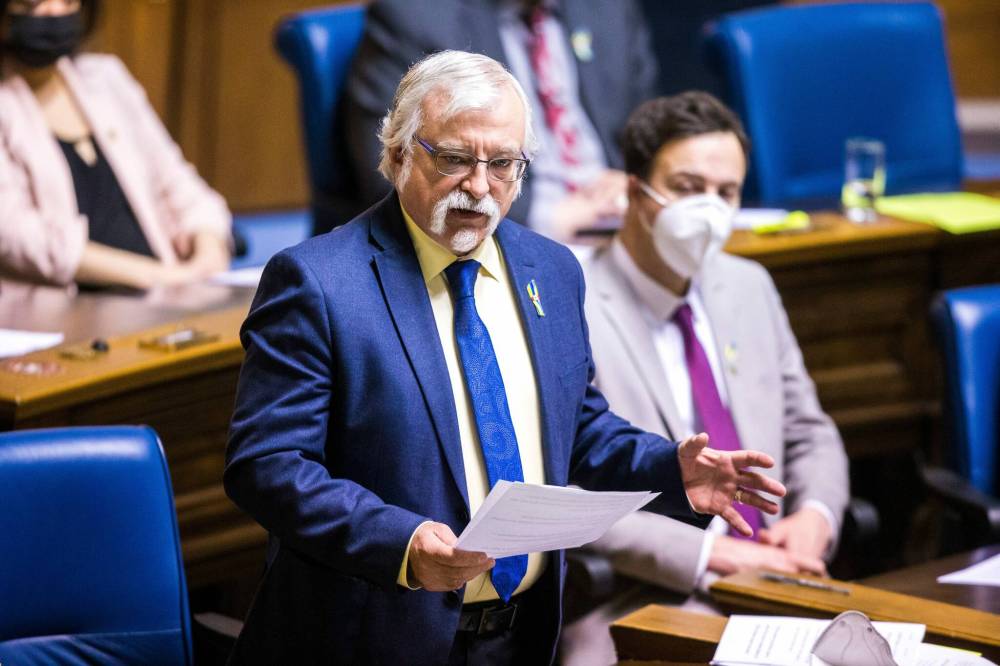
Tom Lindsey, the NDP MLA for Flin Flon. (Winnipeg Free Press)
In 2021, the Progressive Conservative government signed a deal with Xplore Inc., formerly Xplornet Communications, to speed up the process of connecting communities to the Crown-owned cable network. After a lengthy RFP process, Xplore was given access to the Manitoba Hydro Telecom fibre network that spans thousands of kilometres.
The company said it would invest more than $200 million over the next few years to build the infrastructure to deliver high-speed internet to 350 rural communities and 30 First Nations that would be connected to Manitoba Hydro Telecom’s network.
That work has been on hold since mid-February, according to an April 24 memo obtained by the NDP and confirmed by Manitoba Hydro Thursday.
Only 20 per cent of the rural broadband expansion has been completed, the April 24 Manitoba Hydro memo said.
Just 14 per cent of First Nations in Manitoba have access to high-speed internet, a 2023 Canadian Radio-Television and Telecommunication Commission report said.
Giant swaths of the province remain behind the times, unconnected to the fibre-optic cable lines owned by Manitoba Hydro, which is owned by the people of Manitoba, said NDP Leader Wab Kinew.
“People in rural and northern Manitoba deserve to have access to fast broadband internet and cell service now,” the Opposition leader said during question period. “More than ever, it’s essential for everyday life,” he said.
“Why has the government ceased all work on rural broadband in Manitoba?” Kinew asked.
Premier Heather Stefanson shot back. She said her government has been busy cleaning up the former NDP government’s “$4-billion boondoggle” as she referred to cost overruns in the construction of the Bipole III transmission line and the Keeyask generating station up north.
“They left Manitoba Hydro riddled with debt,” said the premier. She went on to say that her PC government takes the issue of rural broadband expansion “very seriously.”
“We want to ensure all Manitobans have access to internet services no matter where they live in the province,” the premier said. Her government has spoken to people in remote communities about how to help them, she said. “We will continue to get things done for those who live in remote communities in our province.”
In neighbouring Saskatchewan, 99 per cent of residents have high-speed internet access, a spokesman for the provincially owned Crown corporation said Thursday.
“As of today, SaskTel can deliver broadband connectivity via our wired and wireless networks to over 99 per cent of the population of Saskatchewan,” corporate communications manager Greg Jacobs said.
Its wired broadband network reaches more than 460 communities, of which, 27 have been converted to fibre and SaskTel has announced $200 million to convert another 130 communities to fibre by the end of March 2025, he said Thursday in an email.
Its wireless network can deliver data services to more than 99 per cent of people in Saskatchewan and plans to invest more than $500 million to upgrade the wireless network to 5G, he said. That will allow the publicly owned telecom to deliver significantly faster data speeds to its customers across the province, Jacobs said.
Manitoba privatized its provincial telecom, MTS, in 1997 at a price the CRTC estimated was less than its market value.
Comparisons with Sasktel, Canada’s last provincially owned telecommunications company, by organizations like the Canadian Centre for Policy Alternatives have shown that privatization led to higher service costs and reduced benefits to Manitobans.
“We’re still in the dark ages when it comes to internet access,” Flin Flon MLA Tom Lindsey said during a debate in the chamber Thursday morning.
Manitoba’s lack of high-speed broadband and cellphone services in rural and northern areas disadvantages students, stifles tourism, and hinders economic opportunities, while a lack of cellphone service is a public-safety issue because Manitobans can’t call 911 in an emergency, Lindsey said.
It’s especially frustrating when Manitoba Hydro owns fibre-optic cable that runs near or through unserved communities that could access high-speed Internet if they could connect to it, he said.
“The line runs right through Cranberry Portage,” Lindsey said of the rural municipality of 608 people, 50 kilometres southeast of Flin Flon. “But they won’t provide connectivity.”
The New Democrats introduced a resolution this week that condemns the PC government for failing to follow through on its promise to provide high-speed broadband services to rural and northern Manitoba.
The PC government did not respond to a request for comment Thursday.
“We could’ve been running some of the greatest high-speed internet across the province,” Liberal Leader Dougald Lamont said in the chamber. “The areas where it’s most needed are being completely ignored.”
NDP hydro critic Adrien Sala wouldn’t say how a New Democratic government would handle rural broadband expansion but “a good foundation” was in place before the Tories partnered with an “out-of-province, hedge fund-owned” mega-company that’s now holding up rural broadband expansion.
“We had a Manitoba Hydro-owned subsidiary that owned that fibre optic infrastructure and worked with small Manitoba businesses to do the ‘last mile’ (connection) to northern communities and small rural communities,” Sala told reporters. “They did the work and they were doing it well. We had that foundation in place that we could’ve built on.”
» Winnipeg Free Press